Monday, 10 October 2011

Thomas Traherne


The poet and spiritual writer Thomas Traherne is often commemorated on 10 October (he is known to have died some time between 27th September and 10th October, 1674), and that seems as good an excuse as any to post some extracts from my college's very own mystic.

(He's our only mystic. So far. Though we do have a couple of great hymn-writers.)

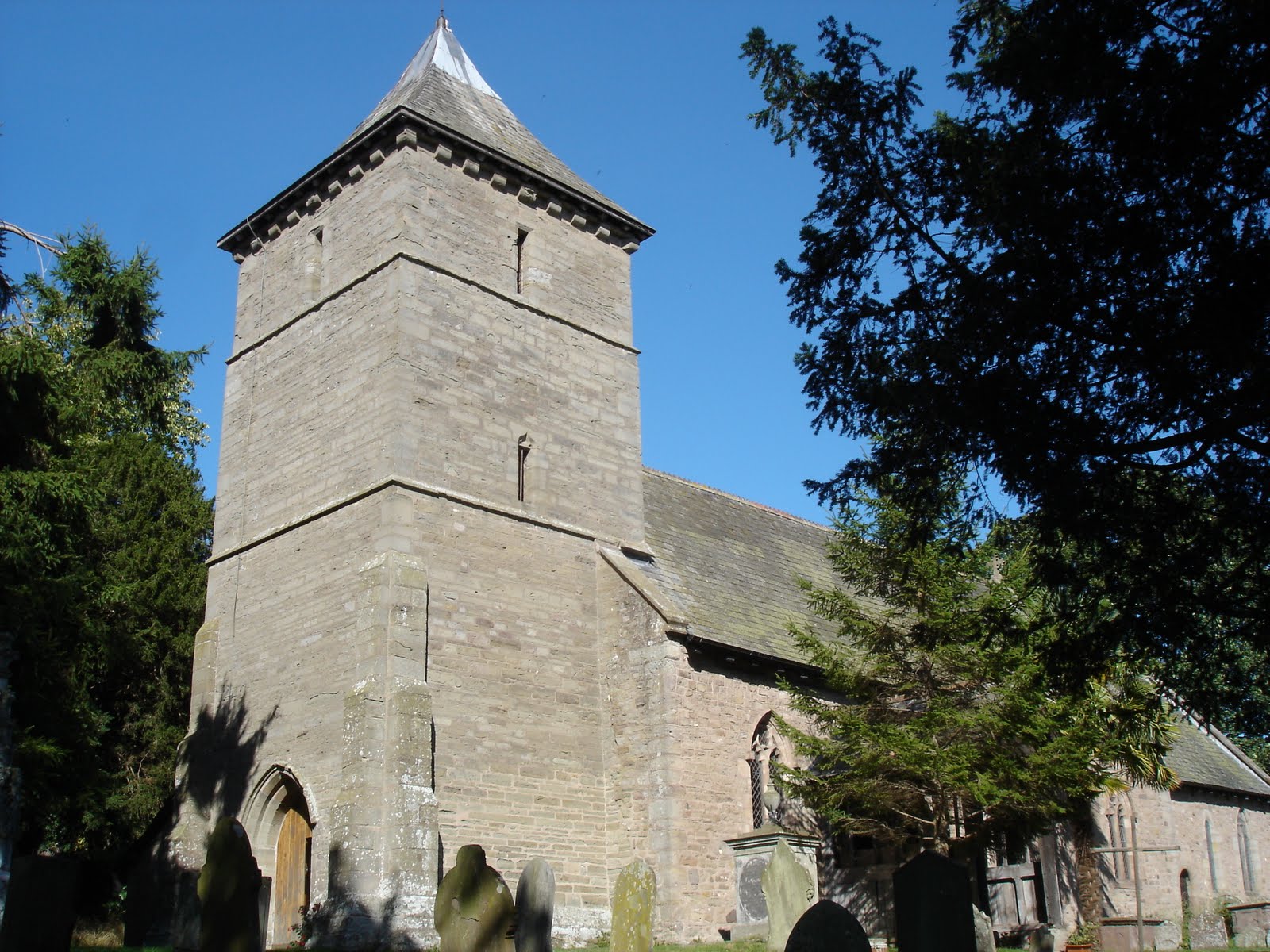
These are all from his Centuries of Meditations, which C. S. Lewis called "almost the most beautiful book in English." I've posted some of them before. The pictures are from Credenhill near Hereford, where Traherne was parish priest, a very peaceful and beautiful place.


As nothing is more easy than to think, so nothing is more difficult than to think well.
That violence wherewith sometimes a man doteth upon one creature, is but a little spark of that love, even towards all, which lurketh in his nature. We are made to love, both to satisfy the necessity of our active nature, and to answer the beauties in every creature. By Love our Souls are married and solder'd to the creatures and it is our Duty like God to be united to them all. We must love them infinitely, but in God, and for God and God in them: namely all His excellencies manifested in them.

When we dote upon the perfections and beauties of some one creature, we do not love that too much, but other things too little. Never was anything in this world loved too much, but many things have been loved in a false way; and all in too short a measure...

O what a treasure is every sand when truly understood! Who can love anything that God made too much? What a world would this be, were everything beloved as it ought to be!

We could easily show that the idea of Heaven and Earth in the Soul of Man, is more precious with God than the things themselves and more excellent in nature... What would Heaven and Earth be worth, were there no spectator, no enjoyer? As much therefore as the end is better than the means, the thought of the World whereby it is enjoyed is better than the World. So is the idea of it in the Soul of Man, better than the World in the esteem of God: it being the end of the World, without which Heaven and Earth would be in vain...

The sun in your eye is as much to you as the sun in the heavens. For by this the other is enjoyed. It would shine on all rivers, trees, and beasts in vain to you could you not think upon it. The sun in your understanding illuminates your soul, the sun in the heavens enlightens the hemisphere. The world within you is an offering returned, which is infinitely more acceptable to God Almighty, since it came from Him, that it might return unto Him. Wherein the mystery is great. For God hath made you able to create worlds in your own mind which are more precious unto Him than those which He created; and to give and offer up the world unto Him, which is very delightful in flowing from Him, but much more in returning to Him.

Sunday, 9 October 2011

The prayer oft mixed with tears

This is a hymn by Charlotte Elliot (1789-1871), whose better-known hymn is 'Just as I am'. This seems to have once been very popular, though I've never myself heard it sung in a church (unlike 'Just as I am'!). Charlotte Elliot was an invalid, and if this account is to be believed, struggled with a feeling that her physical weakness made her useless in the service of God. I'm sure the popularity of this hymn, and certainly of her more famous one, stems from how honestly she confronts this struggle, not denying exactly how difficult it is to say "Thy will be done." It almost comes through gritted teeth.


My God, my Father, while I stray
Far from my home, on life's rough way,
O teach me from my heart to say,
Thy will be done!

Though dark my path, and sad my lot,
Let me be still and murmur not,
Or breathe the prayer divinely taught,
Thy will be done!

What though in lonely grief I sigh
For friends beloved, no longer nigh,
Submissive still would I reply,
Thy will be done!

If Thou shoulds't call me to resign
What most I prize, it ne'er was mine:
I only yield thee what is thine;
Thy will be done!

Let but my fainting heart be blest
With thy sweet Spirit for its guest,
My God, to thee I leave the rest;
Thy will be done!

Renew my will from day to day;
Blend it with thine, and take away
All that now makes it hard to say,
Thy will be done!

Then, when on earth I breathe no more
The prayer oft mixed with tears before,
I'll sing upon a happier shore,
Thy will be done!

Saturday, 8 October 2011

Each man's holiest hour, And all the lit confusion of our days

This is Rudyard Kipling's sonnet 'Chartres Windows', with pictures of windows from Doddington, Kent. They might not be Chartres (I've never been) but they're pretty good.


Colour fulfils where Music has no power:
By each man's light the unjudging glass betrays
All men's surrender, each man's holiest hour
And all the lit confusion of our days-
Purfled with iron, traced in dusk and fire,
Challenging ordered Time who, at the last,
Shall bring it, grozed and leaded and wedged fast,
To the cold stone that curbs or crowns desire.
Yet on the pavement that all feet have trod-
Even as the Spirit, in her deeps and heights,
Turns only, and that voiceless, to her God-
There falls no tincture from those anguished lights.
And Heaven's one light, behind them, striking through
Blazons what each man dreamed no other knew.


(purfled is a strange word. Apparently it means 'decorated with an ornamental border'.)

Thursday, 6 October 2011

The longing of a heart pent up forlorn

Here's a nice cheerful poem for National Poetry Day.


E la Sua Volontade è nostra pace. - Dante
Sol con questi pensier, con altre chiome. - Petrarca

Youth gone, and beauty gone if ever there
Dwelt beauty in so poor a face as this;
Youth gone and beauty, what remains of bliss?
I will not bind fresh roses in my hair,
To shame a cheek at best but little fair,--
Leave youth his roses, who can bear a thorn,--
I will not seek for blossoms anywhere,
Except such common flowers as blow with corn.
Youth gone and beauty gone, what doth remain?
The longing of a heart pent up forlorn,
A silent heart whose silence loves and longs;
The silence of a heart which sang its songs
While youth and beauty made a summer morn,
Silence of love that cannot sing again.


I've left this almost to the last of the 'Monna Innominata', not because it's the final sonnet in the sequence (though it is) but because it cuts a little close to the bone for me. But it's a good poem, if a little excessively... something; and the quotation from Dante means "And His will is our peace".

Tuesday, 4 October 2011

A Medieval St Francis

One of the earliest English depictions of St Francis of Assisi (whose feast day is today): a mid-thirteenth-century wall-painting from the church at Doddington, Kent.

Doddington also has this decorative painting around the other side of the window:

And a figure who is apparently supposed to be Henry III (1207-1272), although why on earth anyone would want a painting of Henry III right next to the altar, I don't know. The paintings were executed in his reign, but that still seems an odd reason to depict him in a church. I can't think of any parallels - it's like the medieval equivalent of the modern practice of hanging a portrait of the Queen in a village hall, and that can't have been at all common.

However, if this church was up-to-date enough to have a picture of St Francis within thirty years of his death, perhaps they were rather cutting-edge by thirteenth-century standards. When the Franciscan order arrived in England in 1224, their first base was at Canterbury - where their chapel survives - and Doddington (near Sittingbourne) is not far off the main road from Canterbury to London; perhaps some of those Franciscans who dispersed throughout England "as thick as motes in a sun-beam" (in Chaucer's words) passed through Doddington, and inspired someone to decorate the church with the latest saint.

The church at Doddington bears an unusual dedication to the Beheading of John the Baptist. I went there on that feast-day (August 29) this year - by accident. Funny how that works.

Monday, 3 October 2011

Just a picture

Far from the madding crowd's ignoble strife,
Their sober wishes never learn'd to stray;
Along the cool sequester'd vale of life
They kept the noiseless tenor of their way.


I spent this sunny day in a churchyard, with a book.

(Not the churchyard in this picture, though - Holywell Cemetery in Oxford, just about the only churchyard where Gray's Elegy doesn't seem appropriate. Not many of the people buried there lived lives of decent obscurity!)

Sunday, 2 October 2011

Fixed is the doom


Fixed is the doom; and to the last of years
Teacher and taught, friend, lover, parent, child,
Each walks, though near, yet separate; each beholds
His dear ones shine beyond him like the stars.
We also, love, forever dwell apart;
With cries approach, with cries behold the gulph,
The Unvaulted; as two great eagles that do wheel in air
Above a mountain, and with screams confer,
Far heard athwart the cedars.
Yet the years
Shall bring us ever nearer; day by day
Endearing, week by week, till death at last
Dissolve that long divorce. By faith we love,
Not knowledge; and by faith, though far removed,
Dwell as in perfect nearness, heart to heart.
We but excuse
Those things we merely are; and to our souls
A brave deception cherish.
So from unhappy war a man returns
Unfearing, or the seaman from the deep;
So from cool night and woodlands to a feast
May someone enter, and still breathe of dews,
And in her eyes still wear the dusky night.