Tuesday, 1 May 2012

"This morning is the first of May, / The primest of the year"

May Day is a Big Deal in Oxford, where people first gather at 6am to hear Magdalen choir sing madrigals and then proceed to wander around in a puzzled, awake-too-early kind of daze as Morris dancers and Jack-in-the-Green weave their way through the crowds. This morning I didn't brave the rain or the early start, so here are some photographs from last year's idyllic May Day, when the sun shone.

Dawn over Magdalen


Looking up the High Street...

Looking down the High Street.


The towers of All Souls


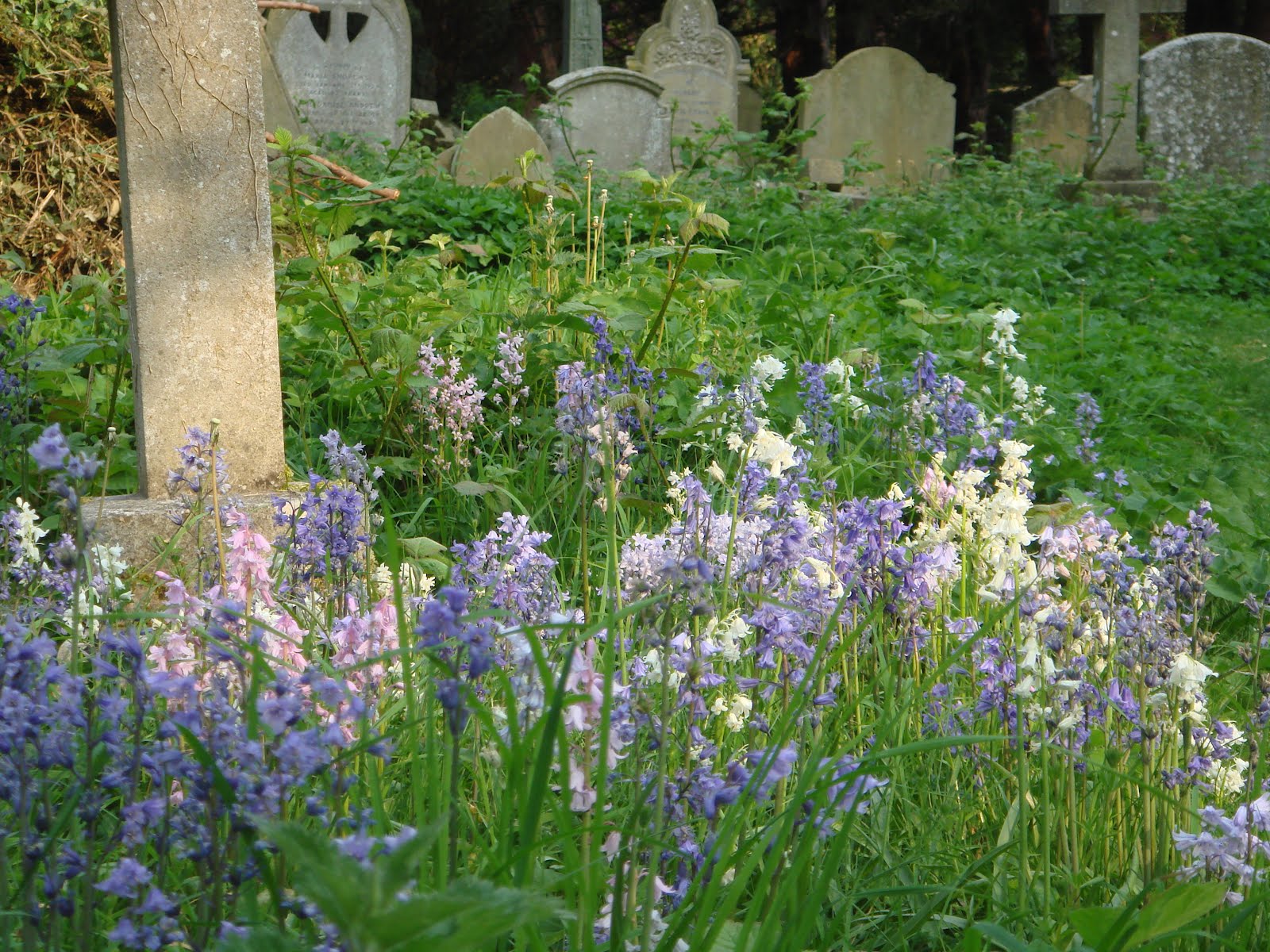
Back then I lived next door to Holywell Cemetery, which explains why I went to take pictures in a graveyard on the year's most life-filled day. It was quiet and dewy and full of flowers.


Morris dancers in Broad Street:


Christ Church meadow, as the sun grew stronger:


This, I think, is may.

Monday, 30 April 2012

"My heart is like a singing bird"


Continuing yesterday's youtube theme, this video is an absolutely perfect combination of words, music and pictures - for none of which am I responsible, but which I highly recommend. (Also, I know the birthday is this poem is a metaphorical one, but today actually is my birthday, and I couldn't think of anything else to post about...)

Sunday, 29 April 2012

Medieval Multimedia

So I had (what seemed at the time like) a bright idea, and started a youtube channel of me reading stuff in Old and Middle English, to supplement things I've posted on this blog. There's lots of videos of people reading medieval stuff on youtube and some of it is great (this for instance is fantastic) and some of it is pretty bad (so many versions of the General Prologue!), so I figured I might as well contribute to the cacophony. So far I've posted some videos of me reading from the Old English Gospels, and 'Stond wel moder under rode'. And also 'When the nightingale sings' because, well, it's April.

I think you can find it here...

Psalm Translations: By the waters of Babylon

I was thinking about something today - I don't know why - and as so often happens, a psalm at Evensong tonight resonated with my thought, and worked to crystallise it somehow. So if this post goes off on a tangent at the end, you'll have to forgive me.

It was Psalm 136/7:


1. By the waters of Babylon we sat down and wept : when we remembered thee, O Sion.
2 As for our harps, we hanged them up : upon the trees that are therein.
3 For they that led us away captive required of us then a song, and melody, in our heaviness : Sing us one of the songs of Sion.
4 How shall we sing the Lord's song : in a strange land?
5 If I forget thee, O Jerusalem, : let my right hand forget her cunning.
6 If I do not remember thee, let my tongue cleave to the roof of my mouth : yea, if I prefer not Jerusalem in my mirth.
7 Remember the children of Edom, O Lord, in the day of Jerusalem : how they said, Down with it, down with it, even to the ground.
8 O daughter of Babylon, wasted with misery : yea, happy shall he be that rewardeth thee, as thou hast served us.
9 Blessed shall he be that taketh thy children : and throweth them against the stones.


I love that setting, which is by George Garrett; it's so beautiful it breaks your heart.

This is perhaps the most famous setting of the Latin version:


1 Super flumina Babylonis ibi sedimus et flevimus, cum recordaremur Sion.
2 Super salices in medio eius suspendimus citharas nostras.
3 Quoniam ibi interrogaverunt nos qui captivos duxerunt nos verba carminis et qui adfligebant nos laeti: canite nobis de canticis Sion.
4 Quomodo cantabimus canticum Domini in terra aliena?
5 Si oblitus fuero tui, Hierusalem, in oblivione sit dextera mea.
6 Adhereat lingua mea gutturi meo, si non recordatus fuero tui si non praeposuero Hierusalem in principio laetitiae meae.
7 Memento, Domine, filiorum Edom in diem Hierusalem dicentium evacuate evacuate usque ad fundamentum eius.
8 Filia Babylon vastata, beatus qui retribuet tibi vicissitudinem tuam quam retribuisti nobis.
9 Beatus qui tenebit et adlidet parvulos tuos ad petram.


Now for some medieval translations. I don't have an Old English translation to offer you, but I can direct you to this illustration from a Psalter produced at Canterbury in c.1000. The organ and harp hanging on the sinewy trees are wonderful!

The earliest English translation I could find is by Richard Rolle (I didn't look very hard, so there may be earlier ones).

1. Aboven the flodes of Babilon, thar we sat and gret whils we umthou3t of Syon.
2. In the wylghis in the myddis of hit we hang up our orgoyns.
3. For thar thei askyd us, tho that caitifes led us, wordes of songes, and tho that away led us ȝmpne synges til us of the sanges of syon.
4. How shal we syng the song of Lord in aliens land?
5. If I forgete thee Jerusalem, til forgetyng be gifen my riȝthand.
6. My tong draw til my chekis, if i had thouȝt not of thee, if i sett nouȝt of thee, Jerusalem, in begynnyng of my joy.
7. Be menand, Lord, of the sunnys of Edom in day of Jerusalem, the whilk seys "temys, temys, til the ground in hit."
8. Dowȝghtur of Babilon, wrech, blisful he that shal ȝeld til thee the ȝeldyng that thou ȝeldid til us.
9. Blisful he that shal holde and knok his smale til the stone.


Rolle's is a psalter with commentary, and his comment on this last verse is, "These small [things] are evil stirrings in man's thought, of pride, covetise and lechery, but he is blessed that holds them, that they pass not into delight, and knocks them against Christ, that they perish through his might, for if he let them wax, they will not so soon be overcome." I like that!

His comment on the first verse is, "Floods of Babylon are all things that are loved here and pass away, which holy men behold and forsake, sitting above them, and weeping for their own pilgrimage and their sins that are ravished into the floods while they think of Sion - that is, of heaven, where nothing runs away, but all joy is together. Worldly men weep for the loss of their goods or their friends, as they joy in nothing but in their wealth; but each man should weep when thinking of Sion."

We'll come back to that.

Here's a Wycliffite translation from the late 14th century:

1. On the floodis of Babiloyne there we saten, and wepten; while we bithouyten on Syon.
2. In salewis in the myddil therof; we hangiden up oure orguns.
3. For thei that ledden us prisoners, axiden us there the wordis of songis. And thei that ledden awei us seiden "Synge ye to us an ympne of the songis of Syon."
4. Hou schulen we singe a songe of the Lord in an alien lond?
5. If I foryete thee, Jerusalem, my riyt hond be youun to foryeting.
6. Mi tunge cleue to my chekis, if I bithenke not on thee, if I purposide not of thee, Jerusalem, in the bigynnyng of my gladnesse.
7. Lord, haue thou mynde on the sones of Edom, for the dai of Jerusalem. Whiche seien, Anyntische ye, anyntische ye; til to the foundement ther ynne.
8. Thou wretchid douyter of Babiloyne; he is blessid, that schal yelde to thee thi yelding, which thou yeldidist to vs.
9. He is blessid, that schal holde; and hurtle doun hise litle children at a stoon.


It took me a ridiculously long time to realise that the word ympne in "Synge ye to us an ympne of the songis of Syon" is of course hymn. Should have spotted that sooner...

This would be a useful psalm to learn condemnations from. That "Anyntische ye, anyntische ye" in verse 7 means 'bring to nothing, destroy' (related to the French anéantir), while Rolle's "temys, temys" comes from a word of Old Norse origin meaning 'to spill, to pour out'. Choose your method of destruction.

Rolle was a Yorkshireman and our next translation is also from Yorkshire, from the thirteenth-century Surtees Psalter (the numbering of the verses is a bit different here):

1. Stremes ofe Babilon, þare sate we on,
And wepe, whils we mined of Syon.

2. In selihes in mide ofe ite
Our organes henge we yhite.

3. For þider asked vs, þat wrecches swa
Led vs, wordes of sanges ma;

4. And þat outlede vs: "ympne singe yhe
Til vs of sanges ofe Syon be."

5. Hou sal we singe sange with blisse
Ofe lauerd in outen land þat isse?

6. Ife I forgete þe, Jerusalem land,
To forgetelnesse giuen be mi righte hand.

7. Mi tunge to mi chekes cleuand be,
Ife þat I noght mine ofe þe;

8. Ife I forsete þe noght, Jerusalem, ai
In biginninge ofe mi fainenes al dai.

9. Mine, lauerd, ofe Edom sones, þat tem,
In daie ofe Jerusalem,

10. Þat saies: “lesses, lesses yhite,
Vnto þe grondstaþelnes in ite!”

11. Doghtre of Babilon, wrecched alle!
Seli þat foryhelde salle
To þe þi foryheldinge nou
Þat til vs foryhelded þou;

12. Seli þat sal hald on-ane
And giue þi smale vnto þe stane.


Seli is one of my favourite words for 'blessed'; in Middle English it means 'fortunate, favoured', but also 'innocent, blameless', and over time the latter meaning came to be used of things deserving of compassion or pity, like children or animals (especially sheep, for some reason - so you will sometimes find Christmas carols which have the shepherds 'leave their silly sheep'). And this tender epithet came to have overtones of 'weak, foolish', and thus we get today's silly, still used of things or people towards whom one feels more pity than contempt.


Songs and hymns, streams and floods and waters. I didn't even realise until I started writing this post just how close this psalm comes to what I've been thinking about in my own life. It's something about singing in exile. Rolle is quite right: "The floods of Babylon are all things that are loved here and pass away". Recently I've been feeling self-conscious about the things I love - essentially, all the stuff I post about on this blog. It's such an odd and silly assortment, and pretty much no one I know in real life shares my love for any of it. I've spent my whole life being a little embarrassed about my taste in music and literature, and wishing really that I could just be normal and like the things everyone else likes; I don't feel that as much as I did when I was younger, but I still wish I could love my own things a little less. Perhaps it's just an extreme case of the grad student's curse - which is the knowledge that absolutely no one cares about your subject as much as you do - but I suspect really it's a manifestation of Sehnsucht, C. S. Lewis' Joy, the 'inconsolable longing for we know not what', and the sense of utter aloneness which comes with it.

And somewhere in there is Chesterton, and his idea of things 'saved from the wreck':

Crusoe is a man on a small rock with a few comforts just snatched from the sea: the best thing in the book is simply the list of things saved from the wreck. The greatest of poems is an inventory. Every kitchen tool becomes ideal because Crusoe might have dropped it in the sea. It is a good exercise, in empty or ugly hours of the day, to look at anything, the coal-scuttle or the book-case, and think how happy one could be to have brought it out of the sinking ship on to the solitary island. But it is a better exercise still to remember how all things have had this hair-breadth escape: everything has been saved from a wreck...

I really felt (the fancy may seem foolish) as if all the order and number of things were the romantic remnant of Crusoe's ship. That there are two sexes and one sun, was like the fact that there were two guns and one axe. It was poignantly urgent that none should be lost; but somehow, it was rather fun that none could be added. The trees and the planets seemed like things saved from the wreck: and when I saw the Matterhorn I was glad that it had not been overlooked in the confusion. I felt economical about the stars as if they were sapphires (they are called so in Milton's Eden): I hoarded the hills. For the universe is a single jewel, and while it is a natural cant to talk of a jewel as peerless and priceless, of this jewel it is literally true. This cosmos is indeed without peer and without price: for there cannot be another one.

'The greatest of poems is an inventory' - I love that. I've quoted it before in reference to this poem (and it's even more true of this one). Chesterton was being typically ebullient, but hoarding hills and seeing in them a sudden glimpse of the hills of heaven are two sides of the same coin. Sometimes it's cosy, sometimes it's "the old stab, the old bittersweet". Everyone would have their own list of things saved from the wreck; this was C. S. Lewis':

the smell of bonfire, the sound of wild ducks flying overhead, the title of The Well at the World's End, the opening lines of Kubla Khan, the morning cobwebs in late summer, or the noise of falling waves.

That longing, that love, is an endless hunger of hopeless things, and sometimes it's more wonderful than painful, and sometimes the other way around. I suppose everyone feels it to some degree, but some people seem more susceptible than others; and these days I wish I was less susceptible.

And I've forgotten what this has to do with the psalm.

Saturday, 28 April 2012

O’er the moor I wander lonely

You can here a snippet of what sounds like an excellent version of Percy Grainger's setting of this 'Song of the North' here. The words are by A(nnie) C(ampbell) Macleod, collector of the Skye Boat Song.


O’er the moor I wander lonely,
Ochon-a-rie, my heart is sore;
Where are all the joys I cherished?
With my darling they have perished,
And they will return no more.

I loved thee first, I loved thee only,
Ochon-a-rie, my heart is sore;
I loved thee from the day I met thee,
What care I though all forget thee!
I will love thee evermore.

Friday, 27 April 2012

"This April twilight on the river"

This past week in Oxford has been all April showers - sudden cataracts of rain and frail sunshine changing place with each other by the minute. But April is not always like that; here are two poems about quiet, spring-like April twilights upon a river.

First, Rupert Brooke's 'Blue Evening', written in 1909.


Blue Evening

My restless blood now lies a-quiver,
Knowing that always, exquisitely,
This April twilight on the river
Stirs anguish in the heart of me.

For the fast world in that rare glimmer
Puts on the witchery of a dream,
The straight grey buildings, richly dimmer,
The fiery windows, and the stream

With willows leaning quietly over,
The still ecstatic fading skies...
And all these, like a waiting lover,
Murmur and gleam, lift lustrous eyes,

Drift close to me, and sideways bending
Whisper delicious words. But I
Stretch terrible hands, uncomprehending,
Shaken with love; and laugh; and cry.

My agony made the willows quiver;
I heard the knocking of my heart
Die loudly down the windless river,
I heard the pale skies fall apart,

And the shrill stars' unmeaning laughter,
And my voice with the vocal trees
Weeping. And Hatred followed after,
Shrilling madly down the breeze.

In peace from the wild heart of clamour,
A flower in moonlight, she was there,
Was rippling down white ways of glamour
Quietly laid on wave and air.

Her passing left no leaf a-quiver.
Pale flowers wreathed her white, white brows.
Her feet were silence on the river;
And "Hush!" she said, between the boughs.


And now, Robert Louis Stevenson's 'Air of Diabelli's', much warmer and more tranquil a poem (whatever Rupert Brooke is, he's never tranquil):


Call it to mind, O my love.
Dear were your eyes as the day,
Bright as the day and the sky;
Like the stream of gold and the sky above,
Dear were your eyes in the grey.
We have lived, my love, O, we have lived, my love!
Now along the silent river, azure
Through the sky's inverted image,
Softly swam the boat that bore our love,
Swiftly ran the shallow of our love
Through the heaven's inverted image,
In the reedy mazes round the river.
See along the silent river,

See of old the lover's shallop steer.
Berried brake and reedy island,
Heaven below and only heaven above.
Through the sky's inverted image
Swiftly swam the boat that bore our love.
Berried brake and reedy island,
Mirrored flower and shallop gliding by.
All the earth and all the sky were ours,
Silent sat the wafted lovers,
Bound with grain and watched by all the sky,
Hand to hand and eye to . . . eye.

Days of April, airs of Eden,
Call to mind how bright the vanished angel hours,
Golden hours of evening,
When our boat drew homeward filled with flowers.
O darling, call them to mind; love the past, my love.
Days of April, airs of Eden.
How the glory died through golden hours,
And the shining moon arising;
How the boat drew homeward filled with flowers.
Age and winter close us slowly in.

Level river, cloudless heaven,
Islanded reed mazes, silver weirs;
How the silent boat with silver
Threads the inverted forest as she goes,
Broke the trembling green of mirrored trees.
O, remember, and remember
How the berries hung in garlands.

Still in the river see the shallop floats.
Hark! Chimes the falling oar.
Still in the mind
Hark to the song of the past!
Dream, and they pass in their dreams.

Those that loved of yore, O those that loved of yore!
Hark through the stillness, O darling, hark!
Through it all the ear of the mind

Knows the boat of love. Hark!
Chimes the falling oar.

O half in vain they grew old.

Now the halcyon days are over,
Age and winter close us slowly round,
And these sounds at fall of even
Dim the sight and muffle all the sound.
And at the married fireside, sleep of soul and sleep of fancy,
Joan and Darby.
Silence of the world without a sound;
And beside the winter faggot

Joan and Darby sit and dose and dream and wake -
Dream they hear the flowing, singing river,
See the berries in the island brake;
Dream they hear the weir,
See the gliding shallop mar the stream.
Hark! in your dreams do you hear?

Snow has filled the drifted forest;
Ice has bound the . . . stream.
Frost has bound our flowing river;
Snow has whitened all our island brake.

Berried brake and reedy island,
Heaven below and only heaven above azure
Through the sky's inverted image
Safely swam the boat that bore our love.
Dear were your eyes as the day,
Bright ran the stream, bright hung the sky above.
Days of April, airs of Eden.
How the glory died through golden hours,
And the shining moon arising,
How the boat drew homeward filled with flowers.
Bright were your eyes in the night:
We have lived, my love;
O, we have loved, my love.
Now the . . . days are over,
Age and winter close us slowly round.

Vainly time departs, and vainly
Age and winter come and close us round.

Hark the river's long continuous sound.

Hear the river ripples in the reeds.

Lo, in dreams they see their shallop
Run the lilies down and drown the weeds
Mid the sound of crackling faggots.
So in dreams the new created
Happy past returns, to-day recedes,
And they hear once more,

From the old years,
Yesterday returns, to-day recedes,
And they hear with aged hearing warbles

Love's own river ripple in the weeds.
And again the lover's shallop;
Lo, the shallop sheds the streaming weeds;
And afar in foreign countries
In the ears of aged lovers.

And again in winter evens
Starred with lilies . . . with stirring weeds.
In these ears of aged lovers
Love's own river ripples in the reeds.


Thursday, 26 April 2012

The Saints Say Mass

Fifteenth-century Mass scene from the font at Westhall, Suffolk

This is a fifteenth-century poem - or rather song, though its music hasn't survived - which is completely one of a kind; I've never encountered anything else like it in medieval poetry. Here it is (in modernised form):

Merry it is on a May morning
Merry ways for to go.

And by a chapel as I came,
Met I with Jesu to church-ward gone,
Peter and Paul, Thomas and John,
And his disciples every one.

Saint Thomas the bells did ring,
Saint Nicholas the Mass did sing:
Saint John took the sweet offering,
And by a chapel as I came.

Our Lord offered what he would, [i.e. wished to]
A chalice all of rich red gold,
Our Lady the crown off her mowlde; [head]
The sun out of her bosom shone.

Saint George, who is Our Lady's knight,
Tended the tapers fair and bright;
To my eyes a semely sight,
And by a chapel as I came.

[semely = pleasing, beautiful, splendid]


The leading authority on English carols, Richard Greene, has this to say about the carol in his A Selection of English Carols:

"This chanson d'aventure, with its highly orthodox religious imagery, its 'popular fantasy uncontrolled by the book', and its characteristic style, quite unlike that of the other religious carols, has a good claim to be considered as true folk-song, that is, a piece originating outside of learned clerical society and passed on by oral transmission. There is nothing in canonical or apocryphal scripture or in liturgy or hymnology to point to as a source. The burden is certainly a borrowing from a secular May song, possibly accompanied by the borrowing of a tune...

The only other occurrence in poetry known to me of the strange conception of Christ as officiating priest is in a version of the ballad The Famous Flower of Serving-Men (Child No.106) collected as recently as 1942 from Mrs. Belle Richards of Colebrook, New Hampshire, by Marguerite Olney and published in Helen Hartness Flanders and Marguerite Olney, eds. Ballads Migrant in New England, p.125:

'Twas all alone I dug his grave
And all alone in it him I laid,
While Christ was priest and I was clerk
I laid my love in the clay-cold earth.

The collector remarks (p.125): 'I have looked through many regional collections as well as the monumental work of Professor Francis James Child and of Cecil Sharp but have not discovered the especial grief of this passage.' The special magic of the passage is found in this carol and the likeness of the image confirms the collector's judgement that it comes from the reservoir of unlearned tradition."

Greene, A Selection of English Carols (Oxford, 1962), pp.231-2.


It's certainly an odd poem; I almost wonder if this is for once a medieval vision lyric which is what it purports to be, an actual dream, because it has that kind of vivid unreality. However, the idea of Christ as officiating priest is not quite as unusual as Greene suggests, because the poem bears comparison with this story from the Golden Legend (this is Caxton's translation):

We read an example of a noble lady which had great devotion in the blessed Virgin Mary, and she had a chapel in which she did do say mass of our Lady daily by her chaplain. It happed that the day of the purification of our Lady, her chaplain was out, so that this lady might that day have no mass, and she durst not go to another church because she had given her mantle unto a poor man for the love of our Lady. She was much sorrowful because she might hear no mass and for to make her devotions she went into the chapel, and tofore the altar she kneeled down for to make her prayers to our Lady.

And anon she fell asleep, in which she had a vision, and her seemed that she was in a church, and saw come into the church a great company of virgins, tofore whom she saw come a right noble virgin crowned right preciously. And when they were all set each in order, came a company of young men which sat down each after other in order like the other; after, entered one that bare a burden of candles, and departed them to them above first, and so to each of them by order he gave one, and at the last came this man to this lady aforesaid and gave to her also a candle of wax. The which lady saw also come a priest, a deacon and a subdeacon, all revested, going to the altar as for to say mass.

And her seemed that S. Laurence and S. Vincent were deacon and sub-deacon, and Jesu Christ the priest, and two angels bearing tofore them candles, and two young angels began the introit of the mass, and all the company of the virgins sang the mass. And when the mass was sung unto the offering, her seemed that thilk virgin so crowned went tofore, and after, all the others followed, and offered to the priest, kneeling much devoutly, their candles. And when the priest tarried for this lady that she should also have come to the offering, the glorious queen of virgins sent to her to say that she was not courteous to make the priest so long to tarry for her. And the lady answered that the priest should proceed in his mass forth, for she would keep her candle and not offer it. And the glorious virgin sent yet once to her, and she said she would not offer her candle.

The third time the queen said to the messenger: Go and pray her that she come and offer her candle, or else take it from her by force. The messenger came to this lady, and because in no wise she would not come and offer up her candle, he set hand on the candle that this lady held and drew fast, and she held fast, and so long he drew and haled that the candle brake in two pieces, and that one half abode still in the hand of the lady aforesaid, which anon awoke and came to herself; and found the piece of the candle in her hand, whereof she much marvelled, and thanked our Lord and the glorious Virgin Mary devoutly which had suffered her that day not to be without mass.

And all the days of her life after she kept that piece of that candle much preciously, like an holy relic, and all they that were touched therewith were guerished and healed of their maladies and sicknesses.

Now there's an odd story - am I just too naturally compliant, or is really not done to make a scene like this when the Virgin Mary asks you to hand over your candle? I don't think I could behave so badly even in my own dreams! Thank goodness the visionary in the English poem seems content to watch and wonder.

Visions involving the Mass are fairly common in medieval literature - generally in the form of visions which take place during a Mass, and especially at the moment of the elevation of the Host. Stories about visions in which the Host is transformed into a living child, or bleeds human blood when broken, were frequently cited as evidence for the Real Presence in the fourteenth and fifteenth centuries, as the nature of the Eucharist became an increasingly controversial subject. Less gruesomely, St Bridget of Sweden had a vision at Mass of Christ himself in the hands of the priest, saying, "I bless all of you who believe; to those who do not believe I shall become a judge". St Bridget's visions were very popular in fifteenth-century England, and Margery Kempe (always a lady for a little oneupmanship) had a similar vision in which the Host fluttered in the priest's hand, and Christ said to her "Bridget never saw me in this way". There are also stories about how visions at Mass could give away priests who had behaved wickedly. One which springs to mind is told by Symeon of Durham, who had heard it from the son of the priest in question - the priest had spent the night with his mistress and went in the morning to celebrate Mass, but saw the wine in the chalice turn to fiery pitch as a sign of his unworthiness. (He repented and was forgiven. It doesn't give one a very good impression of twelfth-century Northumbrian priests, though!)

Anyway, the English poem is all much nicer and less polemical than those stories. One particularly attractive thing about it, I think, is how it combines the vision with the conventions of medieval lyrics, including the 'Merry May morning' refrain (the chanson d'aventure opening, from which folk song got its 'As I walked out one morning' type of first line), and the detail of the sun shining out of Mary's breast (which is related to this kind of Mary/sunshine imagery). And the saints are such familiar ones - St George, of course; the second St Thomas mentioned is probably Thomas Becket; and there's St Nicholas too, called "Sent Collas" in the original text (a corruption of the name found elsewhere, and somewhat along the lines of Tooley and Toosey).

And generally, doesn't it give you the clearest impression of stumbling across Mass in a fifteenth-century English parish church - tapers glowing, bells ringing, incense burning ('the sweet offering'), and the sun shining in?

Pugin's idea of a medieval Mass, in stained glass from St Augustine's, Ramsgate

The poem appears in a miscellany of verse and prose in a manuscript known as Porkington 10 (here's a list of other poems in the same manuscript), and here's the original text as printed by Greene:

Mery hyt ys is in May mornyng
Mery wayys for to gone.

And by a chapell as Y came,
Mett Y wyhte Jhesu to chyrcheward gone,
Petur and Pawle, Thomas and Jhon,
And hys desyplys everychone.

Sente Thomas the bellys gane ryng,
And Sent Collas the Mas gane syng:
Sente Jhon toke that swete offeryng,
And by a chapell as Y came.

Owre Lorde offeryd whate he wollde,
A challes all off ryche rede gollde,
Owre Lady the crowne off hyr mowlde;
The son owte off hyr bosom shone.

Sent Jorge, that ys Owre Lady knyghte,
He tende the tapyrys fayre and bryte,
To myn yghe a semley syghte,
And by a chapell as Y came.

 A priest saying Mass, from a 15th-century English MS (British Library, Harley 2915)