Sunday, 23 November 2014

St Clement's, Sandwich

St Clement (Westhall, Suffolk)

23 November is the feast of St Clement, the first-century pope and martyr who was, rather incongruously, a favourite saint with Vikings. (He was martyred by being tied to an anchor and thrown into the sea, therefore he is often shown with an anchor, therefore he is the patron of seafarers, and therefore of Vikings. Impeccable logic!) This is only tangentially related to the subject of today's post, but it is one of my favourite Viking facts. Churches dedicated to St Clement often correlate with areas of Scandinavian settlement and, especially, with Danish military garrisons dating to the reign of Cnut; this probably accounts for the dedication of St Clement Danes in London, St Clement's here in Oxford, and many churches dedicated to St Clement in the former Danelaw.

Today's post is also only vaguely related to St Clement himself, because it's not really about him but about something which happened in the eleventh century in a church dedicated to him. It occurs in a curiosity of Anglo-Saxon literature known as 'The Vision of Leofric', a short Old English prose text which recounts several visions experienced by Leofric, Earl of Mercia, probably in the 1040s or 1050s (Leofric died in 1057). This text tells of four visions attributed to Leofric. The first is a dream in which he sees St Paul saying Mass before a crowd of people, in a beautiful field. The second and third episodes take place inside the church at Christ Church, Canterbury: in one Leofric, seeking to pray in the church at night, finds the locked door miraculously opened for him (even though the sacristan is too drunk to let him in), and in the other he goes to pray close to the tomb of St Dunstan and experiences miraculous noises and lights. And this is the last:

Not long afterwards the king was at Sandwich with his ships. It was [Leofric's] custom that every day he would hear two masses (unless it was more) and all the office too, before he went out. He was going about some necessary business, and Mass was being said before the king in St. Clement’s church. He said to his companions that it would be better if they went to Mass. He went in, and someone called to him at once; he went straightaway inside the sanctuary on the north side, and the king was standing on the south side.

There was a triple-threaded wall-hanging there, very thickly woven, which hung behind the altar, and a moderate-sized cross standing on the floor in the north-east corner; there was as much as a good hand's breadth of the cross visible below the hanging, and the rest was between the hanging and the wall. The priest was saying Mass beside the cross. Then [Leofric] saw above the cross a hand, as if it were blessing. At first he thought that it was someone blessing him, because the church was very full of people, but it was not so. Then he looked at it more carefully, and he saw the whole cross as clearly as if there were nothing in front of it, and the blessing hand was moving and going upwards. Then he was afraid, and doubted whether it could really be as it seemed to him. Then as his mind doubted, the hand became visible to him as clearly as he could see his own: its beautiful fingers were slender and long, and the nails distinct, and the large part below the thumb was all visible, and from the little finger to the arm and part of the sleeve. Then he dared not look at it any longer, but hung down his head, and then it ceased from blessing. That was near the time when the Gospel was being read.

What Leofric sees above the cross seems to be a living embodiment of the 'hand of God' motif which is often a part of Anglo-Saxon crucifix scenes - as, for instance, in the Romsey crucifix, made about twenty years before Leofric had his vision. Leofric's vision in Sandwich was later connected with the hagiography of Edward the Confessor and taken to be related to the saintliness of the king, but there's no sign of that here (the king isn't even named); this is all about Leofric.

It's hard to know quite what to make of this text; without it we would not think of Earl Leofric as anything other than an ordinary eleventh-century Anglo-Saxon nobleman, perhaps a little more pious than the average, but not a visionary. The specificity of the details of the setting is unusual - in the two visions which take place within Christ Church, too - and produces an incredibly vivid impression. (Although you might like to compare these roughly contemporary visions which also took place within Christ Church.) For this reason, among others, I find the text very interesting, but it also intrigues me because it takes place in a location I know well - Sandwich in Kent. This vision is the first reference to a church in Sandwich dedicated to St Clement, a church which today looks like this:


Sandwich, on the easternmost point of the Kent coast, was an important port in the medieval period, and the Anglo-Saxon Chronicle records that King Edward was regularly there with his fleet in the troubled years of the 1040s and 1050s - so this is probably when Leofric's vision took place in St Clement's. Of Sandwich's several medieval churches, this is the one closest to the harbour, an appropriate place for a church dedicated to the seafarers' saint.

The fact that the church is first mentioned in Leofric's vision, plus the dedication to St Clement, suggests it was founded in the early eleventh century - probably during the reign of Cnut, as I discussed here. St Clement's today is not the building Leofric would have known, but it's still a lovely church, so let me show you some pictures of it. (You can read a detailed description of the church fabric here, should you be so inclined.) The church's most distinctive feature is its massive central Norman tower, built in the twelfth century:


Just look at that thing! It's more like a castle keep than a church bell-tower.


(This is the only picture I have of St Clement's in the sunshine - but this golden light is what I associate most with Sandwich.)

Inside the church, the tower completely dominates the space:


It's a big church for a little bit of the town (especially since, as I said, there are several medieval churches in Sandwich), but once they'd built that massive tower I suppose they couldn't keep things on a small scale. Also the nave was rebuilt and extended in the fifteenth century, after it was destroyed when the French attacked the town. Because that's the kind of thing that happens in Sandwich.


It's a strange feeling to stand within the huge tower and look up; it's really not like being in a church at all.


But the best bit is around the corner behind the tower, above a little door which leads up to the belfry:


This is Norman carving of the loveliest kind - dated to the mid-twelfth century, I believe.


This is recognisably akin to the decoration on the Norman font now in St Martin's, Canterbury, which originally came from the cathedral.


And best of all:


Isn't that wonderful? It's a deer and a duck, I think - maybe a hunting scene of some kind. So lovely, and so tiny, and just hidden away around a corner.


The cathedral priory of Christ Church was given the port of Sandwich in the eleventh century, by grant of Cnut (or so they said), and they measured their control in a particularly memorable and vaguely Scandinavian way:

I, Cnut, by the grace of God king of England and of all the adjacent islands, lay the royal crown from my head with my own hands upon the altar of Christ in Canterbury for the benefit of the said monastery, and I grant to the said monastery for the sustenance of the monks the harbour at Sandwich with all the landings and dues on either side of the river from Pepperness to Marfleet, extending as far as a small axe can be thrown from a ship onto the land, when the ship is afloat and the river is in full flood.

And if there is anything in the great sea beyond the harbour, their rights shall extend as far as the sea at the utmost recedes, and [as far as] the length of a man holding a pole in his hand, and stretching himself as far as he can reach into the sea."

(Full text here).

I wonder what St Clement, the sailors' saint, would think of this kind of watery dominion.


The eastern end of the church has been rebuilt, and we can only imagine the cross and the triple-threaded wall-hanging of Leofric's vision - but it's not hard to imagine them. The Saxon church may have looked different, but it was on this spot that Leofric saw whatever it was he saw.


So that's St Clement's. For more on the Vision of Leofric, see the following articles:

Peter A. Stokes, 'The Vision of Leofric: Manuscript, Text and Context', Review of English Studies 63 (2012), 529-550.
A. S. Napier, 'An Old English Vision of Leofric, Earl of Mercia', Transactions of the Philological Society 26:2 (1908), 180-188.
Milton McC. Gatch, 'Miracles in architectural settings: Christ Church, Canterbury and St Clement's, Sandwich in the Old English Vision of Leofric', Anglo-Saxon England 22 (1993), 227-252.

Thursday, 20 November 2014

'Eadmund se eadiga, Eastengla cynincg'


Today is the feast of St Edmund, King of East Anglia, who was killed by an invading Viking army in 869. I've posted about St Edmund quite a bit over the years I've been writing this blog, not only because the Vikings in England are my particular interest, but because Edmund is today one of the most popular of Anglo-Saxon saints, especially beloved in his former kingdom. (And therefore much depicted in modern church art). I wrote about the later medieval developments in Edmund's legend here, but today I want to post some of the Old English Life of Edmund written at the end of the tenth century by the homilist Ælfric. I've posted an extract from this text at least once before, but I'll do so again because - well, why not. This was one of the first pieces of Old English I ever learned, as a first-year undergraduate, so it has a special place in my heart.

It's a translation of a Latin Passio of Edmund by Abbo of Fleury, and Ælfric begins by explaining the chain of sources which led to the composition of his Life:

Sum swyðe gelæred munuc com suþan ofer sæ fram sancte Benedictes stowe on Æþelredes cynincges dæge to Dunstane ærcebisceope, þrim gearum ær he forðferde, and se munuc hatte Abbo. Þa wurdon hi æt spræce oþþæt Dunstan rehte be sancte Eadmunde, swa swa Eadmundes swurdbora hit rehte Æþelstane cynincge þa þa Dunstan iung man wæs, and se swurdbora wæs forealdod man. Þa gesette se munuc ealle þa gereccednysse on anre bec, and eft ða þa seo boc com to us binnan feawum gearum þa awende we hit on englisc, swa swa hit heræfter stent.

'A very learned monk came from the south across the sea from St Benedict's monastery [i.e. Fleury], in the days of King Æthelred, to Archbishop Dunstan, three years before he died; and the monk was called Abbo. They talked together until Dunstan told the story of St Edmund, just as Edmund's sword-bearer told it to King Æthelstan in the days when Dunstan was a young man and the sword-bearer was a very old man. Then the monk set down all the story in a book, and afterwards when the book came to us a few years later we turned it into English, as follows hereafter.'

This is an impeccable chain of authorities: learned Abbo, saintly Dunstan, the glorious King Æthelstan, and an eyewitness. The chain covers about 130 years between Edmund's death and Ælfric translating the Life: Edmund was killed in 869, Æthelstan ruled between 924-39, and Dunstan died in 988. The East Anglian royal line was wiped out by Edmund's death, and by the time of Æthelstan the kings of Wessex, now kings of all England, had in a sense adopted the martyred East Anglian king as one of their forebears. So we can imagine the old sword-bearer telling his story at Æthelstan's court, and young Dunstan listening ('with tears in his eyes', Abbo says) in between all his music, metalwork, manuscript-correcting, and devil-fighting. (This was presumably before Dunstan was driven out of Æthelstan's court by accusations of black magic...) If there weren't already enough reasons to admire multi-talented Dunstan, his role in preserving Edmund's story gives him a claim to the gratitude of all fans of Anglo-Saxon saints.

Ælfric produced his Lives of Saints in the late 990s. Between Dunstan telling the story to Abbo in 985, and Ælfric translating Abbo's Passio some ten years later, Edmund's death had suddenly become all too topical. The Vikings were back, more organised and effective than ever. In the last years of Dunstan's life, the Anglo-Saxon Chronicle records Viking raids along the south coast of England for the first time in decades, and it was later believed that Dunstan in his last days knew this was the beginning of worse to come - that he prophetically foresaw all the disasters which would befall England through the course of the eleventh century. If Dunstan was telling stories from his youth about St Edmund in 985, this might be why. And by the late 990s things had only grown worse: one might argue (I would, in fact) that at the same time as Ælfric was writing his Life of Edmund a poet somewhere in Edmund's old kingdom was busy writing The Battle of Maldon, a poem which similarly tells of an East Anglian nobleman slain by a Viking army, and which in a different way finds heroism in a catastrophic defeat.

Edmund, Ely Cathedral

The whole Life can be found online in Old English and in Modern English, but here are some extracts. (I've added punctuation, and the translation is mine. Abbo's original can be found here.) It's particularly worth seeing the Old English alongside the translation because this text is written in Ælfric's distinctive style of alliterative, rhythmical prose, which can produce some beautiful effects - as exemplified by a line like 'Eadmund se eadiga, Eastengla cynincg', the first line of the Life proper. Here the alliteration also plays on the first element of the saint's name (ead, blessed).
Eadmund se eadiga, Eastengla cynincg, wæs snotor and wurðfull and wurðode symble mid æþelum þeawum þone ælmihtigan god. He wæs eadmod and geþungen and swa anræde þurhwunode þæt he nolde abugan to bysmorfullum leahtrum ne on naþre healfe he ne ahylde his þeawas ac wæs symble gemyndig þære soþan lare: 'þu eart to heafodmen geset? ne ahefe þu ðe, ac beo betwux mannum swa swa an man of him.' He wæs cystig wædlum and wydewum swa swa fæder and mid welwillendnysse gewissode his folc symble to rihtwisnysse and þam reþum styrde and gesæliglice leofode on soþan geleafan.

'Edmund the blessed, King of the East Angles, was wise and honourable, and always honoured Almighty God in noble conduct [þeawas]. He was humble and virtuous and endured so resolutely that he would never submit to shameful vices, nor on either side deviate from his virtuous practices, but was always mindful of the true teaching: 'Have you been appointed as ruler? Do not exalt yourself, but be among men as if you are one of them.' [Ecclesiasticus 32.1] He was generous to the poor and like a father to widows, and with benevolence always guided his people to righteousness, and restrained the violent, and blessedly lived in the true faith.'

Bury St Edmunds
Hit gelamp ða æt nextan þæt þa deniscan leode ferdon mid sciphere hergiende and sleande wide geond land, swa swa heora gewuna is. On þam flotan wæron þa fyrmestan heafodmen Hinguar and Hubba, geanlæhte þurh deofol, and hi on norðhymbralande gelendon mid æscum and aweston þæt land þa leoda ofslogon. Þa gewende Hinguar east mid his scipum and Hubba belaf on norðhymbralande gewunnenum sige mid wælhreownysse. Hinguar þa becom to east englum rowende on þam geare þe ælfred æðelincg an and twentig geare wæs, se þe west-sexena cynincg siþþan wearð mære. And se foresæda Hinguar færlice swa swa wulf on lande bestalcode and þa leode sloh weras and wif and þa ungewittigan cild, and to bysmore tucode þa bilewitan cristenan.

He sende ða sona syððan to þam cyninge beotlic ærende þæt he abugan sceolde to his manrædene gif he rohte his feores. Se ærendraca com þa to Eadmunde cynincge and Hinguares ærende him ardlice abead. "Hinguar ure cyning, cene and sigefæst on sæ and on lande, hæfð fela þeoda gewyld and com nu mid fyrde færlice her to lande þæt he her wintersetl mid his werode hæbbe. Nu het he þe dælan þine digelan goldhordas and þinra yldrena gestreon ardlice wið hine and þu beo his underkyning, gif ðu cucu beon wylt, for ðan þe ðu næfst þa mihte þæt þu mage him wiðstandan.
'It happened in the end that the Danish people came with a ship-army, harrying and killing throughout the country, as is their habit. [!] The foremost leaders of the fleet were Inguar and Ubbe [i.e. Ivar the Boneless and his brother, sons of the legendary Danish king Ragnar Lothbrok], united through the devil, and they landed in Northumbria with their ships and laid waste the land and slew the people. Then Inguar turned east with his ships, and Ubbe remained in Northumbria, having won the victory with cruelty. Then Inguar came rowing to East Anglia in the year that Alfred the prince was twenty-one years old, who was later to be the glorious king of the West Saxons [that's Alfred the Great, of course]. And this Inguar suddenly stalked the land like a wolf, and slew the people, men and women and innocent children, and too shamefully harassed blameless Christians.

Soon afterwards he sent a boasting message to the king, saying that he should submit to enter his service if he valued his life. The messenger came to King Edmund and quickly told him Inguar's message. "Inguar our king, brave and victorious on sea and on land, rules many peoples, and is now swiftly coming with an army here to this land, so that he can take winter-quarters here with his company. Now he commands you to quickly share your concealed gold-hoards and your ancestors' treasure with him, and you must become his under-king, if you want to live, because you don't have the power to withstand him."'

Before answering the messenger, Edmund consults with a bishop, who advises him to submit. Edmund says he would rather fight and die in battle than do that, but the bishop reminds him that he does not have the forces to fight, because so many of his people have been killed. His only options are to submit or to die.

Þa cwæð Eadmund cyning, swa swa he ful cene wæs, "þæs ic gewilnige and gewisce mid mode, þæt ic ana ne belife æfter minum leofum þegnum þe on heora bedde wurdon, mid bearnum and wifum, færlice ofslægene fram þysum flotmannum. Næs me næfre gewunelic þæt ic worhte fleames, ac ic wolde swiðor sweltan gif ic þorfte for minum agenum earde, and se ælmihtiga God wat þæt ic nelle abugan fram his biggengum æfre, ne fram his soþan lufe, swelte ic, lybbe ic."

'Then King Edmund said, in his great courage, "This I desire and wish in my mind, that I may not survive alone after my dear thegns who have been suddenly slain in their beds, with their children and wives, by these seamen. It was never my custom to flee; I would rather die, if I must, for my own land, and Almighty God knows that I will never turn away from his service, or from his true love, whether I live or die."'

Edmund's death (St Mary's, Bury St Edmunds)

He sends a message back to Inguar saying that he will not submit unless the Danish king converts to Christianity. Inguar orders Edmund to be captured, bound and killed. The Danes descend on Edmund as he stands within his hall, and he does not resist them.

Hwæt þe arleasan þa Eadmund gebundon and gebysmrodon huxlice and beoton mid saglum, and swa syððan læddon þone geleaffullan cyning to anum eorðfæstum treowe and tigdon hine þærto mid heardum bendum, and hine eft swuncgon langlice mid swipum, and he symble clypode betwux þam swinglum mid soðan geleafan to hælende Criste, and þa hæþenan þa for his geleafan wurdon wodlice yrre for þan þe he clypode Crist him to fultume. Hi scuton þa mid gafelucum swilce him to gamenes to oð þæt he eall wæs besæt mid heora scotungum swilce igles byrsta, swa swa Sebastianus wæs. Þa geseah Hingwar se arlease flotman þæt se æþela cyning nolde Criste wiðsacan, ac mid anrædum geleafan hine æfre clypode, het hine þa beheafdian, and þa hæðenan swa dydon. Betwux þam þe he clypode to Criste þagit þa tugon þa hæþenan þone halgan to slæge and mid anum swencge slogon him of þæt heafod, and his sawl siþode gesælig to Criste.

Þær wæs sum man gehende, gehealdan þurh God behyd þam hæþenum, þe þis gehyrde eall and hit eft sæde swa swa we hit secgað her. Hwæt ða se flothere ferde eft to scipe and behyddon þæt heafod þæs halgan Eadmundes on þam þiccum bremelum þæt hit bebyrged ne wurde.

'Then the wicked ones bound Edmund and shamefully mocked him, and beat him with clubs, and afterwards led the faithful king to a tree fixed in the earth and tied him to it with hard bonds. They scourged him for a long time with whips, and he constantly cried out between the strokes with true faith to the Saviour Christ, and the heathen were madly enraged by his faith because he cried to Christ to help him. They shot at him with missiles as if for their amusement, until he was entirely covered with their shots like the spines of a hedgehog, just as Sebastian was. When Inguar, the wicked seaman, saw that the noble king would not forsake Christ, but with steadfast faith constantly called upon him, he ordered him to be beheaded, and the heathens did this. While he was still calling upon Christ, the heathens dragged the holy one away to slay him, and with one stroke cut off his head; and his soul travelled in blessedness to Christ.

There was a certain man nearby, kept hidden by God from the heathens, who heard all this and afterwards told it just as we say here. So then the sailors went back to their ships and hid the head of holy Edmund in the thick brambles so that it could not be buried.'


When the Danes are gone, people come to look for Edmund's body, and search the woods to find his concealed head:

Wæs eac micel wundor, þæt an wulf wearð asend þurh Godes wissunge to bewerigenne þæt heafod wið þa oþre deor ofer dæg and niht. Hi eodon þa secende and symle clypigende swa swa hit gewunelice is þam ðe on wuda gað oft, "Hwær eart þu nu, gefera?" and him andwyrde þæt heafod, "Her, her, her!" and swa gelome clypode andswarigende him eallum swa oft swa heora ænig clypode oþþæt hi ealle becomen þurh ða clypunga him to. Þa læg se græga wulf þe bewiste þæt heafod. And mid his twam fotum hæfde þæt heafod beclypped grædig and hungrig and for Gode ne dorste þæs heafdes abyrian, and heold hit wið deor. Þa wurdon hi ofwundrode þæs wulfes hyrdrædenne and þæt halige heafod ham feredon mid him, þancigende þam ælmihtigan ealra his wundra, ac se wulf folgode forð mid þam heafde oþþæt hí to tune comon swylce he tam wære and gewende eft siþþan to wuda ongean. Þa landleoda þa siþþan ledon þæt heafod to þam halgan bodige and bebyrigdon hine swa swa hí selost mihton on swylcere hrædinge and cyrcan arærdan sona him onuppon.

'Then there was a great wonder, that a wolf was send by the guidance of God to protect the head against other wild beasts by day and night. They went seeking and constantly crying out, as is common for those going through the woods, "Where are you now, friend?" And the head answered them, "Here, here, here!" And so it repeatedly called, anwering them as often as any of them cried out, until they all came to it because of its calling. There lay the grey wolf which had guarded the head, and it had the head clasped between its two feet - greedy and hungry, and yet for God's sake it dared not eat the head, but protected it against wild beasts. They marvelled at the guardianship of the wolf and carried the holy head home with them, thanking the Almighty for all his marvels, but the wolf followed with the head until they reached the town, just as if he were tame, and then went back again to the woods. Then the people of that region laid the head with the holy body, and buried him as best they could in such haste, and soon built a church over him.'


Some time later, after peace has been restored, it is decided to build a better church for the saint. His body is inspected:

þa wæs micel wundor þæt he wæs eall swa gehal swylce he cucu wære mid clænum lichaman and his swura wæs gehalod þe ær wæs forslagen and wæs swylce an seolcen þræd embe his swuran ræd, mannum to sweotelunge hu he ofslagen wæs. Eac swilce þe wunda þe þa wælhreowan hæþenan mid gelomum scotungum on his lice macodon wæron gehælede þurh þone heofonlican God and he liþ swa ansund oþ þisne andwerdan dæg, andbidigende æristes and þæs ecan wuldres.

'There was a great wonder, that he was as whole as if he were alive, with an intact body, and his neck was healed which had previously been cut; it was as if there were a red silken thread about his neck, to show men how he had been killed. And the wounds which the cruel heathen had made in his body with many shots were healed by heavenly God, and he lies thus uncorrupted until this present day, awaiting the resurrection and eternal glory.'


Ælfric then recounts some miracles which took place after Edmund's death, and concludes by saying "Nis Angelcynn bedæled drihtnes halgena" - 'the English are not deprived of the saints of God' - and he lists a few other examples as well as Edmund. This is, of course, characteristic Anglo-Saxon understatement - what he means is that the English have plenty of saints of their own.


These are the ruins of the abbey church at Bury St Edmunds, which was founded in the eleventh century, some thirty-five years after the writing of Ælfric's Life. According to Bury St Edmunds tradition the abbey was founded by Cnut; after he became king of England Cnut was an enthusiastic patron of St Edmund's cult - one way for a Danish king of England to reconcile his dual roles as successor to the kings of Wessex and heir to the conquests of the Danish kings (including Ivar the Boneless). Later legend said that St Edmund was responsible for the death of Cnut's father Svein Forkbeard in 1013, getting some revenge on the Danes from beyond the grave.

Bury St Edmunds soon became one of the leading religious houses in England, a prominence it retained throughout the medieval period, and the church which now lies in ruins was once in size and splendour the equal of any cathedral in the country. So in case the death of St Edmund was making you think ill of the Vikings today, it's salutary to remember it was a Viking king who helped to build this monastery, which for hundreds of years fostered physicians, poets, artists, chroniclers, administrators, and key moments in constitutional history, as well as many hidden lives of pilgrimage and prayer. Next time you feel like using 'medieval' as a pejorative, consider that a Viking king founded this place - and in 1539 a Tudor king tore it down.


I visited Bury St Edmunds last summer, and, knowing that its abbey had been destroyed, had not really been expecting to find it very interesting. But it's an absolutely lovely town - the extensive abbey ruins are now a public park, where children were climbing over the graves of Abbot Samson and his fellows, and the size of the ruins has to be seen to be believed. There are some more substantial medieval relics, such as a Norman tower:


But this would once have been dwarfed by the towers around it. When I was there the tower contained the friendliest group of bell-ringers you could ever hope to meet; I think they must have been the guardian spirits of the place, they were so overwhelmingly welcoming.

The present-day cathedral is tiny compared to what the abbey church would have been (it only became a cathedral in 1914, and was previously a parish church on the edge of the abbey precincts) but is a rather wonderful mixture of the medieval and the brand-new:


This tower was built in 2005!

Since Bury St Edmunds was once a great centre of manuscript production, it was lovely to see some tapestries in the cathedral based on manuscripts made at the abbey:


These are based on images from the fifteenth-century BL Harley 2278 and the twelfth-century 'Bury Bible', respectively. More former monastic churches should do things like this - when manuscripts have been swallowed up into institutional libraries, it's all too easy to forget where they originally came from.

The cathedral also houses this new statue of Edmund, which has become my favourite modern depiction of the saint. It shows him as a young king, proud and defiant in his bonds.

Sunday, 16 November 2014

An Anglo-Saxon Prayer to St Alphege

Alphege window, Canterbury Cathedral

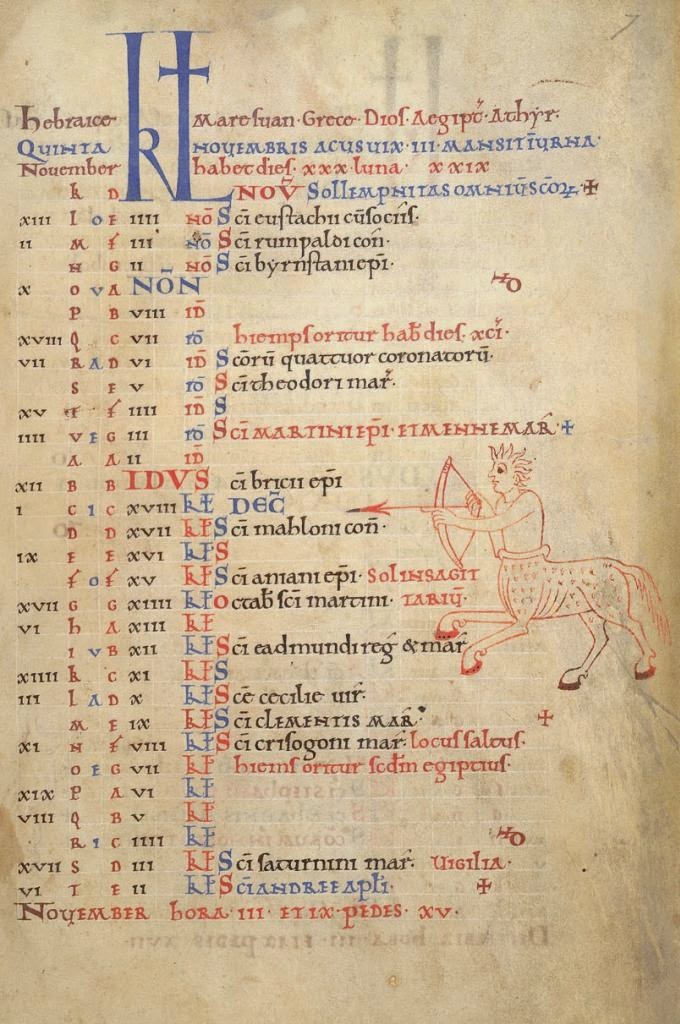
16 November is a feast shared by two medieval English saints: St Margaret of Scotland, one of my favourites, and Oxford's own St Edmund Rich. But before it was their feasts - in fact, before either of those people was born - today was kept in eleventh-century Canterbury as the feast of the ordination of St Alphege. By the middle of the eleventh century the recently-martyred archbishop Alphege already had two perfectly good feasts, in April and in June (his death and translation, respectively), but when you have such a martyr to commemorate you can hardly go overboard, I suppose. Eleventh-century Canterbury, especially during the reign of Edward the Confessor, was not so secure that it could afford to neglect its heavenly patrons. The ordination feast was probably introduced some time between the return of Alphege's body to Canterbury in 1023 and the Norman Conquest; it might be a legacy of Archbishop Æthelnoth the Good, who was responsible for bringing Alphege's relics back to the city he had left in 1011 as the prisoner of a Viking fleet.

In the middle years of the eleventh century, some prayers for a variety of purposes were added to a splendid Psalter which had been made at Canterbury c.1012-23, which is now British Library, Arundel 155. These prayers, some 44 of them, are in Latin with an interlinear Old English gloss. They've been published in two batches, the first group by Ferdinand Holthausen in 'Altenglische Interlinearversionen lateinischer Gebete und Beichten', Anglia 65 (1941), 230-54, and the rest by Jackson J. Campbell in 'Prayers from Ms. Arundel 155' Anglia 81 (1963), 82-177. Among these prayers are two addressed to Canterbury's chief saints, Dunstan and Alphege, and since I'm working on these saints at the moment I've made a translation of these prayers for my own use. I thought for St Alphege's (third) feast-day I'd post my translation of the prayer to the saint, though for the Latin and English text you'll have to search out Campbell's article. This prayer appears in ff. 186-7 of the manuscript, pp. 95-9 in Campbell.

There's one particularly interesting thing to note about this prayer. The name Alphege was naturally left untranslated by the person who made the Old English gloss, but more than a century later another hand came along and updated the prayer to adapt it for Canterbury's newest martyr - every instance of Alphege in the Latin was glossed instead with Thoma, for Thomas Becket. Becket himself apparently endorsed such a parallel between himself and the Anglo-Saxon martyr, when he spoke about Alphege in the sermon he preached on Christmas Day 1170, four days before his own martyrdom: "You already have a martyr here," he said, "Alphege, beloved of God, a true saint. The Divine Mercy will provide another for you; it will not delay." After Thomas' death it would have seemed natural to the monks to link Canterbury's two martyrs by reusing a prayer to the earlier saint. So this is a multi-purpose prayer, and a good example of an Anglo-Saxon manuscript which continued to be in use for a long time after its English glossing would have become archaic.

My thoughts and my desires I make known to you in sorrow and anguish, beloved of God, holy father Alphege. I wish that I could express with mouth or lips how in my inmost heart I pour out prayers to God and to you, and crave merciful pardon from God through your intercession. I know myself to be guilty, gracious father Alphege, and my sins to be more numerous than I can bring to mind or count. To God and to you I confess, therefore, all my life's deeds, which are known to God, and which I cannot conceal or amend, if not for the grace of God and, St Alphege, your interceding mercy.

Holy father Alphege, wicked is my life in the sight of God, stained is my soul with wrongful thoughts and all vices of sins, at the guilt of which my own conscience is offended. Far from me are truth and mercy, if it were not that he, the Saviour of mankind, coming down from the heavens, forbade despair and promised forgiveness to sinners. Long ago he would not suffer delays in the destruction of my weakness, that I fall not into despair. But because it is good to hope in the Lord, and blessed are all they who trust in him, with mind and with body, prostrate before God and you, with humble devotion I crave your merciful protection, holy father Alphege, that, with strength and honour greatly shining forth on earth, through your intervention in heaven you reconcile me, your servant, with God, and redeem me from all sins by your gracious intercession. O noble father Alphege, jewel of bishops and glorious beauty of Christ Church, hear sinful me humbly praying to you, and unceasingly plead for my offences to the blessed Saviour. Holy father Alphege, implore the Lord that he keep far from wretched me sinful lusts and wicked desires, and turn wrongful thoughts away from me, and deliver me from every pollution of the devil and his ministers, that I may become worthily pleasing to God, and fittingly perform this with all love for God and for you.

I pray also through you, holy father Alphege, to all the blessed host of saintly martyrs, who by their steadfast faith and shedding of their blood have achieved heavenly rewards, that supported by the protection of so many saints in this present life I may leave and shun all things which are harmful to the body and the soul, and love Christ entirely with a pure mind, and steadfastly endure in the Lord's commands. And, thus enduring, intercede for me, holy father Alphege, that Christ the Lord may grant that I may deserve to come to eternal bliss, where health, life and joy endure for all those beloved of God, through all ages of ages.

The prayer, Arundel 155 f. 182

I particularly like the last section here, where the petitioner asks for grace to steadfastly perseverare 'endure, continue' in God's commands (þurhwunian is the Old English word), so that he may come to the place where salus, vita et felicitas (hæl, lif and gesælhþ) perseverat, þurhwunaþ, endure for ever.

Here's a flavour of one of this prayer's elegant sentences, first in Latin:

Sed quia bonum est sperare in domino et beati omnis qui confidunt in illum, mente et corpore, et domino et tibi prostratus supplici devotione piam paternitatem tuam sancte pater...

And in Old English (bearing in mind it's a gloss, so the word order is determined by the Latin):

ac forþi god ys hihtan on drihtan, 7 eadige ealle þa þe truwiaþ on hine, mid geþance 7 mid lichaman, 7 gode 7 þe nyþerastreht mid eadmodre estfulnesse milde mundbyrde þine sancte pater...

Calendar for November in Arundel 155, f. 7, showing the feast of the ordination of St Alphege

By way of comparison, this is the prayer to St Alphege with which Osbern concludes his Life of the saint.

Alphege, great soldier of a great King, who washed your robe in the blood of Almighty God, accept the prayers of the sons who cry to you, and by your gracious intercession raise up those whom you have honoured by your holy Passion. Made strong by divine assistance, you overcame the prince of death; father, strengthen us against him, and help us to vanquish him. You had mercy on those who stoned you; have mercy on those who pray to you, that the fury of those who rave may not gain more than the devotion of those who love. Do not let your servants know the gates of death and hell, but bring them to the gates of Paradise through the power given to you by the Saviour, who lives and reigns together with the eternal Father and co-eternal Spirit, the one, only, true God, through endless ages of ages. Amen.

Friday, 7 November 2014

'After that comes Winter's Day'


I'm sorry to break this to you, but it's now officially winter. At least, it is according to the Old English calendar poem The Menologium, which calls 7 November 'winter's day' - the first day of winter:

And þy ylcan dæge ealra we healdað
sancta symbel þara þe sið oððe ær
worhtan in worulde willan drihtnes.
Syþþan wintres dæg wide gangeð
on syx nihtum, sigelbeortne genimð
hærfest mid herige hrimes and snawes,
forste gefeterad, be frean hæse,
þæt us wunian ne moton wangas grene,
foldan frætuwe.

And on the same day [November 1] we keep
the feast of All Saints, of those who recently or long ago
worked in the world the will of the Lord.
After that comes Winter’s Day, far and wide,
after six nights, and seizes sun-bright autumn
with its army of ice and snow,
fettered with frost by the Lord's command,
so that the green fields may no longer stay with us,
the ornaments of the earth.

The phrase 'Winter's Day' doesn't occur elsewhere with this precise meaning, but November 7 is dated as the first day of winter by the best Anglo-Saxon authorities on the calendar: Bede in his De Temporum Ratione and Byrhtferth in his Enchiridion. According to their reckoning winter has 92 days and runs from 7 November to 6 February, which means that midwinter falls around the time of the solstice - as you would expect, the turn of the year occurs at the midpoint of the season. (In recent years it has become popular to say that winter begins on the winter solstice; Bede would not be impressed...) There are of course lots of ways of dating such changes, and early medieval practice varied; but Bede took his dating from Roman authorities and explored its theological significance, and in this, as in many other matters, his opinion was very influential. As a result, many later Anglo-Saxon calendars mark the beginning of spring, summer, autumn and winter on 7 February, 9 May, 7 August and 7 November. These are cross-quarter days, which fall halfway between the solstices and equinoxes.

In its description of 'Winter's Day' the Menologium is following in this learned, scientific tradition, but it's also drawing on a conventional topos of Old English poetry: the threat of winter. This is a poem which finds beauty in almost everything about the turning year; in its formulaic phrases, every month is ‘ornamented’ or ‘adorned’ or ‘distinguished’ by the features and feasts it contains, and in past posts on this poem we’ve seen the exuberance of spring, the brightness of summer, the plenty of autumn. But there’s no such lingering on the beauty of winter; all the beauty belongs to what's lost when winter takes hold. We have a last glimpse of the loveliness of the abundant harvest, sigelbeortne hærfest, 'sun-bright autumn'. Then winter seizes it (the verb is a violent one, genimð ‘plucks, snatches’) with its army of frost and snow, and captures the earth for another year. Winter comes in like an invading warrior and puts autumn in chains, and the green fields which decorate the earth are permitted to stay with us no longer. There's a melancholy contrast between the two similar-sounding words frætuwe and gefeterad – between the green summer fields adorned (‘fretted’) with beauty, and the winter fetters of frost.

11th-century calendar from Christ Church, Canterbury (BL Arundel 155, f.7) 
with the beginning of winter marked on 7 November

This idea of winter imprisoning and chaining the earth will be familiar to anyone who's read a little Old English poetry. There are many, many examples of winter as danger and sorrow: The Seafarer lamenting his cold feet and his burning heart as he sails on the icy ocean, the speaker in The Wife's Lament imagining her lover alone and grieving beneath a storm-dashed cliff, Weland in chains in Deor suffering 'wintercealde wræce', 'winter-cold exile'. But perhaps the most famous - and my favourite - instance is The Wanderer, in which an exile, mourning the loss of home, lord and friends, is trapped in a winter which is his own grief:

Oft ic sceolde ana uhtna gehwylce
mine ceare cwiþan. Nis nu cwicra nan
þe ic him modsefan minne durre
sweotule asecgan. Ic to soþe wat
þæt biþ in eorle indryhten þeaw,
þæt he his ferðlocan fæste binde,
healde his hordcofan, hycge swa he wille.
Ne mæg werig mod wyrde wiðstondan,
ne se hreo hyge helpe gefremman.
Forðon domgeorne dreorigne oft
in hyra breostcofan bindað fæste;
swa ic modsefan minne sceolde,
oft earmcearig, eðle bidæled,
freomægum feor, feterum sælan,
siþþan geara iu goldwine minne
hrusan heolstre biwrah, ond ic hean þonan
wod wintercearig ofer waþema gebind...
Wat se þe cunnað, hu sliþen bið sorg to geferan,
þam þe him lyt hafað leofra geholena.
Warað hine wræclast, nales wunden gold,
ferðloca freorig, nalæs foldan blæd...

Often I must alone, every day before dawn,
lament my sorrow. There is now none living
to whom I dare openly speak
the thoughts of my mind. I truly know
that it is a noble virtue among warriors
for a man to bind his spirit-chest fast,
conceal his heart, whatever he may think.
The weary mind cannot withstand fate,
nor the troubled heart provide help.
And so those eager for glory often
bind fast sorrowful thoughts in their breasts;
so I have had to keep my mind –
often wretched, deprived of homeland,
far from kinsmen – fastened in fetters,
since long ago I buried my lord
in the darkness of the earth, and I from there
journeyed, winter-sorrowful, over the binding waves...
He who has experienced it knows
how cruel sorrow is as a companion
for him who has few beloved friends.
The path of exile holds him, not twisted gold;
a frozen spirit, not the glory of the earth.

In this poem winter infects you, it gets into your heart: the speaker describes himself as wintercearig, 'winter-sorrowful', perhaps 'as desolate as winter', and he has a 'frozen spirit', ferðloca freorig. This is a painful, claustrophobic kind of enclosure; the earth is trapped beneath its winter covering like the aching heart concealed in the grieving warrior’s breast, which strains at its enforced silence. But this is not only a personal but a universal sorrow, the fate of all human society, as if the future of the world could be summed up in one phrase: winter's coming.

Ongietan sceal gleaw hæle hu gæstlic bið,
þonne ealre þisse worulde wela weste stondeð,
swa nu missenlice geond þisne middangeard
winde biwaune weallas stondaþ,
hrime bihrorene, hryðge þa ederas.
Eorlas fornoman asca þryþe,

wæpen wælgifru, wyrd seo mære,
ond þas stanhleoþu stormas cnyssað,
hrið hreosende hrusan bindeð,
wintres woma, þonne won cymeð,
nipeð nihtscua, norþan onsendeð
hreo hæglfare hæleþum on andan.
Eall is earfoðlic eorþan rice,
onwendeð wyrda gesceaft weoruld under heofonum.
Her bið feoh læne, her bið freond læne,
her bið mon læne, her bið mæg læne,
eal þis eorþan gesteal idel weorþeð.


The wise hero must perceive how terrible it will be
when all this world's wealth lies waste,
as now in various places throughout this earth
walls stand blown by the wind,
covered with frost, the buildings snow-swept...
The warriors were taken away by the power of spears,
weapons greedy for slaughter, fate the famous;
and storms batter those rocky cliffs,
snow falling fetters the earth,
the tumult of winter. Then dark comes,
night-shadows deepen; from the north comes
a fierce hailstorm hostile to men.
All is full of hardship in this earthly realm,
the course of events changes the world under the heavens.
Here wealth is fleeting, here friend is fleeting,
here man is fleeting, here kinsman is fleeting,
all the foundation of this world turns to waste.


Ac forhwon fealleð se snaw, foldan behydeð,
bewrihð wyrta cið, wæstmas getigeð,
geðyð hie and geðreatað, ðæt hie ðrage beoð
cealde geclungne?

But why does snow fall, cover the ground,
conceal the shoots of plants, bind up fruits,
crush and repress them, so that they are for a time
shrivelled with cold?

So asks the pagan prince Saturn in The Dialogue of Solomon and Saturn, as he seeks answers from Solomon about the nature of the world; but the answer wise Solomon would have given to this question is lost (on a missing leaf in the manuscript). So we don't know.

But another poem, Maxims I, has a promise of something better:

Forst sceal freosan, fyr wudu meltan,
eorðe growan, is brycgian,
wæter helm wegan, wundrum lucan
eorðan ciðas. An sceal onbindan
forstes fetera, felamihtig God;
winter sceal geweorpan, weder eft cuman,
sumor swegle hat.

Frost must freeze, fire burn up wood,
the earth grow, ice form bridges,
water wear a covering, wondrously locking up
shoots in the earth. One alone shall unbind
the frost’s fetters: God most mighty.
Winter must turn, good weather come again,
summer bright and hot.

This is a more positive image of winter: it not only promises that the season will end, will turn again as everything in the year turns, but it actually finds something marvellous in winter itself, in the 'bridges' miraculously formed by the ice. 'Water wears a covering' is like the beginning of a riddle - and in fact there is a one-line riddle in the Exeter Book which reads:

Wundor wearð on wege; wæter wearð to bane.
There was a wonder on the waves: water turned to bone.

'Ice' seems the most likely solution; winter has its wonders, too. And Maxims I asserts that, inexplicable as may be the oppression of winter and the sorrow of human life, God has power to unlock the chains; just as in Beowulf, when the monster's blood melts the hero's sword,

þæt wæs wundra sum,
þæt hit eal gemealt ise gelicost,
ðonne forstes bend Fæder onlæteð,
onwindeð wælrapas, se geweald hafað
sæla ond mæla.


That was a great wonder:
it all melted, just like ice
when the Father loosens the bonds of frost,
unwinds the water's chains, he who has power
over times and seasons.

11th-century calendar from Winchester, 
noting the beginning of winter on 7 November (BL Arundel 60, f. 7)

I could go on listing examples all day, but that's probably enough for now to welcome winter. I'm aware that many of my readers live in more fortunate climates, where it's not winter yet (or where summer is just beginning), but here in the south of England it does suddenly feel like winter: a few unusually warm days at the end of October were suddenly laid waste by cold and fog, though not yet by ice and snow. So I'm happy to agree with the Anglo-Saxon calendars that this really is the beginning of winter; in this respect, as in many others, you can't wrong following Bede. It's Bede, of course, who in the voice of a counsellor to King Edwin gives us perhaps the most famous use of winter in Anglo-Saxon literature, which I quoted here recently but will unashamedly quote again, in the Old English translation:

Þyslic me is gesewen, þu cyning, þis andwearde lif manna on eorðan, to wiðmetenesse þære tide þe us uncuð is, swylc swa þu æt swæsendum sitte mid þinum ealdormannum 7 þegnum on wintertide, 7 sie fyr onælæd 7 þin heall gewyrmed, 7 hit rine 7 sniwe 7 styrme ute; cume an spearwa 7 hrædlice þæt hus þurhfleo, cume þurh oþre duru in, þurh oþre ut gewite. Hwæt he on þa tid, þe he inne bið, ne bið hrinen mid þy storme þæs wintres; ac þæt bið an eagan bryhtm 7 þæt læsste fæc, ac he sona of wintra on þone winter eft cymeð. Swa þonne þis monna lif to medmiclum fæce ætyweð; hwæt þær foregange, oððe hwæt þær æfterfylige, we ne cunnun.

"O king, it seems to me that this present life of man on earth, in comparison to that time which is unknown to us, is as if you were sitting at a feast in the winter with your ealdormen and thegns, and a fire was kindled and the hall warmed, while it rained and snowed and stormed outside. A sparrow came in, and swiftly flew through the hall; it came in at one door, and went out at the other. Now during the time when he is inside, he is not touched by the winter's storms; but that is the twinkling of an eye and the briefest of moments, and at once he comes again from winter into winter. In such a way the life of man appears for a brief moment; what comes before, and what will follow after, we do not know."

Dark and cold the winter may be, but this vignette also conjures up one of its best features: feasting in good company, 'the fire kindled and the hall warmed, while it rained and stormed and snowed outside'. Something to look forward to in the 92 days ahead.


This image is from BL Harley 5431 (f.38v), a copy of the Rule of St Benedict made in Canterbury at the end of the tenth century. St Benedict's Rule divides the monastic year into two seasons, summer and winter, which had their different timetables and schedules of prayer; winter began in November, and this section describes the schedule hiemis tempore 'in the time of winter'. Its big initial H is formed from spiky lines which always look to me like brambles, or like bare branches black against the winter sky.

Sunday, 2 November 2014

A Selection of Saints' Legends

One day. One day, I will hear a sermon on All Saints' Day which doesn't start off by making a joke about how silly medieval saints' legends are. In Oxford, of all places, you might think a preacher could come up with something a bit more interesting to say on this feast than 'aren't there lots of silly stories about medieval saints? Just as well we know better!' I'd like to think that somewhere out there in the world there must be a member of the clergy who has actually read a medieval saint's legend, or is at least prepared to expend some imagination to understand why saints in the Middle Ages attracted so much love and devotion, such a wealth of literary, artistic, intellectual and emotional investment, and the kind of creativity which made their legends lively, funny and memorable.

Well, not today. This morning's sermon was a classic of the genre, and it was annoying, though not particularly surprising. To do something productive with my annoyance, here are a few links to stories from some of my favourite medieval saints' legends. I'm using the word 'medieval' here in its technical sense and not, as today's preacher was, as a synonym for 'primitive' or 'stupid'.

St Guthlac finds his vocation while musing on his ancestors.

St Ethelburga's nuns are joyfully reunited with her in death.

St Oda saves the day at the Battle of Brunanburh by reforging the king's broken sword.

St Anselm recalls his first childhood vision of God, his youthful anxieties about his vocation, and his longing to escape the busy world and live in peace.

St Wihtburh builds a sandcastle, in a story which is a little silly, but also very sweet.

St Dunstan nips the devil by the nose. A legend which is comic because it's meant to be comic, not because people in the Middle Ages were idiots.

St Gilbert of Sempringham's friends mistake him for a dancer because he's up and down in prayer all night.

St Wulfstan of Worcester in tender and in playful mood.

St Edmund sacrifices himself to save his people.

St Eormenhild defends a little boy who has been cruelly beaten.

St Alphege stands fast in the face of a Viking army.

Edward the Confessor heals a blind man.

St Margaret of Scotland makes the best of life in exile.

Earl Waltheof, humiliated on earth, is honoured as a saint in heaven.

St Etheldreda defends her monks from unjust Norman rulers.

Gundulf of Rochester creeps away to a cowshed to pray in peace.

Julian of Norwich is comforted by St John of Beverley, her friendly 'neighbour', a homely saint glorified by God 'to made us glad and merry in love'.

This is a small selection, limited by nothing more scientific than my own interests - these stories are all from English sources (though the saints include people of Italian, Norman and Danish heritage), and most come from the Anglo-Saxon period and the eleventh and twelfth centuries. Are they all true? No. Maybe none of them are true. It doesn't matter. Though some of them are intentionally or unintentionally funny - more often intentionally, I think - they encompass a wide range of human experience: injustices small and great; battles to save a kingdom, extraordinary courage in time of disaster, and children playing on the seashore; friends teasing each other, expressing their love, and sharing personal memories; bullied children, young people worrying about their futures, old men trying to find peace in the midst of their busy lives; generosity, wisdom, humour, grief, illness, joy, love. Are there absurdities in the legends of medieval saints? Yes, of course; I wouldn't claim otherwise. But there is much, much more of beauty, value and truth.

Saturday, 1 November 2014

'þisne dæg eallum halgum': An Anglo-Saxon Sermon for All Hallows

Litany of saints in an Anglo-Saxon manuscript (BL Arundel 60, f. 131)
Holy teachers have instructed that the faithful church should celebrate and worthily keep this day to the honour of All Saints, because they could not appoint a feast for each of them separately, nor are all their names known to any man in this life; as John the Evangelist wrote in his divine vision, saying, "I saw so great a multitude as no man may number, of all nations and of every tribe, standing before the throne of God, all dressed in white garments, holding palm-branches in their hands, and they sang with a loud voice, Salvation be to our God who sits upon his throne. And all the angels stood around his throne, and bowed down to God, saying, To our God be blessing and brightness, wisdom and thanksgiving, honour and strength, for ever and ever. Amen."
This is the opening of a sermon for All Saints' Day, written in the tenth century by the Anglo-Saxon homilist Ælfric. Here it is in Old English (the text is from here):
Halige lareowas ræddon þæt seo geleaffulle gelaðung þisne dæg eallum halgum to wurþmynte mærsige and arwurðlice freolsige; forðan ðe hi ne mihton heora ælcum synderlice freolstide gesettan, ne nanum menn on andweardum life nis heora eallra nama cuð, swa swa Iohannes se Godspellere on his gastlican gesihðe awrat, þus cweðende, "Ic geseah swa micele menigu, swa nan man geryman ne mæg, of eallum ðeodum and of ælcere mægðe, standende ætforan Godes þrymsetle, ealle mid hwitum gyrlum gescrydde, healdende palmtwigu on heora handum, and sungon mid hluddre stemne, Sy hælu urum Gode þe sitt ofer his þrymsetle. And ealle englas stodon on ymbhwyrfte his ðrymsetles, and aluton to Gode, þus cweðende, Sy urum Gode bletsung and beorhtnys, wisdom and þancung, wurðmynt and strengð, on ealra worulda woruld. Amen."

þisne dæg eallum halgum to wurþmynte mærsige... I couldn't resist calling this post 'a sermon for All Hallows', since that's what Ælfric himself calls it. When he talks about consecrating this day to the honour of eallum halgum 'all hallows' it's hard to tell whether that's meant to be the name of the feast or simply a description, but elsewhere he calls it ealra halgena mæssedæg, and other versions like ealra haligra tid ('All Hallows' tide') are also recorded. The name and phrase 'All Saints' came late into English, not being recorded, according to the OED, before the end of the fourteenth century; but the Old English Menologium calls today ealra sancta symbel 'the feast of all saints':

And þy ylcan dæge ealra we healdað
sancta symbel þara þe sið oððe ær
worhtan in worulde willan drihtnes.


And on the same day we keep
the feast of all saints, of those who early or late [i.e. at any time]
worked in the world the will of the Lord.

In his sermon Ælfric goes on to describe the different categories of saints, beginning with angels and moving on to the prophets, apostles, martyrs, confessors, desert fathers, and anything else you can think of. The whole text can be found at this link, but here are some extracts I particularly like.

Godes halgan sind englas and menn. Englas sind gastas butan lichaman. Þa gesceop se Ælmihtiga Wealdend on micelre fægernysse, him sylfum to lofe, and to wuldre and wurðmynte his mægenþrymme on ecnysse... Nu is þes dæg þisum englum arwurðlice gehalgod, and eac þam halgum mannum, þe þurh miccle geðincða fram frymðe middangeardes Gode geþugon. Of þisum wæron ærest heahfæderas, eawfæste and wuldorfulle weras on heora life, witegena fæderas, þæra gemynd ne bið forgiten, and heora nama þurhwunað on ecnysse; forðan ðe hi wæron Gode gecweme þurh geleafan, and rihtwisnysse, and gehyrsumnysse. Þisum fyligð þæra witegena gecorennys: hi wæron Godes gesprecan, and þam he æteowde his digelnysse, and hi onlihte mid gife þæs Halgan Gastes, swa þæt hi wiston þa towerdan ðing, and mid witigendlicere gyddunge bododon. Witodlice þa gecorenan witegan mid manegum tacnum and forebicnungum on heora life scinende wæron. Hi gehældon manna untrumnysse, and deaddra manna lic to life arærdon...

Æfter þam apostolican werode we wurðiað þone gefæstan heap Godes cyðera, þe ðurh mislice tintrega Cristes ðrowunge werlice geefenlæhton, and ðurh martyrdom þæt upplice rice geferdon. Sume hi wæron mid wæpnum ofslagene, sume on lige forswælede, oðre mid swipum ofbeatene, oþre mid stengum þurhðyde, sume on hengene gecwylmede, sume on widdre sæ besencte, oðre cuce behylde, oðre mid isenum clawum totorene, sume mid stanum ofhrorene, sume mid winterlicum cyle geswencte, sume mid hungre gecwylmede, sume handum and fotum forcorfene, folce to wæfersyne, for geleafan and halgum naman Hælendes Cristes. Þas sind þa sigefæstan Godes frynd, þe ðæra forscyldgodra ealdormanna hæsa forsawon, and nu hi sind gewuldor-beagode mid sige heora þrowunga on ecere myrhðe. Hi mihton beon lichamlice acwealde, ac hi ne mihton fram Gode þurh nane tintregunga beon gebigede. Heora hiht wæs mid undeadlicnysse afylled, þeah ðe hi ætforan mannum getintregode wæron. Hi wæron sceortlice gedrehte, and langlice gefrefrode; forðan ðe God heora afandode swa swa gold on ofne, and he afunde hi him wyrðe, and swa swa halige offrunga, hi underfeng to his heofonlican rice.

Æfter ablunnenre ehtnysse reðra cynega and ealdormanna, on siblicere drohtnunge Godes gelaðunge, wæron halige sacerdas Gode ðeonde, þa mid soðre lare and mid halgum gebysnungum folces menn to Gode symle gebígdon. Heora mod wæs hluttor, and mid clænnysse afylled, and hi mid clænum handum Gode Ælmihtigum æt his weofode ðenodon, mærsigende þa halgan gerynu Cristes lichaman and his blodes. Eac hi offrodon hi sylfe Gode liflice onsægednysse butan womme, oþþe gemencgednysse þwyrlices weorces. Hi befæston Godes lare heora underþeoddum, to unateorigendlicum gafele, and heora mod mid þreatunge, and bene, and micelre gymene to lifes wege gebigdon, and for nanum woruldlicum ege Godes riht ne forsuwodon; and ðeah ðe hi swurdes ecge ne gefreddon, þeah ðurh heora lifes geearnunga hi ne beoð martyrdomes bedælede, forðan þe martyrdom bið gefremmed na on blodes gyte anum, ac eac swylce on synna forhæfednysse, and on biggenge Godes beboda...

Eala ðu, eadige Godes cennestre, symle mæden Maria, tempel ðæs Halgan Gastes, mæden ær geeacnunge, mæden on geeacnunge, mæden æfter geeacnunge, micel is ðin mærð on ðisum freolsdæge betwux þam foresædum halgum; forðan ðe ðurh þine clænan cenninge him eallum becom halignyss and ða heofonlican geðincðu. We sprecað be ðære heofonlican cwene endebyrdlice æfter wifhade, þeahhwæðere eal seo geleaffulle gelaðung getreowfullice be hire singð, þæt heo is geuferod and ahafen ofer engla werod to þam wuldorfullan heahsetle. Nis be nanum oðrum halgan gecweden, þæt heora ænig ofer engla werod ahafen sy, buton be Marian anre. Heo æteowde mid hire gebysnungum þæt heofonlice lif on eorðan, forðan þe mægðhad is ealra mægna cwen and gefera heofonlicra engla. Ðyses mædenes gebysnungum and fotswaðum fyligde ungerim heap mægðhades manna on clænnysse þurhwunigende, forlætenum giftum, to ðam heofonlicum brydguman Criste geþeodende mid anrædum mode, and haligre drohtnunge, and sidefullum gyrlan, to þan swiðe, þæt heora for wel menige for mæigðhade martyrdom geðrowodon, and swa mid twyfealdum sige to heofonlicum eardung-stowum wuldorfulle becomon.

Eallum ðisum foresædum halgum, þæt is, englum and Godes gecorenum mannum, is þyses dæges wurðmynt gemærsod on geleaffulre gelaðunge, him to wurðmynte and us to fultume, þæt we ðurh heora þingrædene him geferlæhte beon moton. Þæs us getiðige se mildheorta Drihten, þe hi ealle and us mid his deorwurðan blode fram deofles hæftnedum alysde. We sceolon on ðyssere mærlican freolstide mid halgum gebedum and lofsangum us geinnian, swa hwæt swa we on oðrum freols-dagum ealles geares ymbrynes, þurh mennisce tyddernysse hwonlicor gefyldon, and carfullice hogian þæt we to ðære ecan freolstide becumon.

Crowned saints (BL Add MS 49598, f.1v)
God's saints are angels and human beings. Angels are spirits without body; the Almighty Ruler created them in great beauty, for his own praise and to the honour and glory of his majesty in eternity... Now this day is worthily consecrated to these angels, and also to the holy people who through great virtues have flourished for God from the beginning of the world. First of these were the patriarchs, righteous and glorious men in their lives, the fathers of the prophets, whose memory shall not be forgotten, and their names shall last for ever, because they were pleasing to God through faith, and righteousness, and obedience. These were followed by the chosen company of prophets: they spoke with God, and to them he made known his secrets, and enlightened them with the grace of the Holy Ghost, so that they knew the things to come and proclaimed them in prophetic song. Truly the chosen prophets by many signs and tokens shone forth in their lives. They healed the sick, and the bodies of the dead they raised to life...

After the company of the apostles we honour the steadfast band of God's martyrs, who through various torments bravely imitated the passion of Christ, and through martyrdom passed to the kingdom on high. Some of them were slain with weapons, some burned by fire, others beaten with whips, others pierced with stakes, some slain on a cross, some sunk in the wide sea, others flayed alive, others torn with iron claws, some overwhelmed with stones, some afflicted by the winter's cold, some slain by hunger, some with hands and feet cut off, as a spectacle to people, for their faith and the holy name of Jesus Christ. These are the victorious friends of God, who scorned the commands of wicked rulers, and are now crowned with glory by the triumph of their sufferings in eternal joy. They could be killed in body, but they could not by any torments be turned away from God. Their hope was filled with immortality, though before men they were tormented. They were afflicted for a short time, and comforted for a long time; because God tested them as gold in a furnace, and he found them worthy of him, and as holy offerings received them into his heavenly kingdom.
This list of torments is, I take it, an elaboration on Hebrews 11.32-12.2 - but I can't help noting that the addition of martyrs 'afflicted by the winter's cold' (mid winterlicum cyle geswencte) is very characteristically Anglo-Saxon! Such a list can be compared to the 'fates of men' trope in Old English wisdom poetry, which is the subject of a whole poem as well as in briefer passages in The Wanderer and other poems.

A group of saints (BL Add MS 49598, f.1)

After the persecution of the cruel kings and rulers had ceased, in the peaceful condition of God's church, there were holy priests flourishing in God, who with true teaching and holy examples constantly guided people to God. Their minds were spotless and filled with purity, and with pure hands they served God Almighty at his altar, celebrating the holy mystery of Christ's body and his blood. They likewise offered themselves as a living sacrifice to God, without blemish or taint of wicked deeds. They established God's teaching in their followers as an unfailing treasure, and with chastisement and prayer and great care guided them in the way of life, and did not remain silent about God's law for any fear of the world. And though they did not feel the sword's edge, yet because of the merits of their lives they are not deprived of martyrdom; for martyrdom is not accomplished by bloodshed alone, but also by refraining from sins and keeping God's commandments...

Female saints (BL Add MS 49598, f.2)
O thou, blessed mother of God, ever virgin Mary, temple of the Holy Ghost, virgin before conceiving, virgin in conceiving, virgin after conceiving, great is your glory in this feast among the saints of whom we speak! For through your pure child-bearing holiness and heavenly honour came to them all. We speak about the queen of heaven last because she is a woman, although all the faithful church confidently sing of her that she is exalted and raised up above the hosts of angels to the throne of glory. Of none of the other saints is it said that any of them are raised up above the hosts of angels, except for Mary alone. She made visible by her example the life of heaven on earth, because chastity is queen of all virtues and companion of the heavenly angels. This virgin's example and footsteps were followed by an uncountable number of celibate people living in purity, renouncing marriage, uniting themselves to the heavenly bridegroom Christ with a steadfast mind and holy conduct and the clothing of virtue, so much so that many of them suffered martyrdom to preserve their virginity, and so with a twofold virtue gloriously came to the heavenly dwelling-place.

To the honour of all these aforesaid saints, that is, angels and God's chosen people, this day is celebrated in the faithful church, for their honour and for our support, so that through their intercession we may be united with them. May the merciful Lord grant us this, who with his precious blood redeemed them all and us from the captivity of the devil. On this glorious festival we should complete, with holy prayers and hymns, whatever we have performed less perfectly through human weakness at other festivals through the course of the year; and seriously reflect, that we may come to the eternal festival.

There is some lovely phrasing in this final paragraph, carefully balancing the two groups of us and them (the saints): this festival is appointed him to wurðmynte and us to fultume, þæt we ðurh heora þingrædene him geferlæhte beon moton 'for their honour and for our support, so that through their intercession we may be united with them'. The word I've translated as 'united' is geferlæhte, which has at its root the noun gefera 'companion, friend'; the prayer is that we should be brought into their happy company, led to the 'eternal festival' by the earthly festival of All Hallows.

St Peter welcomes the dead into heaven (BL Stowe 944, f. 7)