Monday, 13 July 2015
Public Engagement and Personal Enthusiasm, St Mildred and Me
13 July is the feast of St Mildred, eighth-century abbess of the Kentish monastery of Minster-in-Thanet. Mildred is a fairly minor Anglo-Saxon saint, but she's of particular interest to me for various reasons. I wrote about her story here and about the legends surrounding the foundation of her abbey here; if you want to read about Mildred I recommend you follow those links, because today's will be a more personal post - just a ramble, really, about some things I've recently been thinking about.
My interest in Mildred is part scholarly and part personal, and it's not entirely possible to separate the two. First the scholarly. In the eleventh century Mildred's relics and the lands of her former abbey in Thanet came into the possession of St Augustine's, Canterbury (by grant of Cnut, according to St Augustine's tradition); this meant that at the end of the eleventh century the prolific hagiographer Goscelin, among various commissions he undertook for St Augustine's, wrote several works dealing with Mildred. Mildred's relics and cult thus played a role in Cnut's relationship with the English church and in post-Conquest interpretations of the Anglo-Saxon past, two of the subjects I'm most interested in at the moment.
As for the personal: I was born in Thanet, one of the few places where Mildred is still commemorated today. In Mildred's time Thanet was an island close to the north-east tip of Kent; the channel which separated it from the mainland has since silted up, but it's still known as the Isle of Thanet. It's chiefly famous for having once been full of seaside resorts, then becoming very run-down, and now enjoying a bit of a cultural renaissance. When I was growing up there it was still in the 'very run-down' stage of that process, and despite the renaissance it's still often treated as a joke, whose working-class inhabitants can be freely mocked in national newspapers. I'm proud of being from Thanet, but I'm conscious that I don't speak with a Thanet accent, and that if I did, I wouldn't have got very far at Oxford. But long before that story of boom-and-bust-and-boom, Thanet had a rich medieval history, especially in the early Anglo-Saxon period. Bede tells us that St Augustine landed on the coast of Thanet when he came to convert the kingdom of Kent, and the foundation of a royal monastery at Minster followed in the seventh century. St Mildred, although herself a rather shadowy figure, is a part of all this. My first school was dedicated to St Mildred - not that I particularly noticed it at the time! - and later, as a graduate student, I spent two years at Lincoln College in Oxford, which was built (as I learned at the end of my time there) on the site of a medieval church dedicated to St Mildred. I graduated with my doctorate on St Mildred's Day, 2013 (entirely by coincidence - it was the only date available). So her home and her name and her day have a range of personal associations for me which have very little to do with Mildred herself.
I can't say how far the personal inspired the scholarly interest, or the other way around - perhaps I was drawn to Mildred because I'm from Thanet, or perhaps studying Mildred has made me more interested in Thanet's Saxon history, which I didn't really know about or think about when I actually lived there. It's probably a bit of both. Who can explain why they're drawn to the subject they study? I suspect more academics than would freely admit it have private, personal reasons for their scholarly interests which wouldn't stand up to professional scrutiny, alongside the more publicly acceptable ones. We are human beings, after all, and are attracted to certain things by influences we ourselves don't necessarily understand. Struggling as I am with work and vocation right now, I sometimes think it would be nice if more people (not just academics) felt free to talk about what draws them to the work they do.
Over the past few months, as people keep asking me to explain why I write an academic blog, I've come to realise that one reason is to convince myself that it's OK to have a personal, emotional attachment to the things I study. It's even OK to talk in the language of enthusiasm, passion and (dare I say it?) love. Like everybody who isn't senior enough to get away with looking unprofessional, I strictly keep emotional attachment out of my academic work, but I don't feel I have to do that on this blog - and I think the blog is the better for it, and I'm the healthier.
I'm encouraged in this belief by the knowledge that the medieval historians I study generally saw no problem whatsoever in being emotionally attached to their subjects. I like them all the more for it, and when I talk about them to the public, it's that which catches people's attention. As someone whose interests are primarily literary (I'm interested in the stories people tell about history, not in whether those stories are true or not), I find it endearing when medieval historians are biased and parochial and a little bit obsessive - all the things 'monkish writers' used to be criticised for by modern historians of the traditional stamp. Nothing makes me like William of Malmesbury more than his special fondness for Malmesbury's history, the fact that he can't resist being a bit extra interested in Aldhelm and Athelstan and anything connected to his own monastery. I love the thought of Eadmer at the Council of Bari, surrounded by the great and the good of the eleventh-century church but still getting most excited about a minor tidbit of local Canterbury history and the memory of some old monks he knew as a child. And there's something touching about the way Goscelin talks about St Edith of Wilton as if she were a personal friend, and associates her with a lost happy period in his life. These are emotional responses to the past which have little to do with the facts of history, and much to do with each writer's personal associations with a saint and the relationships, identities, or communities they represent for the writer. They're entirely 'unprofessional' reactions, from the best English historians of their day, of a kind which few historians now would admit to in public even if they felt them.
(Is there a little bit of self-conscious display in these accounts of emotional attachment, an attempt to persuade an audience to value the history the writer values? Well, of course, but that doesn't make them any less interesting. All writing is persuasion and self-conscious display - what do you suppose I'm doing right now...)
I think about this question quite often, especially as social media increasingly allows scholars to have a more open approach to displays of personal enthusiasm than is acceptable in a traditional academic environment. (Even if some will still squeak 'Oh no, enthusiasm!') What do we attach ourselves to, and why? These days academics, like many people, are encouraged or forced to live rootless lives, changing jobs often and not developing an attachment to any particular institution. There are few places we have time to know intimately and few communities of which we can become a permanent part. I'm unusual for an early-career academic in that I've been in Oxford for years now, although never in a permanent position or anything like a home - it's been stints of two- or three-year affiliations, while living in different types of rented accommodation (eight places in ten years). Even that precarious form of stability is a black mark against me in the job market (everything's a black mark against you in the job market!); and if I wanted to get another academic job I'd have to be prepared to leave at the drop of a hat, whatever that meant leaving behind.
That's a choice everyone has to make for themselves, of course, and one always has the option to opt out. But I wonder if it grows increasingly hard for people like me to understand what it might be like to count on living in one place your whole life - for instance, what it might be like for a monk or nun to spend his or her entire life attached to one monastery, living its communal life day after day in the physical presence of its saints and former inhabitants. Not that monks and nuns didn't travel, of course - and away from home, home associations pull most strongly. The three writers I mentioned above illustrate this, too: William of Malmesbury travelled around on research trips, Eadmer spent years in exile with St Anselm, and Goscelin, a kind of itinerant hagiographer who worked on commission, could almost be the patron saint of academics on contingent, short-term contracts. And anyway these monks would all have said that no one gets to have a permanent home in this world: Non enim habemus hic manentem civitatem, sed futuram inquirimus, however much we may love the temporary homes we do find in this læne lif. But I think that one reason I am drawn to studying monastic communities is that they offer a rootedness which seems impossible today - at least for people like me. The idea of settling down, finding a home, knowing you can live and work in the same place for decades if you want to - these are things people of my generation are told not to expect or hope for (by people who were able to do just that, of course), and it is difficult, even if we try to believe it's fun and exciting to be adrift in the world. I crave a sense of rootedness and belonging and if I project that feeling of security here on this blog, as people sometimes tell me I do, it's because I'm working hard to find it for myself where circumstances don't provide it for me.
One place I find it is in treasuring the roots I have in a small, unpicturesque island in the most out-of-the-way corner of Kent, and in tracing how disparate elements of my life have accidentally found common ground in an association with St Mildred. Mildred's Thanet looked very different from mine - no seaside resorts in her day - but much would have been the same: the huge skies, the noisy seagulls, the yellow beaches, the white cliffs, the great flat fields stretching out to the sea. Many features of the island were ancient even when Mildred lived in Thanet, from Bronze Age barrows to Roman walls and the very name of the place; they'd grown older still by the time I was born there, 1300 years after Mildred's foot stepped onto Thanet's shore and left its miraculous imprint.
There's no substitute for this kind of intimate connection with a place, and it teaches you things even as you don't realise it. I get most of my knowledge from books, of course, but I've found that one unexpected advantage of talking about my work publicly is that it brings me into contact with people who have that kind of love and knowledge for the places I study. They can correct me or give me hints I couldn't have found otherwise (the third comment on this post is an example I remember fondly). We can go astray in many ways when we get our knowledge only from books, and I've been noting one tiny example of this lately, especially at international conferences: perceptions of distance. To people studying an area by looking at it on a map, things often seem much closer together than they do if you're there – and it's easy to make airy statements about distance which just don't ring true if you know the landscape. I've fallen into this trap myself, and heard others do so when talking about places I know well. I remember reading a journal article once where the argument went something like: 'Canterbury is near London, so monks in Canterbury would have felt a special connection with the saints of St Paul's'. This is a shaky argument for various reasons but what especially pulled me up short was the idea of Canterbury being 'near' London - I mean, of course it is in one sense, on a global scale, and by the standards of US cities, but it certainly doesn't feel so. Now that we in deepest Kent have high-speed trains, you can get between Canterbury and London in less than an hour, but even today I wouldn't say it was 'near' in the way that author meant, such that an inhabitant of Canterbury would feel London's saints to be their own 'local' possessions. Canterbury has enough of its own medieval history to be proud of, I told the author crossly in my head, without piggybacking on London's! (Then I felt silly; but I'd bet you any medieval Canterbury historian would have said the same...) Or, when talking about Mildred's relics, academics sometimes say they were moved from Thanet to 'nearby Canterbury' or 'nearby Lyminge' – Canterbury I'll allow to be 'near' (though it probably felt a bit further away when Thanet was a real island), but try and get from Thanet to Lyminge, even today, even by car, and see whether you would say it was 'nearby'! Thanet is on the very edge of England, closer to France than to London, and on a grey day in January with the mist over the sea it feels like the edge of the world. Even the other end of Kent is very far away.
Did it feel the same 1300 years ago? I can't know for sure, but I can be a bit more confident than if I had never known the place; and that only makes me more aware of how much I don't know about other places, other experiences, other lives than the one I have lived, and how much there is to learn. So I'm not saying any of this to nitpick anyone else's work; obviously people don't and shouldn't only work on subjects of which they have personal experience, and I know I've made similar errors when talking about areas I'm not familiar with. (I'd written quite a bit in my thesis about Ely and the Fens before I visited the area, and as soon as I got there I felt I hadn't really understood the place at all.) But these are things we can learn from the places themselves and the people who live in them, and it does pay to be mindful about such things. If you don't walk the landscape and you don't live the life, you should at least be prepared to listen to people who do. It's about perception and perspective, not maps and facts - and this applies to more intangible matters as well. I gave a public lecture earlier this year which was partly about Mildred, and in the audience were two nuns from her own monastery, Minster-in-Thanet. This was incredibly humbling. I was supposedly the 'expert' in the room, and the nuns were very friendly and enthusiastic and said I'd told them things about Mildred that they hadn't known; but although in some ways they knew less about Mildred than I do, in other ways they knew much, much more – living in her monastery (on the same spot and in some of the very same buildings) and living the life she lived, they knew her in a way I could never fully understand.
Perhaps that's a rather unusual example, but I ponder this sometimes when thinking about the difference between the lives I study and the life I live, and about public engagement. Being prepared to listen to other people's experiences is one of the many ways in which public engagement can enrich academic study - and here I come back to my medieval historians. We could think of medieval saints' cults as a form of public engagement, in which an educated person with a scholarly interest in a particular historical figure - but probably also a personal investment in promoting that figure to the public - attempts to mediate a historical story in a way attractive to a whole range of audiences, talking about the past to people who might know very little about history, and who have their own intensely personal reasons for being interested in the subject. (Because they want a cure, or a local hero, or to prove someone wrong, or they don't like the monastery, or whatever it might be.) Accounts of saints' miracles are very rich social pictures, offering glimpses at many kinds of human experience - from sick little children with their worried parents to vulnerable elderly people with carers at the end of their tether, they tell stories of the ill and the dying, the proud and the frightened, the faithful and the sceptical, from all classes. Read enough of these and you see the generic patterns, but they are also at the same time unique, local, and specific. These narratives are scattered with place-names which would mean a great deal to a local audience and nothing to one further afield. For example, here's a list of some of the people whose stories are told in the first few Miracles of St Waltheof, which I happen to have to hand: a blind man from Luddington; a sick woman from Sleaford; a little girl from Stretton; a mentally disturbed boy from Whaplode; a blind woman from Skirbeck; and so on. The monk of Crowland Abbey making a note of Waltheof's miracles recorded the names and homes and afflictions of all these people who had come to seek a cure from the saint, and the list is geographically restricted (those places are mostly in Lincolnshire and the surrounding counties) but diverse in every other way. It's easy to think of scholarly monks as proto-academics - but if this was the range of people with whom a medieval English monk was interacting, was his experience really more restricted and narrow than life in academia, where scholars principally get together with other scholars from similar backgrounds and panic at the idea of talking to the public?
Among all the other things it is, medieval hagiography is local history, and that's one of the things which makes it easy to write about for a popular audience. You'd think nothing would be less accessible to a modern audience than stories of medieval saints (especially since I tell them fairly seriously, not in a 'here are some funny stories about weird miracles' way) - but when I post about such stories they touch people on a personal level, and I find that moving. When I look at the people who respond to my posts about saints here and on Twitter, there's always a strong local element, and it often seems to be people without any other obvious interest in medieval history who will say with most excitement 'oh, a story about my area'! I watch my links spreading through local networks of businesses, schools, churches and enthusiastic individuals: Norfolk networks love the Norfolk saints, Kentish networks seize on the Kentish saints, London networks are proud of the London saints, and so on. Place-names like those in the list above, which don't mean much to me, are to some people a word for 'home', and a part of their own personal history, as Mildred and Thanet are to me. It feels like a privilege to give people the chance to get these little footholds of personal connection to the past.
Such enthusiasm scares some academics, and they frown on anyone who appears to be encouraging it. But that dreaded enthusiasm is a lot closer to the experience of the people who believed in and the people who wrote about medieval saints' histories than the hermetically-sealed world of academia. Academic culture can be so narrow, and we narrow it still further by fostering a homogenous, 'professionalized' environment where 'professional' is defined in prescriptive, class-based, gendered terms which exclude many of the people whose lives and experiences we are supposed to be trying to understand. As I've said many times before, one of the advantages of talking about academic work in public is that the public will talk back - and since 'the public' is not one great mass dumbly waiting for you to pour knowledge down their throats, but comprises millions of individual human beings with a diversity of experiences, thoughts, and opinions, their reactions can immensely enrich academic work. (You'd really think this was so obvious it doesn't need saying, and I'm sorry it does! It's not controversial anywhere except academia, of course; I said something like this on Twitter a few days ago and the only snarky response was, naturally, from a senior male academic. Big surprise there.)
It would be best, of course, if such a diversity of experiences could be represented within academia itself, but as routes into the profession drastically constrict the less possible that seems. As I watch my postdoc friends quietly leaving academia, it seems to me it's not just talent which is lost but that very diversity: those who leave are the people who can't live rootless lives, because they have (and believe it's important to have) children, parents, and partners to think about; or the people who appear less 'professional' by academic standards (too working-class, too female, that kind of thing); or the people who don't come from backgrounds where constant rejection and job instability are things you just shrug off. The more academia becomes the preserve of people who are able - financially, practically or emotionally - to move countries every few years and to support themselves through extended periods of part-time work, the more socially and psychologically narrow a world it will become, the more detached from the wide range of human experience it claims to be able to classify and explain.
That's one reason why it needs to listen to the public, as much as the other way around. That's partly why I'm prepared to 'do history in public' in a personal way, and to talk here about my own experiences and my love for various authors and texts, even though I fear - quite a lot, actually - that it will come across as silly and unprofessional. I admit freely that my attachment to Mildred is utterly irrational, and not a bit diminished by the fact that most of what we know about her is 'just' legend. Even if she had never existed, never been more than a name, that name and her story would still represent a part of my life, a part of me: a connection to my own history, the institutions I've been a member of, the people I knew and loved there. Those things matter to me immeasurably, and they will remain with me whatever happens to my academic career. What I do on this blog (I've recently learned) is considered 'public history', but it doesn't feel that way; it feels like thousands of private histories, which interact and intersect and enrich each other. And mine is one among them.
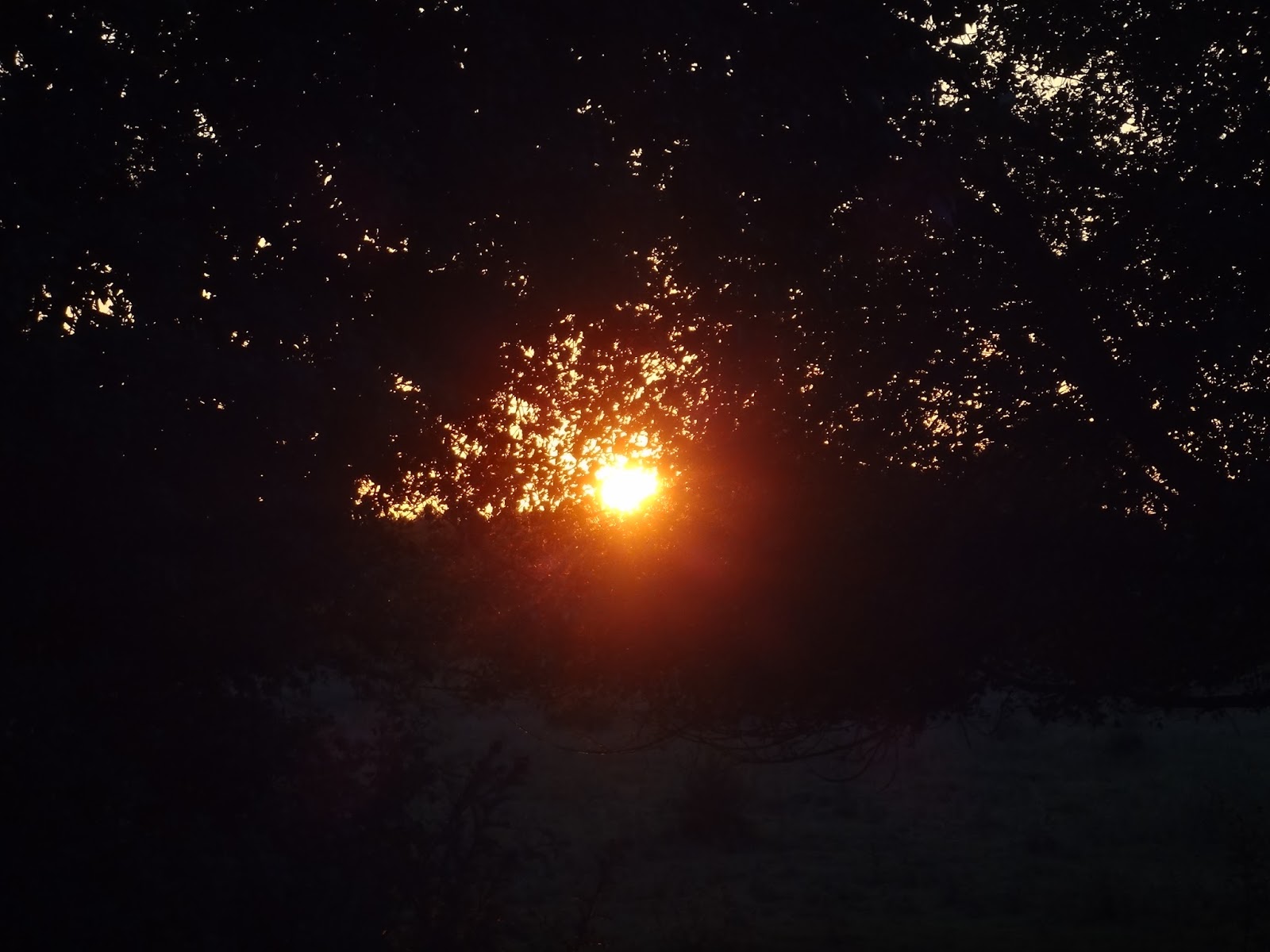
All the pictures in this post are of Thanet's fathomless skies.
Saturday, 4 July 2015
Welcome!
I was amazed and delighted this morning to discover an article about my blog (specifically this post about Ælfric's homily on the death of St Benedict) in the Telegraph. I've been reading Christopher Howse's column since I was a teenager, and it's long been a kind of model for me in how to write clearly, lyrically, and sensitively about the past - so this really was a thrill.
Anyone who has come here today on that recommendation, you're very welcome! Here are some links you might find helpful. This post explains why and how I blog about medieval texts; I do so in the hope of offering a glimpse at the richness and diversity of England's medieval literature and the many ways it can still delight, amuse, teach and guide. More extracts from the writings of the incomparable tenth-century homilist Ælfric can be found under this tag - representing just a tiny fraction of the work of this incredibly prolific, thoughtful and generous teacher and lucid writer of English prose. Here's a collection of links to posts about Anglo-Saxon literature exploring the cycle of the year, and here's more on the stories of medieval saints from Benedict to Dunstan, Edmund, Anselm, Etheldreda, and more. I hope you find something to interest you!
Friday, 3 July 2015
The Danish Conquest, Part 7: Murder at Oxford
Two years ago, I began a series of posts marking - in real time, as far as possible - the 1000th anniversary of the Danish Conquest of England. This was a lengthy struggle, which resulted in the Danish king Cnut driving the English royal family into exile and ruling England from 1016-1035. During those decades England was part of a great pan-Scandinavian empire, but this period in English history is relatively little known, especially by comparison with the Norman Conquest which took place half a century later. I considered some reasons why that might be so here. This series of posts is an attempt to trace the long and fascinating story of battles, invasions, shifting allegiances, murders, marriages, and betrayals, as recorded in the history and poetry of the time. Links to all the posts in the series so far can be found here.
If you're new to my blog, you may not have been aware of this series, because it's been more than a year since the last installment - not because I forgot about the project (honest) but because there was a long hiatus in hostilities between the spring of 1014 and the summer of 1015. Let's recap: Svein Forkbeard, king of Denmark, invaded England in the summer of 1013, after a targeted and swift-moving campaign which involved making alliances with some key players among the English nobility. (This will become important in a moment.) By the end of the year Svein had driven the English king, Æthelred, into exile. But Svein's reign in England lasted less than two months: he died suddenly in February 1014, and Æthelred returned from exile, making a bargain with the witan that he would rule England more justly than he had before. Within a few months he had managed to force the Danish army, now led by Svein's young son Cnut, back to Denmark. Last summer, we saw Cnut sailing away with a final gesture of unpleasant defiance: returning the English hostages who had been given to his father with their hands, ears and noses cut off. A number of Danish ships under the command of the formidable Viking leader Thorkell the Tall stayed in England, still taking large payments of money from Æthelred, but apparently not giving their full allegiance to either the English or the Danish king.
Between Michaelmas 1014 and the summer of 1015, the Anglo-Saxon Chronicle, our most detailed narrative source, doesn't tell us what was going on in England. The gap itself is interesting. One of the advantages of this kind of real-time project, attempting to follow events more or less in the sequence that they happened, is that you are forced to notice gaps and pauses as much as events, the absence as well as the presence of information. Writing a narrative of any historical period, we mostly have little choice but to skip over the times for which we don't have any details; but a year is a long time, and a lot can happen. What was Æthelred doing? Was he consolidating his position, 'ruling more justly than before'? Was he holding fire on his internal enemies, waiting to strike? We can't really know.
But in summer 1015, while Cnut was still in Denmark, things started to get tense in England. The Anglo-Saxon Chronicle (E) says:
This is the English aristocracy in chaos. A 'great assembly' held at Oxford was probably an attempt at peace-keeping, reunification of Æthelred's kingdom after it had fallen piecemeal (and not always reluctantly) to the Danes two years before. In the Anglo-Saxon period Oxford was (strange as it is to think of!) border-territory, on the frontier between Wessex and Mercia - formerly independent kingdoms, all part of 'England' by the eleventh century, but ruled by different interests and with some sense of regional identity, nonetheless. Lying at the meeting-place of roads and rivers, Oxford was a key strategic location; two years earlier, it had been the first town in the south to submit to Svein, by force, after the north had declared allegiance to him. Perhaps the assembly of 1015 was held in Oxford as a kind of neutral territory, a symbolic gesture to bring the north and south together in a reunited country under the restored king. But it didn't work out that way.
'Eadric the ealdorman', better known as Eadric streona, was one of Æthelred's closest advisors, and he may well have been acting on the king's orders when he secretly and treacherously murdered Sigeferth and Morcar, the most powerful thegns in the Midlands (they ruled a territory based around the 'Five Boroughs' of Lincoln, Derby, Leicester, Nottingham, and Stamford). In 1013 the Five Boroughs had submitted to Svein very quickly, and Sigeferth and Morcar had not only led the submission to the Danes but probably arranged for their kinswoman Ælfgifu of Northampton to marry Cnut. After this defection it seems that Æthelred did not trust them, and perhaps this summary killing at the Oxford assembly was delayed punishment for their rejection of the English king - who had promised on his return that he would 'forgive all injuries against him', and didn't.
To murder anyone under the guise of hospitality in this way was a particularly shocking act. Æthelred may have rid himself of two potential enemies, but he created another, and a more dangerous: his own son, Edmund Ironside, who now openly rebelled against his father. Edmund married Sigeferth's widow and reclaimed the territory of the murdered thegns from the king, building himself a power-base in the Midlands. Sigeferth and Morcar may have been Edmund's friends and allies - they had apparently been close to his brother Æthelstan, who had recently died and left them bequests in his will. After the early death of his elder brother in 1014, Edmund was Æthelred's oldest surviving son and the person best placed to inherit the throne. This break between the king and the atheling was a serious crisis.
Sigeferth's widow, the woman here seized and imprisoned and taken and married ('against the king's will' - was it against hers?) is named by a later source as Ealdgyth. We know nothing more about her, but she was probably the mother of Edmund Ironside's two sons, who spent almost all their short lives in exile after fleeing England in 1016; but one of them was the father of St Margaret of Scotland, through whose descendents the line of the Anglo-Saxon kings was grafted back into the royal family tree after the Norman Conquest. So this marriage, hasty and controversial as it was, may have left a long legacy.
And what was happening in Denmark, all this while? As summer drew on, Cnut was preparing to launch another invasion. The Encomium Emmae Reginae, a Latin account of Cnut's conquest and reign written for his second wife Emma, c.1041, fills in the gap a little on the Danish side. As we saw in my last post, the Encomium tells us that Cnut returned to Denmark and reached a rather awkward agreement with his brother about how they should divide the rule of their father's kingdom. And then Thorkell turned up:
The Encomium is not to be taken entirely at face value, but I rather like this little vignette of Cnut walking along the beach, spotting ships out at sea, and then waiting on the shore to receive Thorkell's hesitant embassy. (Scenes of landing are always interesting; this one makes me think of Beowulf getting a wary welcome when he lands on the coast of Denmark.) Anyway, let's take the author's word for it that Thorkell came and urged Cnut to return to England and said 'we can easily beat the English, because we know the terrain!' So Cnut readied his ships, over which the Encomium waxes lyrical:
Encomium Emmae Reginae, trans. Campbell, pp. 19-21.
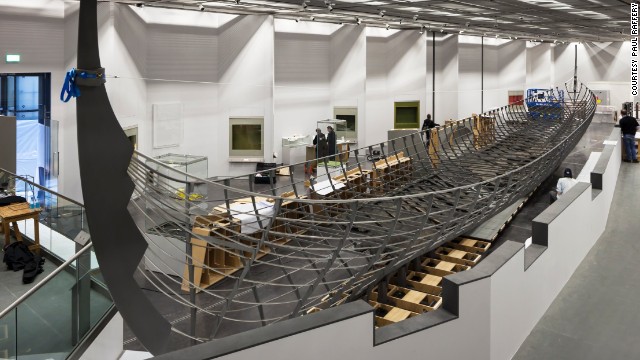
There's poetic licence here, but perhaps not too much; anyone who marvelled at the huge reconstructed ship in the British Museum's recent Vikings exhibition can imagine how impressive Cnut's fleet must have been.
Those winged ships flying across the water caught the imagination of Cnut's poets, too; here's how a poem addressed to Cnut (composed probably in the 1020s) describes his voyage to England:
Hratt lítt gamall, lýtir
lǫgreiðar, framm skeiðum;
fórat fylkir œri
folksveimuðr, þér heiman;
Hilmir, bjótt ok hættir
harðbrynjuð skip kynjum;
reiðr hafðir þú rauðar
randir, Knútr, fyr landi...
Vǫð blés of þér, vísi;
vestr settir þú flesta
- kunnt gørðir þú þannig
þitt nafn - í haf stafna.
Óttarr svarti, Knútsdrápa, ed. Matthew Townend, in Diana Whaley, ed., Poetry from the Kings' Sagas 1, Skaldic Poetry of the Scandinavian Middle Ages I (Turnhout: Brepols, 2012), Part 2, p.
That is:
In the next post, we'll see what happened when those ships reached land. But as a foretaste, here's an extract from another poem composed for Cnut, this time by Sigvatr Þórðarson - this is what Æthelred and Edmund Ironside had to look forward to.
Ok Ellu bak,
at, lét, hinns sat,
Ívarr ara,
Jórvík, skorit.
Ok senn sonu
sló, hvern ok þó,
Aðalráðs eða
út flæmði Knútr.
Sigvatr Þórðarson, Knútsdrápa, ed. Matthew Townend in Whaley, Poetry from the Kings' Sagas 1, pp. 651-2.
That is:
This is a reference to one of the most famous Vikings of them all: Ivar 'the Boneless', son of Ragnar Lothbrok. In compliment to Cnut, the poet Sigvatr here brings together two Danish triumphs over English kings which took place almost exactly 150 years apart. In 867 Ivar and his brothers killed Ælla, king of Northumbria, and conquered northern England - a famous victory, and even in the eleventh century the stuff of evocative legend. Ivar's was a name to conjure with, a great Viking predecessor for a young Danish king to follow. Ivar and his brother were most famous in English history as the killers of St Edmund of East Anglia - and in 1015 St Edmund's namesake, Edmund Ironside, was about to encounter the Vikings for the first time.
If you're new to my blog, you may not have been aware of this series, because it's been more than a year since the last installment - not because I forgot about the project (honest) but because there was a long hiatus in hostilities between the spring of 1014 and the summer of 1015. Let's recap: Svein Forkbeard, king of Denmark, invaded England in the summer of 1013, after a targeted and swift-moving campaign which involved making alliances with some key players among the English nobility. (This will become important in a moment.) By the end of the year Svein had driven the English king, Æthelred, into exile. But Svein's reign in England lasted less than two months: he died suddenly in February 1014, and Æthelred returned from exile, making a bargain with the witan that he would rule England more justly than he had before. Within a few months he had managed to force the Danish army, now led by Svein's young son Cnut, back to Denmark. Last summer, we saw Cnut sailing away with a final gesture of unpleasant defiance: returning the English hostages who had been given to his father with their hands, ears and noses cut off. A number of Danish ships under the command of the formidable Viking leader Thorkell the Tall stayed in England, still taking large payments of money from Æthelred, but apparently not giving their full allegiance to either the English or the Danish king.
Between Michaelmas 1014 and the summer of 1015, the Anglo-Saxon Chronicle, our most detailed narrative source, doesn't tell us what was going on in England. The gap itself is interesting. One of the advantages of this kind of real-time project, attempting to follow events more or less in the sequence that they happened, is that you are forced to notice gaps and pauses as much as events, the absence as well as the presence of information. Writing a narrative of any historical period, we mostly have little choice but to skip over the times for which we don't have any details; but a year is a long time, and a lot can happen. What was Æthelred doing? Was he consolidating his position, 'ruling more justly than before'? Was he holding fire on his internal enemies, waiting to strike? We can't really know.
But in summer 1015, while Cnut was still in Denmark, things started to get tense in England. The Anglo-Saxon Chronicle (E) says:
On þissum geare wæs þæt mycele gemot on Oxonaforda. 7 þær Eadric ealdorman beswac Sigeferð 7 Morcær þa yldestan þægenas into Seofonburgum. bepæhte hi into his bure. 7 hi man þær inne ofsloh ungerisenlice. 7 se cyng þa genam eall heora æhta. 7 het nimon Sigeferðes lafe 7 gebringon binnon Mealdelmes byrig. Þa æfter litlum fece ferde Eadmund æðeling to. 7 genam þæt wif ofer þes cynges willan. 7 heafde him to wife. Ða toforan natiuitas sancte Mariæ ferde se æðeling wæston norð into Fifburgum. 7 gerad sona ealle Sigeferðes are 7 Morcares. 7 þæt folc eall him tobeah.
[In this year was the great assembly at Oxford, and there Eadric the ealdorman betrayed Sigeferth and Morcar, the foremost thegns in the Seven Boroughs; he lured them into his chamber, and in there they were dishonorably murdered. And the king then took all their possessions, and ordered Sigeferth's widow to be seized and brought to Malmesbury. Then after a little while Edmund the atheling journeyed there, and took the woman against the king's will, and married her. Then before the Nativity of St Mary the atheling journeyed from the west, north into the Five Boroughs and rode at once into all Sigeferth and Morcar's territory, and the people all submitted to him.]
This is the English aristocracy in chaos. A 'great assembly' held at Oxford was probably an attempt at peace-keeping, reunification of Æthelred's kingdom after it had fallen piecemeal (and not always reluctantly) to the Danes two years before. In the Anglo-Saxon period Oxford was (strange as it is to think of!) border-territory, on the frontier between Wessex and Mercia - formerly independent kingdoms, all part of 'England' by the eleventh century, but ruled by different interests and with some sense of regional identity, nonetheless. Lying at the meeting-place of roads and rivers, Oxford was a key strategic location; two years earlier, it had been the first town in the south to submit to Svein, by force, after the north had declared allegiance to him. Perhaps the assembly of 1015 was held in Oxford as a kind of neutral territory, a symbolic gesture to bring the north and south together in a reunited country under the restored king. But it didn't work out that way.
A map of Saxon Oxford, from this site
'Eadric the ealdorman', better known as Eadric streona, was one of Æthelred's closest advisors, and he may well have been acting on the king's orders when he secretly and treacherously murdered Sigeferth and Morcar, the most powerful thegns in the Midlands (they ruled a territory based around the 'Five Boroughs' of Lincoln, Derby, Leicester, Nottingham, and Stamford). In 1013 the Five Boroughs had submitted to Svein very quickly, and Sigeferth and Morcar had not only led the submission to the Danes but probably arranged for their kinswoman Ælfgifu of Northampton to marry Cnut. After this defection it seems that Æthelred did not trust them, and perhaps this summary killing at the Oxford assembly was delayed punishment for their rejection of the English king - who had promised on his return that he would 'forgive all injuries against him', and didn't.
To murder anyone under the guise of hospitality in this way was a particularly shocking act. Æthelred may have rid himself of two potential enemies, but he created another, and a more dangerous: his own son, Edmund Ironside, who now openly rebelled against his father. Edmund married Sigeferth's widow and reclaimed the territory of the murdered thegns from the king, building himself a power-base in the Midlands. Sigeferth and Morcar may have been Edmund's friends and allies - they had apparently been close to his brother Æthelstan, who had recently died and left them bequests in his will. After the early death of his elder brother in 1014, Edmund was Æthelred's oldest surviving son and the person best placed to inherit the throne. This break between the king and the atheling was a serious crisis.
Sigeferth's widow, the woman here seized and imprisoned and taken and married ('against the king's will' - was it against hers?) is named by a later source as Ealdgyth. We know nothing more about her, but she was probably the mother of Edmund Ironside's two sons, who spent almost all their short lives in exile after fleeing England in 1016; but one of them was the father of St Margaret of Scotland, through whose descendents the line of the Anglo-Saxon kings was grafted back into the royal family tree after the Norman Conquest. So this marriage, hasty and controversial as it was, may have left a long legacy.
Edmund Ironside and his descendents (BL Royal 14 B VI)
And what was happening in Denmark, all this while? As summer drew on, Cnut was preparing to launch another invasion. The Encomium Emmae Reginae, a Latin account of Cnut's conquest and reign written for his second wife Emma, c.1041, fills in the gap a little on the Danish side. As we saw in my last post, the Encomium tells us that Cnut returned to Denmark and reached a rather awkward agreement with his brother about how they should divide the rule of their father's kingdom. And then Thorkell turned up:
The summer sun was drawing near, and Knutr, having restored the army, hastened to return and avenge his injuries. But as he was strolling round the beaches, he observed a small number of ships out at sea. For Thorkell, remembering what he had done to Sveinn, and that he had also unadvisedly remained in the country without the leave of Knutr, his lord, sought his lord with nine ships and their crews, in order to make it clear to him that he was not acting against his safety in remaining, when he went away. When he arrived, he did not presume to approach the shore unbidden, but casting anchor, he sent messengers, and asked leave to enter the ports. When this was granted, he landed and asked his lord's mercy, and having become with great difficulty reconciled to him, he gave an oath of fidelity, to the effect that he would serve him continuously and faithfully. He remained with him more than a whole month, and urged him to return to England, saying that he could easily overcome people whose country was known far and wide to both of them. In particular, he said that he had left thirty ships in England with a most faithful army, who would receive them with honour when they came, and would conduct them through the whole extent of the country.Encomium Emmae Reginae, ed. and trans. Alistair Campbell (London: Royal Historical Society, 1949), p. 19.
The Encomium is not to be taken entirely at face value, but I rather like this little vignette of Cnut walking along the beach, spotting ships out at sea, and then waiting on the shore to receive Thorkell's hesitant embassy. (Scenes of landing are always interesting; this one makes me think of Beowulf getting a wary welcome when he lands on the coast of Denmark.) Anyway, let's take the author's word for it that Thorkell came and urged Cnut to return to England and said 'we can easily beat the English, because we know the terrain!' So Cnut readied his ships, over which the Encomium waxes lyrical:
Then the king said farewell to his mother and brother, and returned to the area of the winding coast, where he had already assembled the fair spectacle of two hundred ships. For here was so great a quantity of arms, that one of those ships would have very abundantly supplied weapons, if they had been lacking to all the rest. Furthermore, there were there so many kinds of shields, that you would have believed that troops of all nations were present. So great, also, was the ornamentation of the ships, that the eyes of the beholders were dazzled, and to those looking from afar they seemed of flame rather than of wood. For if at any time the sun cast the splendour of its rays among them, the flashing of arms shone in one place, in another the flame of suspended shields. Gold shone on the prows, silver also flashed on the variously shaped ships. So great, in fact, was the magnificence of the fleet, that if its lord had desired to conquer any people, the ships alone would have terrified the enemy, before the warriors whom they carried joined battle at all. For who could look upon the lions of the foe, terrible with the brightness of gold, who upon the men of metal, menacing with golden face, who upon the dragons burning with pure gold, who upon the bulls on the ships threatening death, their horns shining with gold, without feeling any fear for the king of such a force? Furthermore, in this great expedition there was present no slave, no man freed from slavery, no low-born man, no man weakened by age; for all were noble, all strong with the might of mature age, all sufficiently fit for any type of fighting, all of such great fleetness, that they scorned the speed of horsemen.
And so the force which has been described, having unfastened the anchors and ropes from the shore, boarded the lofty ships and put to sea, and swept the waves with such impetus, that you would have thought that they were flying over the water in winged ships, which hardly creaked, heavy as the sea was.
Encomium Emmae Reginae, trans. Campbell, pp. 19-21.
There's poetic licence here, but perhaps not too much; anyone who marvelled at the huge reconstructed ship in the British Museum's recent Vikings exhibition can imagine how impressive Cnut's fleet must have been.
Cnut, BL Royal 14 B VI
Those winged ships flying across the water caught the imagination of Cnut's poets, too; here's how a poem addressed to Cnut (composed probably in the 1020s) describes his voyage to England:
Hratt lítt gamall, lýtir
lǫgreiðar, framm skeiðum;
fórat fylkir œri
folksveimuðr, þér heiman;
Hilmir, bjótt ok hættir
harðbrynjuð skip kynjum;
reiðr hafðir þú rauðar
randir, Knútr, fyr landi...
Vǫð blés of þér, vísi;
vestr settir þú flesta
- kunnt gørðir þú þannig
þitt nafn - í haf stafna.
Óttarr svarti, Knútsdrápa, ed. Matthew Townend, in Diana Whaley, ed., Poetry from the Kings' Sagas 1, Skaldic Poetry of the Scandinavian Middle Ages I (Turnhout: Brepols, 2012), Part 2, p.
That is:
Sea-chariot's destroyer, you launched ships at a young age; no younger ruler than you, O warrior, ever set out from home! Prince, you prepared hard-armoured ships, and were wondrously brave; in your rage, Cnut, you raised red shields before the land... Captain, the sail billowed above you; many prows you sent west across the sea. Thus you made your name known!
In the next post, we'll see what happened when those ships reached land. But as a foretaste, here's an extract from another poem composed for Cnut, this time by Sigvatr Þórðarson - this is what Æthelred and Edmund Ironside had to look forward to.
Ok Ellu bak,
at, lét, hinns sat,
Ívarr ara,
Jórvík, skorit.
Ok senn sonu
sló, hvern ok þó,
Aðalráðs eða
út flæmði Knútr.
Sigvatr Þórðarson, Knútsdrápa, ed. Matthew Townend in Whaley, Poetry from the Kings' Sagas 1, pp. 651-2.
That is:
And Ivar, who dwelt at York, had Ælla's back cut with an eagle; and Cnut soon struck down or drove out the sons of Æthelred, every single one.
This is a reference to one of the most famous Vikings of them all: Ivar 'the Boneless', son of Ragnar Lothbrok. In compliment to Cnut, the poet Sigvatr here brings together two Danish triumphs over English kings which took place almost exactly 150 years apart. In 867 Ivar and his brothers killed Ælla, king of Northumbria, and conquered northern England - a famous victory, and even in the eleventh century the stuff of evocative legend. Ivar's was a name to conjure with, a great Viking predecessor for a young Danish king to follow. Ivar and his brother were most famous in English history as the killers of St Edmund of East Anglia - and in 1015 St Edmund's namesake, Edmund Ironside, was about to encounter the Vikings for the first time.
Ivar's fleet, as imagined by a 15th-century English manuscript (BL Harley 2278, f. 47v)
Tuesday, 30 June 2015
The Sun and the Seed-Corn
Following on from this recent post about Anglo-Saxon wisdom literature, here are two extracts from the 'Metres of Boethius', a sequence of Old English poems based on the metrical sections of Boethius' Consolation of Philosophy. This is Metre 3.
Eala, on hu grimmum and hu grundleasum
seaðe swinceð þæt sweorcende mod,
þonne hit þa strongan stormas beatað
weoruldbisgunga, þonne hit winnende
his agen leoht an forlæteð,
and mid uua forgit þone ecan gefean,
ðringð on þa ðiostro ðisse worulde,
sorgum geswenced. Swa is þissum nu
mode gelumpen, nu hit mare ne wat
for gode godes buton gnornunge
fremdre worulde. Him is frofre ðearf.
O, in how fearsome and how fathomless
a mire struggles the darkening mind,
when the stern storms of worldly trouble
beat against it! Then, battling on,
it loses its own light,
and in grief forgets the eternal joy,
driven on into the darkness of this world,
oppressed by sorrow. So now it is
for this mind, now it knows no more
of God's goods but grieving
in an unwelcoming world. It needs comfort.
Here's the section on which this is based; the Old English is briefer and simpler, and somehow more poignant to me for that reason. My translation can't capture how much the sound of the poetry contributes to this picture of a mind growing dark, squelched by sorrow, sinking into a bottomless pit: the sweorcende mod, sorgum geswenced. Say out loud the word gnornunge - couldn't you guess without being told that it means 'grieving, lamenting'?
By contrast, here's the OE Metre 22, for which compare this.
Se þe æfter rihte mid gerece wille
inweardlice æfter spyrian
swa deoplice, þæt hit todrifan ne mæg
monna ænig, ne amerran huru
ænig eorðlic ðincg, he ærest sceal
secan on him selfum þæt he sume hwile
ymbutan hine æror sohte.
Sece þæt siððan on his sefan innan,
and forlæte an, swa he oftost mæge,
ælcne ymbhogan ðy him unnet sie,
and gesamnige, swa he swiðost mæge,
ealle to þæm anum his ingeðonc,
gesecge his mode þæt hit mæg findan
eall on him innan þæt hit oftost nu
ymbutan hit ealneg seceð,
gooda æghwylc. He ongit siððan
yfel and unnet eal þæt he hæfde
on his incofan æror lange
efne swa sweotole swa he on þa sunnan mæg
eagum andweardum on locian,
and he eac ongit his ingeþonc
leohtre and berhtre þonne se leoma sie
sunnan on sumera, þonne swegles gim,
hador heofontungol, hlutrost scineð.
Forðæm þæs lichoman leahtras and hefignes
and þa unþeawas eallunga ne magon
of mode ation monna ænegum
rihtwisnesse, ðeah nu rinca hwæm
þæs lichoman leahtras and hefignes
and unþeawas oft bysigen
monna modsefan, mæst and swiðost
mid þære yflan oforgiotolnesse,
mid gedwolmiste dreorigne sefan
fortihð mod foran monna gehwelces,
þæt hit swa beorhte ne mot blican and scinan
swa hit wolde, gif hit geweald ahte.
þeah bið sum corn sædes gehealden
symle on ðære saule soðfæstnesse,
þenden gadertang wunað gast on lice.
Ðæs sædes corn bið symle aweaht
mid ascunga, eac siððan mid
goodre lare, gif hit growan sceal.
Hu mæg ænig man andsware findan
ðinga æniges, þegen mid gesceade,
þeah hine rinca hwilc rihtwislice
æfter frigne gif he awuht nafað
on his modsefan mycles ne lytles
rihtwisnesse ne geradscipes?
Nis þeah ænig man þætte ealles swa
þæs geradscipes swa bereafod sie
þæt he andsware ænige ne cunne
findan on ferhðe, gif he frugnen bið.
Forðæm hit is riht spell þæt us reahte gio
ald uðwita, ure Platon;
he cwæð þætte æghwilc ungemyndig
rihtwisnesse hine hræðe sceolde
eft gewendan into sinum
modes gemynde; he mæg siððan
on his runcofan rihtwisnesse
findan on ferhte fæste gehydde
mid gedræfnesse dogora gehwilce
modes sines mæst and swiðost,
and mid hefinesse his lichoman,
and mid þæm bisgum þe on breostum styreð
mon on mode mæla gehwylce.
He who wishes to search in an ordered way
for the right, inwardly,
so deeply that no man may drive it out,
nor any earthly thing at all
corrupt it, he shall first
seek within himself that which for a time
he had once sought outside himself.
He must seek then in his mind within,
and utterly forsake, as often as he can,
every anxiety which is useless to him,
and gather, as much as he can,
all into one his inner thought;
say to his mind that it can discover
all within itself which it is now so often
always seeking outside itself:
every good. He will then perceive
all the harmful and useless things which he had long kept
within his inner chamber,
just as clearly as he may look upon the sun
with his present eyes;
and he will also perceive his inner thought,
lighter and brighter than the radiance
of the sun in summer, when the jewel of the sky,
serene star of the heavens, shines most brightly.
For the sins and heaviness of the body
and all its bad ways cannot
take from any human mind
reason, although now for every being
the sins and heaviness of the body
and its bad ways often trouble
the mind of man, greatly and cruelly,
with the evil of forgetfulness,
draw a mist of error over the sorrowful spirit,
the mind of every man,
so that it cannot blaze and shine
as brightly as it wants to, if it had the power.
But there will always be
a seed-corn of truth held within the soul
as long as the spirit and body live entwined together.
This seed-corn will always be quickened
by asking, and then by
good teaching, if it is to grow.
How may any man find an answer
for anything, a person with reason,
though a man might ask him about it
properly, if he has nothing
of wisdom or counsel in his mind,
great or small?
There is no man so entirely bereft of reason
that he cannot find any answer
in his mind, if he is questioned.
For it is a true speech which the ancient philosopher,
our Plato, long ago told us:
he said that anyone forgetful of reason
should swiftly turn within his own mind's memory;
in his secret chamber he will find reason,
hidden fast within his mind
amid the turbulence of his spirit
every day, greatly and cruelly,
and amid the heaviness of his body
and amid the cares which in the heart disturb
a man in his mind at all times.
This is complex and intricate and hard to translate - hard for me, and hard for the Anglo-Saxon poet, I would think. But Old English poetry had many ways of talking about the processes of the mind and the memory, and they get a good workout here. This is sophisticated psychological and philosophical reasoning, and it draws on Old English poetic diction as well as on Boethius and 'our Plato': there's a characteristic kenning for the mind, runcofan, 'secret chamber' ('chamber of secrets'?) as well as the usual vocabulary of mod and ferþ and sefa - the mind, spirit, heart, soul. And although the metaphor may be Boethius', the lines about the sun contain two beautifully Anglo-Saxon kennings:
and he eac ongit his ingeþonc
leohtre and berhtre þonne se leoma sie
sunnan on sumera, þonne swegles gim,
hador heofontungol, hlutrost scineð.
and he will also perceive his inner thought,
lighter and brighter than the radiance
of the sun in summer, when the jewel of the sky,
serene star of the heavens, shines most brightly.
Yesterday in Oxford the sun was blazing down, sunnan on sumera at its very brightest, hottest, most all-embracing. Can the mind, sinking in so fearsome and fathomless a mire, really ever learn to be as bright as that?
Monday, 29 June 2015
'Each man ought himself to know'
Some life advice from the late fourteenth century.
1. In a pistel þat Poul wrouȝt,
I fond hit writen, & seide riht þis:
Vche cristne creature knowen himself ouȝt
His oune vessel, and soþ hit is.
Nere help of him þat vs deore bouȝt,
We weoren bore to luytel blis;
Whon al þi gode dedes beþ þorw-souȝt,
Seche, and þou schalt fynden amis.
Eueri mon scholde iknowen his,
And þat is luitel, as I trowe;
To teche vs self, crist vs wis;
For vche mon ouȝte him-self to knowe.
2. Knowe þi-self what þou ware,
Whon þou were of þi moder born,
Ho was þi moder þat þe bare,
And ho was þi fader þer-bi-foren;
Knowe hou þei beþ forþ fare;
So schaltou þeiȝ þou hed sworen.
Knowe þou come hider wiþ care;
Þou nost neuer ȝif þou byde til morn;
Hou lihtly þou maiȝt be forlorn,
But þou þi sinne schriue & schowe;
ffor lond or kiþ, catel or corn,
Vche mon oute him-self to knowe.
3. Knowe þi lyf; hit may not last,
But as a blast blouh out þi breth;
Tote, and bi a noþer mon tast;
Riht as a glentand glem hit geth.
What is al þat forþ is past?
Hit fareþ as a fuir of heth.
Þis worldes good awey wol wast,
For synnes seeknesse þi soule sleþ.
And þat is a ful delful deþ,
To saue þi soule and þou be slowe,
Wiþ þi Maystrie medel þi meþ,
For vche mon ouȝte him-self to knowe.
4. Ȝif þou þi-self knowe con,
Sit doun, and tac countures rounde,
Seþþe furst þou monnes wit bi-gon
Hou ofte sunne þe haþ ibounde.
And for vch a synne lei þou doun on,
Til þou þi synnes haue isouȝt vp sounde;
Counte þi goode dedes euerichon,
Abyd þer a while and stunte a stounde;
And ȝif þou fele þe siker and sounde,
Þonk þou þi god, as þou wel owe;
And ȝif þou art in sunne ibounde
Amende þe, and þi-self knowe.
5. Knowe what god haþ for þe do:
Made þe after his oune liknes;
Seþþe, he com from heuene also,
And diȝede for þe wiþ gret distres.
For þe he soffrede boþe pyne and wo;
Knowe þou him and alle his:
Who-so greueþ him is worþi to go
To helle-fuir, but he hit redres,
And he be demed bi rihtfulnes;
But his grace is so wyde isowe,
From his wraþþe I rede vs bles,
For vche mon ouȝte him-self to knowe.
6. Knowe þi-self þat þou schalt dye,
But what tyme, þou nost neuer whenne;
Wiþ a twynklyng of an eiȝe,
Eueri day þou hiȝest þe henne;
Þi fleschly foode þe wermes wol fye:
Vche cristen mon ouȝte þis to kenne.
Loke aboute and wel a-spye,
Þis world doþ bote bi-traye menne;
And beo war of þe fuir þat euer schal brenne,
And þenk þou regnest her but a þrowe;
Heuene-blisse þou schal haue þenne,
For vche mon ouȝte him self to knowe.
7. Knowe þi flesch, þat wol rote;
ffor certes, þou maiȝt not longe endure;
And nedes dye, hennes þou mote,
Þei þou haue kyngdam and empyre.
And sone þou schalt beo forgote;
So schal souereyn, so schal syre.
Hose leeueþ not þis, I trouwe he dote,
For eueri mok most in-to myre.
Preye we to god vr soules enspire,
Or we ben logged in erþe lowe,
Heuene to haue to vr huire;
For vche mon ouȝte him-self to knowe.
8. Knowe þi kuynde creatoure,
Knowe what he for þe dide;
Knowe þis worldly honoure,
Hou sone þat hit is forþ islyde.
Ende of ioye is her doloure;
Strengþe stont vs in no stide,
But longyng & beoing in laboure;
Vr bost, vr brag is sone ouerbide.
Arthur and Ector þat we dredde,
Deth haþ leid hem wonderly lowe.
Amende þe, mon, euene forþ mide,
For vche mon ouȝte him-self to knowe.
9. Þi concience schal þe saue and deme
Wheþer þat þou beo ille or good;
Grope aboute, and tak good ȝeme,
Þer maiȝt þou wite, but þou beo wood,
Þer schalt þou þe same seone.
Aske merci wiþ mylde mood,
Amende þe, þou wot what I mene.
Vche creatur þat beres bon and blood,
Preye we to god þat dyed on rode,
Ar vre breþ beo out iblowe,
Þat cristes face mai ben vr foode,
For vche mon ouȝte him self to knowe.
This poem survives in two manuscripts, two important collections of Middle English verse: the Vernon manuscript and the Simeon manuscript. Here's an image of part of it in the latter (BL Add. MS 22283, f.129v):
A translation (N.B. the epistle quoted at the beginning is 1 Thessalonians 4):
1. In an epistle which Paul made,
I found it written, and it said just this:
'Each Christian creature ought to know
His own vessel' - and true it is.
If not for help from him who us dearly bought,
We were born to little bliss;
When your good deeds are looked all through,
Seek, and you shall find amiss.
Every man should know what is his,
And that is little, as I believe;
To teach ourselves, Christ us guide;
For each man ought himself to know.
2. Know yourself, what you were
When you were of your mother born,
Who was your mother who you bore,
And who your father was before;
Know how they have departed;
So shall you, though you've sworn you won't.
Know that you came here with sorrow;
You never know if you will stay till morrow.
How easily you may be lost,
Unless your sins you confess and show!
Despite land or lineage, chattels or corn,
Each man ought himself to know.
3. Know your life; it cannot last,
But as a blast blows out your breath.
Look, but another man will taste;
Like a glancing gleam it is gone.
What is all that forth has passed?
It fares like a fire on the heath.
This world's goods away will waste,
For sin's sickness your soul slays.
And that is a very doleful death,
To save your soul if you are slain.
Temper your strength with moderation;
For each man ought himself to know.
4. If you would learn to know yourself,
Sit down, and take some counters round:
Since first you possessed human sense,
Count how often sin has you bound,
And for each sin lay a counter down,
Until all your sins have been reckoned up.
Count your good deeds, one by one,
Stay there a while, and take your time.
And if you feel healthy and sound,
Thank your God, as you ought to do;
And if you are in sin bound,
Make amends, and know yourself.
5. Know what God has done for you:
He made you after his own likeness;
Then he came himself from heaven,
And died for you, in great distress.
For you he suffered both pain and woe;
Know him, and all that is his:
Whoever angers him deserves to go
To hell-fire, unless he make amends,
If he is judged by right justice.
But his grace is so widely sown,
I say it will protect us from his wrath;
For each man ought himself to know.
6. Know yourself, that you shall die,
But at what time, you never can know when;
With a twinkling of an eye,
Every day you are hastening from hence;
The worms will make food of your flesh.
Each Christian man ought to know this.
Look about and consider well:
This world does but men betray;
And beware of the fire that shall burn for ever,
And think that you reign here but a short while.
Heaven's bliss you shall have then,
For each man ought himself to know.
7. Know your flesh, which will decay;
For certainly, you cannot long endure;
And must needs die, and go from here,
Though you have kingdoms and empires.
And soon you shall be all forgotten -
So shall sovereign, so shall sire.
Who believes this not, he is a fool:
All muck goes back into the mire.
Pray we to God our souls to inspire,
Lest we be stuck on earth so low,
Heaven to have as our reward,
For each man ought himself to know.
8. Know your loving Creator,
Know what he did for you;
Know this worldly honour,
How quickly it slides away.
The end of joy is sorrow here;
Strength will stay us in no stead,
For all our longing and our labour,
Our pomp and power all pass by.
Arthur and Hector whom we feared,
Death has laid them wondrous low.
Make amends, man, and right now,
For each man ought himself to know.
9. Your conscience shall you save and judge
Whether you be evil or good;
Consider it well, and take good care,
Wherever you may look, unless you're mad,
There you will see.
Ask mercy with a mild spirit.
Amend yourself; you know my meaning.
Each creature who bears bone and blood,
Pray we to God who died on the rood,
Before our breath is all blown out,
That Christ's face may be our support,
For each man ought himself to know.
Although this poem is perhaps not Middle English verse at its most sophisticated, it has some things to recommend it. There are several neat phrases made memorable by alliteration: we are told that life is like a 'glancing gleam', consisting of 'longing and being in labour' - while 'all muck goes back into the mire' is a particularly strongly-worded version of 'you are dust, and to dust you shall return'! The poem has a distinctive form and subject-matter which it shares with a number of poems in the same two manuscripts - I've posted several examples before, including 'In a church where I did kneel', 'Think on yesterday' and 'In summer before the Ascension'. They're poems of counsel and advice, urging the reader to consider the brevity of life and the ubiquity of human failings, and suggesting possibilities for amendment.
I'm sure there are some modern readers who find this form of moralising off-putting, very medieval-in-the-bad-sense, but I'll admit that I find this poem strangely reassuring. Of course 'know yourself' is excellent counsel, at all times and in all places - more prevalent perhaps even than the English poet knew. It is so old-fashioned as to be utterly timeless, and if you think the medieval poet is a little prolix in making his point, he is at least more concise and memorable than some modern counsellors giving the same advice. (Can you believe there's a Wikihow for 'How to Know Thyself'? It should just suggest reading this poem instead...)
The strategy for learning to know yourself here is, of course, overtly Christian, advising you to think about your good and bad deeds, but its approach to life is refreshingly straightforward and generally applicable: be glad if things are good, amend what you have done amiss, and everything will be fine. You might not much like the idea of tallying up sins with 'counters round', but it does offer an optimistic take on the human possibility for improvement and the chances of forgiveness and a fresh start - more perhaps than we allow ourselves today. The poem's suggestion of round 'counters' as a way of gaining self-knowledge reminded me with amusement of this self-assessment tool for researchers, which is designed to show you all the things you're supposed to be and do in order to become a successful academic. Although it's intended to be helpful, and many people doubtless find it so, as a form of self-reflection it utterly defeats me - it just makes me want to cry. I don't necessarily doubt my ability to acquire any or all of the skills listed, but I despair at being able to prove that fact to someone else's satisfaction. Is everything one does in life to be evaluated solely as evidence of skills to be demonstrated to a potential employer (even, absurdly, 'self-reflection' itself)? That Wheel of Inhuman Perfection is of a piece with all the formal education I've ever had - as a child of the 1990s, education was nothing but mark-schemes, and 'don't learn that, it won't be on the exam', and 'make sure you use the exact keywords or you won't get the points'. I went along with all that, dutifully ticked all the boxes - and all I ever really learned (by accident) is that no success will ever be enough to earn you approval or happiness or peace of mind. One of the most insidious effects of my current job situation is that the more I worry about my career, the more difficult it becomes to remember that my career is not my self, and to try and believe there's more to the value of my life than can ever be put on my CV. A career-focused view of life, especially in academia, insists that everything you do must be constantly up for evaluation, by people who don't really value you (or anyone) at all; I've learned, and wish I had realised sooner, how much this daily erodes my own sense of what's important and what I'm allowed to value about myself. It actively works against true self-knowledge by teaching you that you are only worthwhile in as far as you meet someone else's impossible standards.
Once it might have been the job of educators to challenge that limited view of human life, to insist on exploring the consequences of the obvious truth that 'this world does but men betray' - to teach that rather than striving for money, success, or power, you might be happier if you try to know yourself and focus on what's really important. But that's not what schools and universities do any more. The goal of all my school's fussy box-ticking was not really to teach us anything, just to prepare us to get a job - but even with the best career in the world, still 'this world's goods away will waste'. Medieval schools might have been pretty tough, but at least they didn't teach children that the value of their life lay in how many exams they could pass. The reason this poem reads a bit like a list of cliches is that the ideas it promotes were ubiquitous in medieval literature, as a glance at just a few examples will demonstrate; medieval 'clerks' brought up on The Consolation of Philosophy and similar texts had such messages inculcated in them from their earliest schooldays. 'Know this worldly honour, how quickly it slides away...' By comparison with their modern equivalent, such doom-laden lessons seem (perhaps paradoxically) tremendously humane, generous, and wise. Sit down with your little counters, 'stay there a while and take your time', and learn to understand the true value of your actions - learn how to be a good person, not just a successful one. It encourages reflection, patience, and compassion towards yourself and others, and the insistent focus on the idea that 'you reign here but a short while' is a reminder to focus on what's important, to consider what really matters in the end - which is not, for most of us, going to be any great achievement or worldly success, but our relationships with others, and the good we manage to do in the little time we have. Primary school children in this country now have lessons in mindfulness, to help them cope with the stress of constant assessment; perhaps we should do the medieval thing, and teach them Boethius instead.
Know where you came from, what you really are, and where you are eventually going. What more do you need? This triad is more pithily expressed in the wonderful Lollai, lollai, litil child, whi wepistou so sore?:
Child, if betidith that thou ssalt thriue and the,
Thench thou were ifostred vp thi moder kne.
Euer hab mund in thi hert of thos thinges thre:
Whan thou commist, what thou art and what ssal com of the.
Child, if it should happen that thou shalt thrive and thee [flourish]
Think how thou wert fostered at thy mother's knee.
Ever have mind in thy heart of these things three:
Whence thou comest, what thou art, and what shall become of thee.
'Whence, what, whither': the best advice you'll ever get.
1. In a pistel þat Poul wrouȝt,
I fond hit writen, & seide riht þis:
Vche cristne creature knowen himself ouȝt
His oune vessel, and soþ hit is.
Nere help of him þat vs deore bouȝt,
We weoren bore to luytel blis;
Whon al þi gode dedes beþ þorw-souȝt,
Seche, and þou schalt fynden amis.
Eueri mon scholde iknowen his,
And þat is luitel, as I trowe;
To teche vs self, crist vs wis;
For vche mon ouȝte him-self to knowe.
2. Knowe þi-self what þou ware,
Whon þou were of þi moder born,
Ho was þi moder þat þe bare,
And ho was þi fader þer-bi-foren;
Knowe hou þei beþ forþ fare;
So schaltou þeiȝ þou hed sworen.
Knowe þou come hider wiþ care;
Þou nost neuer ȝif þou byde til morn;
Hou lihtly þou maiȝt be forlorn,
But þou þi sinne schriue & schowe;
ffor lond or kiþ, catel or corn,
Vche mon oute him-self to knowe.
3. Knowe þi lyf; hit may not last,
But as a blast blouh out þi breth;
Tote, and bi a noþer mon tast;
Riht as a glentand glem hit geth.
What is al þat forþ is past?
Hit fareþ as a fuir of heth.
Þis worldes good awey wol wast,
For synnes seeknesse þi soule sleþ.
And þat is a ful delful deþ,
To saue þi soule and þou be slowe,
Wiþ þi Maystrie medel þi meþ,
For vche mon ouȝte him-self to knowe.
4. Ȝif þou þi-self knowe con,
Sit doun, and tac countures rounde,
Seþþe furst þou monnes wit bi-gon
Hou ofte sunne þe haþ ibounde.
And for vch a synne lei þou doun on,
Til þou þi synnes haue isouȝt vp sounde;
Counte þi goode dedes euerichon,
Abyd þer a while and stunte a stounde;
And ȝif þou fele þe siker and sounde,
Þonk þou þi god, as þou wel owe;
And ȝif þou art in sunne ibounde
Amende þe, and þi-self knowe.
5. Knowe what god haþ for þe do:
Made þe after his oune liknes;
Seþþe, he com from heuene also,
And diȝede for þe wiþ gret distres.
For þe he soffrede boþe pyne and wo;
Knowe þou him and alle his:
Who-so greueþ him is worþi to go
To helle-fuir, but he hit redres,
And he be demed bi rihtfulnes;
But his grace is so wyde isowe,
From his wraþþe I rede vs bles,
For vche mon ouȝte him-self to knowe.
6. Knowe þi-self þat þou schalt dye,
But what tyme, þou nost neuer whenne;
Wiþ a twynklyng of an eiȝe,
Eueri day þou hiȝest þe henne;
Þi fleschly foode þe wermes wol fye:
Vche cristen mon ouȝte þis to kenne.
Loke aboute and wel a-spye,
Þis world doþ bote bi-traye menne;
And beo war of þe fuir þat euer schal brenne,
And þenk þou regnest her but a þrowe;
Heuene-blisse þou schal haue þenne,
For vche mon ouȝte him self to knowe.
7. Knowe þi flesch, þat wol rote;
ffor certes, þou maiȝt not longe endure;
And nedes dye, hennes þou mote,
Þei þou haue kyngdam and empyre.
And sone þou schalt beo forgote;
So schal souereyn, so schal syre.
Hose leeueþ not þis, I trouwe he dote,
For eueri mok most in-to myre.
Preye we to god vr soules enspire,
Or we ben logged in erþe lowe,
Heuene to haue to vr huire;
For vche mon ouȝte him-self to knowe.
8. Knowe þi kuynde creatoure,
Knowe what he for þe dide;
Knowe þis worldly honoure,
Hou sone þat hit is forþ islyde.
Ende of ioye is her doloure;
Strengþe stont vs in no stide,
But longyng & beoing in laboure;
Vr bost, vr brag is sone ouerbide.
Arthur and Ector þat we dredde,
Deth haþ leid hem wonderly lowe.
Amende þe, mon, euene forþ mide,
For vche mon ouȝte him-self to knowe.
9. Þi concience schal þe saue and deme
Wheþer þat þou beo ille or good;
Grope aboute, and tak good ȝeme,
Þer maiȝt þou wite, but þou beo wood,
Þer schalt þou þe same seone.
Aske merci wiþ mylde mood,
Amende þe, þou wot what I mene.
Vche creatur þat beres bon and blood,
Preye we to god þat dyed on rode,
Ar vre breþ beo out iblowe,
Þat cristes face mai ben vr foode,
For vche mon ouȝte him self to knowe.
This poem survives in two manuscripts, two important collections of Middle English verse: the Vernon manuscript and the Simeon manuscript. Here's an image of part of it in the latter (BL Add. MS 22283, f.129v):
A translation (N.B. the epistle quoted at the beginning is 1 Thessalonians 4):
1. In an epistle which Paul made,
I found it written, and it said just this:
'Each Christian creature ought to know
His own vessel' - and true it is.
If not for help from him who us dearly bought,
We were born to little bliss;
When your good deeds are looked all through,
Seek, and you shall find amiss.
Every man should know what is his,
And that is little, as I believe;
To teach ourselves, Christ us guide;
For each man ought himself to know.
2. Know yourself, what you were
When you were of your mother born,
Who was your mother who you bore,
And who your father was before;
Know how they have departed;
So shall you, though you've sworn you won't.
Know that you came here with sorrow;
You never know if you will stay till morrow.
How easily you may be lost,
Unless your sins you confess and show!
Despite land or lineage, chattels or corn,
Each man ought himself to know.
3. Know your life; it cannot last,
But as a blast blows out your breath.
Look, but another man will taste;
Like a glancing gleam it is gone.
What is all that forth has passed?
It fares like a fire on the heath.
This world's goods away will waste,
For sin's sickness your soul slays.
And that is a very doleful death,
To save your soul if you are slain.
Temper your strength with moderation;
For each man ought himself to know.
4. If you would learn to know yourself,
Sit down, and take some counters round:
Since first you possessed human sense,
Count how often sin has you bound,
And for each sin lay a counter down,
Until all your sins have been reckoned up.
Count your good deeds, one by one,
Stay there a while, and take your time.
And if you feel healthy and sound,
Thank your God, as you ought to do;
And if you are in sin bound,
Make amends, and know yourself.
5. Know what God has done for you:
He made you after his own likeness;
Then he came himself from heaven,
And died for you, in great distress.
For you he suffered both pain and woe;
Know him, and all that is his:
Whoever angers him deserves to go
To hell-fire, unless he make amends,
If he is judged by right justice.
But his grace is so widely sown,
I say it will protect us from his wrath;
For each man ought himself to know.
6. Know yourself, that you shall die,
But at what time, you never can know when;
With a twinkling of an eye,
Every day you are hastening from hence;
The worms will make food of your flesh.
Each Christian man ought to know this.
Look about and consider well:
This world does but men betray;
And beware of the fire that shall burn for ever,
And think that you reign here but a short while.
Heaven's bliss you shall have then,
For each man ought himself to know.
7. Know your flesh, which will decay;
For certainly, you cannot long endure;
And must needs die, and go from here,
Though you have kingdoms and empires.
And soon you shall be all forgotten -
So shall sovereign, so shall sire.
Who believes this not, he is a fool:
All muck goes back into the mire.
Pray we to God our souls to inspire,
Lest we be stuck on earth so low,
Heaven to have as our reward,
For each man ought himself to know.
8. Know your loving Creator,
Know what he did for you;
Know this worldly honour,
How quickly it slides away.
The end of joy is sorrow here;
Strength will stay us in no stead,
For all our longing and our labour,
Our pomp and power all pass by.
Arthur and Hector whom we feared,
Death has laid them wondrous low.
Make amends, man, and right now,
For each man ought himself to know.
9. Your conscience shall you save and judge
Whether you be evil or good;
Consider it well, and take good care,
Wherever you may look, unless you're mad,
There you will see.
Ask mercy with a mild spirit.
Amend yourself; you know my meaning.
Each creature who bears bone and blood,
Pray we to God who died on the rood,
Before our breath is all blown out,
That Christ's face may be our support,
For each man ought himself to know.
Although this poem is perhaps not Middle English verse at its most sophisticated, it has some things to recommend it. There are several neat phrases made memorable by alliteration: we are told that life is like a 'glancing gleam', consisting of 'longing and being in labour' - while 'all muck goes back into the mire' is a particularly strongly-worded version of 'you are dust, and to dust you shall return'! The poem has a distinctive form and subject-matter which it shares with a number of poems in the same two manuscripts - I've posted several examples before, including 'In a church where I did kneel', 'Think on yesterday' and 'In summer before the Ascension'. They're poems of counsel and advice, urging the reader to consider the brevity of life and the ubiquity of human failings, and suggesting possibilities for amendment.
I'm sure there are some modern readers who find this form of moralising off-putting, very medieval-in-the-bad-sense, but I'll admit that I find this poem strangely reassuring. Of course 'know yourself' is excellent counsel, at all times and in all places - more prevalent perhaps even than the English poet knew. It is so old-fashioned as to be utterly timeless, and if you think the medieval poet is a little prolix in making his point, he is at least more concise and memorable than some modern counsellors giving the same advice. (Can you believe there's a Wikihow for 'How to Know Thyself'? It should just suggest reading this poem instead...)
The strategy for learning to know yourself here is, of course, overtly Christian, advising you to think about your good and bad deeds, but its approach to life is refreshingly straightforward and generally applicable: be glad if things are good, amend what you have done amiss, and everything will be fine. You might not much like the idea of tallying up sins with 'counters round', but it does offer an optimistic take on the human possibility for improvement and the chances of forgiveness and a fresh start - more perhaps than we allow ourselves today. The poem's suggestion of round 'counters' as a way of gaining self-knowledge reminded me with amusement of this self-assessment tool for researchers, which is designed to show you all the things you're supposed to be and do in order to become a successful academic. Although it's intended to be helpful, and many people doubtless find it so, as a form of self-reflection it utterly defeats me - it just makes me want to cry. I don't necessarily doubt my ability to acquire any or all of the skills listed, but I despair at being able to prove that fact to someone else's satisfaction. Is everything one does in life to be evaluated solely as evidence of skills to be demonstrated to a potential employer (even, absurdly, 'self-reflection' itself)? That Wheel of Inhuman Perfection is of a piece with all the formal education I've ever had - as a child of the 1990s, education was nothing but mark-schemes, and 'don't learn that, it won't be on the exam', and 'make sure you use the exact keywords or you won't get the points'. I went along with all that, dutifully ticked all the boxes - and all I ever really learned (by accident) is that no success will ever be enough to earn you approval or happiness or peace of mind. One of the most insidious effects of my current job situation is that the more I worry about my career, the more difficult it becomes to remember that my career is not my self, and to try and believe there's more to the value of my life than can ever be put on my CV. A career-focused view of life, especially in academia, insists that everything you do must be constantly up for evaluation, by people who don't really value you (or anyone) at all; I've learned, and wish I had realised sooner, how much this daily erodes my own sense of what's important and what I'm allowed to value about myself. It actively works against true self-knowledge by teaching you that you are only worthwhile in as far as you meet someone else's impossible standards.
Once it might have been the job of educators to challenge that limited view of human life, to insist on exploring the consequences of the obvious truth that 'this world does but men betray' - to teach that rather than striving for money, success, or power, you might be happier if you try to know yourself and focus on what's really important. But that's not what schools and universities do any more. The goal of all my school's fussy box-ticking was not really to teach us anything, just to prepare us to get a job - but even with the best career in the world, still 'this world's goods away will waste'. Medieval schools might have been pretty tough, but at least they didn't teach children that the value of their life lay in how many exams they could pass. The reason this poem reads a bit like a list of cliches is that the ideas it promotes were ubiquitous in medieval literature, as a glance at just a few examples will demonstrate; medieval 'clerks' brought up on The Consolation of Philosophy and similar texts had such messages inculcated in them from their earliest schooldays. 'Know this worldly honour, how quickly it slides away...' By comparison with their modern equivalent, such doom-laden lessons seem (perhaps paradoxically) tremendously humane, generous, and wise. Sit down with your little counters, 'stay there a while and take your time', and learn to understand the true value of your actions - learn how to be a good person, not just a successful one. It encourages reflection, patience, and compassion towards yourself and others, and the insistent focus on the idea that 'you reign here but a short while' is a reminder to focus on what's important, to consider what really matters in the end - which is not, for most of us, going to be any great achievement or worldly success, but our relationships with others, and the good we manage to do in the little time we have. Primary school children in this country now have lessons in mindfulness, to help them cope with the stress of constant assessment; perhaps we should do the medieval thing, and teach them Boethius instead.
Know where you came from, what you really are, and where you are eventually going. What more do you need? This triad is more pithily expressed in the wonderful Lollai, lollai, litil child, whi wepistou so sore?:
Child, if betidith that thou ssalt thriue and the,
Thench thou were ifostred vp thi moder kne.
Euer hab mund in thi hert of thos thinges thre:
Whan thou commist, what thou art and what ssal com of the.
Child, if it should happen that thou shalt thrive and thee [flourish]
Think how thou wert fostered at thy mother's knee.
Ever have mind in thy heart of these things three:
Whence thou comest, what thou art, and what shall become of thee.
'Whence, what, whither': the best advice you'll ever get.
Wednesday, 24 June 2015
'Swa swa se dægsteorra gæð beforan ðære sunnan'
The Birth of John the Baptist (BL Additional 49598, f.92v)
Þænne wuldres þegn
ymb þreotyne, þeodnes dyrling,
Iohannes in geardagan wearð acenned,
tyn nihtum eac; we þa tiid healdað
on midne sumor mycles on æþelum.
Then after thirteen and ten nights [i.e. on 24th June]
the thegn of glory, the Prince's darling,
John, was born in days of old;
we keep that feast at Midsummer, with much honour.
- The Old English Menologium
On this Midsummer feast of the Nativity of John the Baptist, here's an extract from Ælfric's homily for the day. It can be read in full here.
Ðreora manna gebyrdtide freolsað seo halige gelaðung: ðæs Hælendes, seðe is God and mann, and Iohannes his bydeles, and ðære eadigan Marian his moder. Oðra gecorenra manna, ðe ðurh martyrdom, oððe þurh oðre halige geearnunga, Godes rice geferdon, heora endenextan dæg, seðe hi æfter gefyllednysse ealra earfoðnyssa sigefæste to ðam ecan life acende, we wurðiað him to gebyrdtide; and ðone dæg, ðe hi to ðisum andweardan life acennede wæron, we lætað to gymeleaste, forðan ðe hi comon hider to earfoðnyssum, and costnungum, and mislicum fræcednyssum. Se dæg bið gemyndig Godes ðeowum ðe ða halgan, æfter gewunnenum sige, asende to ecere myrhðe fram eallum gedreccednyssum, and se is heora soðe acennednys; na woplic, swa swa seo ærre, ac blissigendlic to ðam ecum life.'The holy church celebrates the birth-tide of three people: of the Saviour, who is God and man, and of John his herald, and of the blessed Mary his mother. Of other chosen people, who have gone to God's kingdom through martyrdom or other holy merits, we celebrate as their birth-tide their last day, which, after the fulfilment of all their labours, bore them victorious to eternal life; and the day on which they were born to this present life we let pass unheeded, because they came here to hardships and temptations and various dangers. The day is worthy of memory for God's servants which sends his saints, after victory won, from all afflictions to eternal joy, and that is their true birth - not tearful, as the first, but rejoicing in eternal life.
Ac us is to wurðigenne mid micelre gecnyrdnysse Cristes gebyrdtide, ðurh ða us com alysednys. Iohannes is geendung ðære ealdan æ and anginn ðære niwan, swa swa se Hælend be him cwæð, "Seo ealde æ and witegan wæron oð Iohannes to-cyme." Siððan ongann godspel-bodung. Nu for his micclan halignysse is gewurðod his acennednys, swa swa se heah-engel behet his fæder mid ðisum wordum, "Manega blissiað on his gebyrdtide." Maria, Godes cynnestre, nis nanum oðrum gelic, forðan ðe heo is mæden and modor, and ðone abær ðe hi and ealle gesceafta gesceop: is heo forði wel wyrðe þæt hire acennednys arwurðlice gefreolsod sy...
He wæs asend toforan Drihtne, swa swa se dægsteorra gæð beforan ðære sunnan, swa swa bydel ætforan deman, swa swa seo Ealde Gecyðnys ætforan ðære Niwan; forðan ðe seo ealde æ wæs swilce sceadu, and seo Niwe Gecyðnys is soðfæstnys ðurh ðæs Hælendes gife.
Anes geares cild hi wæron, Crist and Iohannes. On ðisum dæge acende seo unwæstmbære moder ðone mæran witegan Iohannem, se is geherod mid þisum wordum, ðurh Cristes muð, "Betwux wifa bearnum ne aras nan mærra man ðonne is Iohannes se Fulluhtere." On middes wintres mæssedæge acende þæt halige mæden Maria þone Heofenlican Æðeling, se nis geteald to wifa bearnum, forðon ðe he is Godes Sunu on ðære Godcundnysse, and Godes and mædenes Bearn ðurh menniscnysse...
Nis butan getacnunge þæt ðæs bydeles acennednys on ðære tide wæs gefremod ðe se woruldlica dæg wanigende bið, and on Drihtnes gebyrdtide weaxende bið. Þas getacnunge onwreah se ylca Iohannes mid ðisum wordum, "Criste gedafenað þæt he weaxe, and me þæt ic wanigende beo." Iohannes wæs hraðor mannum cuð þurh his mærlican drohtnunga, þonne Crist wære, forðan ðe he ne æteowde his godcundan mihte, ærðam ðe he wæs ðritig geara on ðære menniscnysse. Þa wæs he geðuht ðam folce þæt he witega wære, and Iohannes Crist. Hwæt ða Crist geswutelode hine sylfne ðurh miccle tacna, and his hlisa weox geond ealne middangeard, þæt he soð God wæs, seðe wæs ærðan witega geðuht. Iohannes soðlice wæs wanigende on his hlisan, forðan ðe he wearð oncnawen witega, and bydel ðæs Heofonlican Æðelinges, seðe wæs lytle ær Crist geteald mid ungewissum wenan. Þas wanunge getacnað se wanigenda dæg his gebyrd-tide, and se ðeonda dæg ðæs Hælendes acennednysse gebícnað his ðeondan mihte æfter ðære menniscnysse.
But the birth-tide of Christ is to be celebrated with great care, through which came our redemption. John is the ending of the old law and the beginning of the new; as the Saviour said of him, "The old law and the prophets were till the coming of John." Afterwards began the preaching of the gospel. Now, because of his great holiness, his birth is honoured, as the archangel promised his father with these words, "Many shall rejoice in his birth-tide." Mary, parent of God, is like to none other, for she is maiden and mother, and bore him who created her and all creation: therefore she is most worthy that her birth should be honourably celebrated...
He was sent before the Lord, as the day-star goes before the sun, as the beadle goes before the judge, as the Old Testament before the New; because the old law was like a shadow, and the New Testament is the truth itself, through the grace of the Saviour.
They were the children of one year, Christ and John. On this day the barren mother gave birth to the great prophet John, who is praised in these words from the mouth of Christ: 'Among the children of women there arose none greater than John the Baptist.' On midwinter's day the holy maiden Mary gave birth to the heavenly prince, who is not counted among the children of women, because he is God's Son in his divinity, and God and the Virgin's Son in his humanity...
It is not without meaning that the herald's birth at this season came to pass when the earthly day is waning, and the Lord's birth when it is waxing. This meaning John himself revealed with these words: "It is fitting for Christ that he should increase, and for me that I should decrease." John became known to people, through his famous actions, earlier than Christ was, because he did not reveal his divine power before he had lived thirty years in human nature. So it seemed to the people that he was a prophet, and that John was Christ. But then Christ made himself known through great signs, and his fame waxed throughout all the world, that he was true God, who had previously seemed a prophet. Truly John's fame was waning, because he was recognised as a prophet, and herald of the heavenly Prince, who a little while before was believed to be Christ by uncertain guesses. This waning is betokened by the waning day at the season of his birth, and the increasing day at the Saviour's birth signifies his increasing power according to his human nature.'
This follows the traditional understanding of the relationship between the date of the solstices and the births of Christ and his herald: as Bede (for instance) explains, just as Christ was conceived at the spring equinox and born at the winter solstice, so John was conceived at the autumn equinox and born at the summer solstice:
very many of the Church’s teachers recount... that our Lord was conceived and suffered on the 8th kalends of April [25 March], at the spring equinox, and that he was born at the winter solstice on the 8th kalends of January [25 December]. And again, that the Lord’s blessed precursor and Baptist was conceived at the autumn equinox on the 8th kalends of October [24 September] and born at the summer solstice on the 8th kalends of July [24 June]. To this they add the explanation that it was fitting that the Creator of eternal light should be conceived and born along with the increase of temporal light, and that the herald of penance, who must decrease, should be engendered and born at a time when the light is diminishing.Bede, The Reckoning of Time, trans. Faith Wallis (Liverpool, 2004), p. 87.
They were, as Ælfric says, anes geares cild, 'the children of one year'. After Midsummer se woruldlica dæg wanigende bið, the earthly day is waning, and it goes on waning until the winter solstice brings Earendel and the birth of the sun.
The Benedictional of St Æthelwold, produced a little earlier in the tenth century than Ælfric's sermon, depicts the birth and naming of John the Baptist (BL Additional 49598, f.92v): above, Elizabeth with the baby; below, Zechariah writes 'His name is John'.
Saturday, 13 June 2015
Wisdom's Court
Alfred the Great, from Wantage
I've recently begun a new Twitter project, called Old English Wisdom. The idea is to tweet proverbs, maxims, and other miniature bits of wisdom and advice from Old English poetry and prose, anything which falls under a very broad definition of 'wisdom'! Old English literature abounds in such pithy statements, ranging from wry proverbs about mead-drinking and money to practical advice about moderate behaviour, from a warrior's code of conduct to profound reflections on how one acquires wisdom and the benefits it can bring. There's almost a limitless amount to tweet, and it seemed to me it might be an interesting way to combine the popular fascination with the Old English language (which never ceases to take me by surprise) with an opportunity to post about some texts which are not as well-known as they deserve to be.
This has involved spending my free time re-acquainting myself with some Old English texts I haven't read in a while. It throws up surprises, not always directly useful for the project, but thought-provoking in other ways; when you go looking for wisdom, you find all kinds of things. This week, for instance, I've been re-reading some of the translations credited to Alfred the Great, who would be the patron saint of Anglo-Saxon wisdom, if it had such a thing. Among all his other achievements as king, Alfred arranged for the translation of - or perhaps even translated himself - a range of religious and philosophical texts into English, many of which have interesting things to say about how wisdom is to be gained and used: they include (among other works) Gregory the Great’s Pastoral Care and Dialogues, Boethius’ Consolation of Philosophy, and Augustine’s Soliloquies. As Alfred's famous Preface to the Pastoral Care explains, he believed that learning in England had gone into serious decline in his own days, and that to restore it would be to repair the 'wealth and the wisdom' of the kingdom both together. 'Consider what punishments came upon us in this world when we neither loved wisdom in any way ourselves, nor passed it on to others,' he says; and his translation project explicitly seeks wisdom as a means of finding a way through such serious worldly troubles as Viking invasion. As a result of all this there's a good bit of myth-making about Alfred's wisdom, and by the end of the Anglo-Saxon period he was already regarded as an image of the wise king, that ever-potent symbol. His very name prepared him to be an expert in ræd ('counsel, advice'), and later in the medieval period he was spuriously credited as the omniscient author of a collection of proverbs, cited in texts like The Owl and the Nightingale as an impeccable authority, England's own Solomon. So I picked him as the face of this Twitter project, as imagined (above) by a statue in Wantage, his birthplace, which offers a very Victorian iteration of the Alfred myth:
So the Alfredian texts were a natural place to go in search of wisdom; and passages which are too long to tweet are probably going to end up on this blog! Here, for instance, is an extract from the Old English translation of Augustine's Soliloquies, which is one of several extended additions to the source (the text is from here, with my translation).
Geðenc nu hweðer awiht mani mann cynges ham sece þær ðær he ðonne on tune byð, oððe hys gemot, oððe hys fird, oððe hweðer ðe ðince þæt hi æalle on anne weig þeder cumen? Ic wene þeah ðæt hi cumen on swiðe manige wegas: sume cumað swiðe feorran and habbað swiðe længe weig and swiðe yfelne and swiðe earfoðferne; sume habbað swiðe langne and swiðe rihtne and swiðe godne; sume habbað swiðne scortne, and þeah wone and nearone and fuulne; sume habbað scordne and smeðne and rihtne, and þeah cumað æalle to anum hlaforde; sume æð, sume uneð, naðer ne hi þeder gelice eaðe cumað, ne hi þer gelice eaðe ne beoð. Sume beoð on maran are and on maran eðnesse þonne sume, sume on læssan, sume ful neah buton, buton þæt an þæt he lufað. Swa hit bið æac be þam wisdome. Ælc þara þe hys wilnað and þe hys geornful byt, he hym mæg cuman to and on hys hyrede wunian and be lybban, þeah hi hym sume near sian, sume fyer; swa-swa ælces cynges hama: beoð sume on bure, sume on healle, sume on odene, sume on carcerne; and lybbað þeah æalle be anes hlafordes are, swa-swa æalle men lybbað under anre sunnan and be hyre leohte geseoð þæt þæt hy geseoð. Sume swiðe scearpe and swiðe swotele lociað; sume unæaðe awiht geseoð; sume beoð stæreblind and nyttiað þeah þare sunnan. Ac swa-swa þeos gesewe sunne ures lichaman æagan onleoht, swa onliht se wisdom ures modes æagan, þæt ys, ure angyt.
Consider now, how many men seek the king's court when he is in town, or at his assembly, or with his army; and do you think that they all come there by the same road? I think, in fact, that they come by many different roads. Some come from afar, and have a very long and very bad and very difficult road. Some have a road which is very long and very direct and very good. Some have a very short road, which is nonetheless dark and narrow and dirty. Some have a short and smooth and direct road. Yet they all come to the same lord, some with ease, some without ease.
They do not come there with equal ease, nor are they equally at ease when they are there. Some are in great honour and in more comfort than others, some in less, some almost without any, except for the one whom he loves. So too it is with wisdom. Every one who desires it and eagerly asks for it may come to it and dwell in its household and live close to it, but some are nearer to it, some further away. So it is in every king's court: some are in the chamber, some in the hall, some on the threshing-floor, some in the jail-cell; yet they all live there by the favour of one lord, just as all people live under one sun and by its light see all that they see. Some see very sharply and clearly, some can only see anything with great difficulty; some are stark blind, yet still enjoy the sun. And just as the visible sun gives light to the eyes of our body, so wisdom gives light to the eyes of our mind, that is, our understanding.
The speaker here is 'Reason', addressing the Augustine persona, who is (perhaps) the Alfred persona too. The funny thing about Alfred later being mythologised as such a great sage is that if we can locate his voice anywhere in his translations it would be as the learner, not the teacher - he is no Solomon, but a humble, anxious searcher after wisdom, who is not at all sure he will find it. Here Reason offers a very apt metaphor to his royal pupil, and and this is an appropriate passage, of course, for a text sponsored by a king: the king in his court is implicitly, flatteringly, compared to the sun and to wisdom itself. His are (royal 'favour', but in a broad and positive sense) extends like the rays of the sun, throughout his household and his estate from private chamber to jail-cell and beyond. It's worth remembering that the maintenance of good roads was the kind of task a responsible medieval king might take an interest in - as Alfred himself did - and so perhaps all the many roads which lead to his court are also under his jurisdiction, under his are, as much as the people travelling on them. The king's roads are the king's responsibility, and they all lead to the same place.
This extended metaphor, lovely as it is, is perhaps a long roundabout way of expressing an idea we might convey with a simple proverb: 'all roads lead to Rome'. But although there are no proverbs in this passage, it draws on the traditional language of wisdom literature; it provides, for instance, three nice examples of the sum... sum... lists which frequently appear in Old English prose and poetry to illustrate the varying states and conditions of human beings, the many different ways they can live and die. I quoted two examples at the end of my last post, lists of the various gifts of human skill. The most famous instance is perhaps this passage in The Wanderer:
Ongietan sceal gleaw hæle hu gæstlic bið,
þonne ealre þisse worulde wela weste stondeð,
swa nu missenlice geond þisne middangeard
winde biwaune weallas stondaþ,
hrime bihrorene, hryðge þa ederas.
Woriað þa winsalo, waldend licgað
dreame bidrorene, duguþ eal gecrong,
wlonc bi wealle. Sume wig fornom,
ferede in forðwege, sumne fugel oþbær
ofer heanne holm, sumne se hara wulf
deaðe gedælde, sumne dreorighleor
in eorðscræfe eorl gehydde.
The wise hero must perceive how terrible it will be
when all this world's wealth lies waste,
as now in various places throughout this earth
walls stand blown by the wind,
covered with frost, the buildings snow-swept.
The halls decay, the ruler lies
deprived of joys, the troop all dead,
proud by the wall. Some were taken by war,
carried on their way, one the bird bore off
across the deep sea, one the grey wolf
shared with death, one the sad-faced man
buried in an earthy grave.
A list of all the ways people can die - this is the kind of thing which leads to wisdom literature being frequently cited as one of the aspects of medieval culture which modern audiences find especially challenging, or, worse, especially dull! I've heard this said many times, but I'm not sure it's actually true, and it was partly to test this assumption that I began my little Twitter experiment. The internet has fostered a boom in new kinds of wisdom literature, in the form of 'inspirational quotes'. These sayings walk a fine line between the profound and the banal, and as so often happened with medieval wisdom, they are often spuriously attributed to a famous name who can lend the words a bit of cachet (apparently this phenomenon has a name: 'Churchillian Drift'). It's easy to make fun of this, but it does make me wonder about the relationship between medieval wisdom and modern self-help. Most of the hundreds of people who've started following 'Old English Wisdom' in the past three weeks are not academics or medievalists, nor even people with a literary or academic background. What is it they find so attractive about Anglo-Saxon wisdom poetry? What is the appeal of the obvious statement, the truism, when expressed in language which is both familiar and strange (whether that's because it's in Old English, or because it follows the language and rules of poetry)?
In some ways the answer is obvious. Wisdom of this sort is not theoretical, but eminently practical wisdom: it is meant to console you and guide you through life. The preface to the Old English translation of Boethius' Consolation of Philosophy (called in Old English froferboc, 'book of comfort') claims that Alfred translated it amid 'the various and manifold concerns with which he was often busied, both in mind and body'. Boethius' work was immensely popular in the Middle Ages, and it's not hard to understand the appeal of that kind of wisdom in unsettled times to a busy and anxious mind. Of course Boethius is much more profound than Twitter's plethora of 'inspirational quotes', but it's a continuum. People seek those, too, because they want or need inspiration, encouragement, guidance, support; however banal these popular sayings may seem, they represent a kind of search for wisdom. There are many roads to wisdom, and some of them go by very circuitous routes; but þeah cumað æalle to anum hlaforde.
Subscribe to:
Posts (Atom)