Showing posts with label Alfred the Great. Show all posts

Monday, 26 October 2015

An Alfredian Anthology

Alfred (Wells Cathedral)

Alfred the Great, perhaps the most famous and most admired of all Anglo-Saxon kings, died on 26 October 899. Writing about him a few years ago, I called him 'one of the most attractive figures of Anglo-Saxon history', and many people have found him so - an emblem of the wise and just ruler, thoughtful, scholarly, and devoted to the welfare of his people.

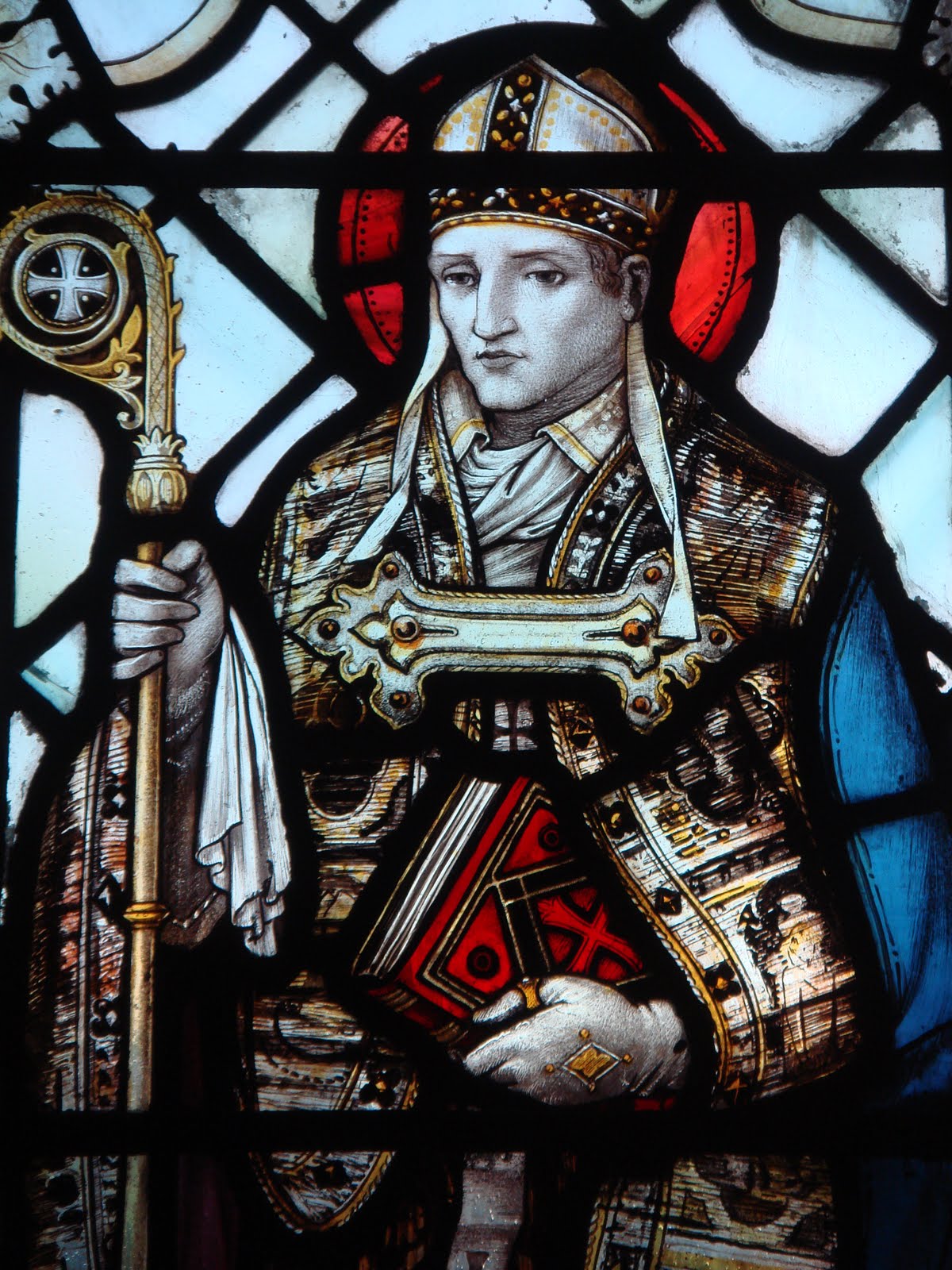
His posthumous reputation is so vast and varied that it can be difficult to think or talk about Alfred without being waylaid into discussing by what others have said about him. I've been thinking quite a bit about Alfred lately, partly as a result of having adopted him as the face of Old English Wisdom (it wouldn't feel right to do that without giving some thought to what it means to make use of his image in such a public way), and partly because he is currently appearing on TV in The Last Kingdom. With Alfred it can be hard to steer a middle course between two extremes - to avoid both the Victorian worship of him as a near-perfect warrior-scholar-saint (which that image of Alfred exemplifies) and the modern iconoclastic view that Alfred may have been clever, but religious talk like his is usually fanaticism at best, hypocrisy at worst (which appears to be the view of The Last Kingdom). Both views are products of their own time, of course, and don't tell us much about the ninth century.

A good way to counter this problem is go back to the works of literature associated with Alfred's name, and to spend some time with them. What struck me while watching the first few episodes of The Last Kingdom (I haven't read the books) is that it's fairly typical, among attempts to dramatise Anglo-Saxon England for a modern audience, in managing to create the impression of a society without literature. We don't see poets among either the Anglo-Saxons or the Vikings; you'd never know from this that kings employed poets, or that the Ragnar of Scandinavian legend was a poet himself and died with a poem on his lips. Alfred's belief in literacy is presented as entirely functional: he spends his time in a room full of scrolls (not books) which apparently contain notes on troop movements and the names of his enemies, and we hear a priest (!) say that the chief benefit of writing is that letters convey messages more accurately than the spoken word. This is an impoverished view of literacy, and not in any way true to the place of literature in Anglo-Saxon England - including Alfred's own thoughts on the subject.

Meanwhile, there's little sense of rhetoric or poetry in the dialogue, which alternates between the unimaginative (following the popular though ungrounded assumption that mild profanity is somehow authentically earthy and 'Anglo-Saxon') and the ridiculous (attempts at more elevated language just end up sounding cod-Shakespearean - especially the awful prayers!). There's a limit to what you can show on screen, of course, but it helps me understand why it's so common to encounter people who believe Anglo-Saxon England produced exactly one poem (Beowulf) and that the Vikings had no literature at all.

Watching that brutal, grey-saturated world on screen, you could be forgiven for thinking that the sun never shone in ninth-century England; you could certainly never guess at the range and richness of Old English poetry, the dazzling complexity of skaldic verse, or the serious thought which Alfred's circle were investing in questions of education, language, and literary translation. The works produced at Alfred's court are the earliest extended examples of English prose, and they're not scraps or notes but book-length vernacular versions of complex works of Latin philosophy, translations which respond in sensitive, creative ways to the challenges of their source material. They are the work of a circle of thoughtful readers, writers and scholars, encouraged and supported by royal power. These texts would be fascinating whoever had produced them, but they do have a special charm for being associated with such a figure as Alfred, written with a clear educational purpose, and in the middle of warfare and unimaginable national turmoil. Remarkable enough that such things were written at all, still more remarkable that they should be the priority of a king with Vikings on his borders.

We don't know how much (if anything) was written by the king himself, but these texts were issued in his name and in his voice; and there's a kind of consistency in that voice between the various texts, whether it goes under the name Boethius, Augustine, Gregory, or Alfred. It's the voice of a seeker after knowledge, eager, questioning, and humble, sometimes despairing amid the troubles of the world and the consciousness of personal failure, sometimes rejoicing in the quest for wisdom and the pleasures of intellectual and spiritual exploration. Not everyone will find such a voice appealing and sympathetic, but I do; and whether it's Alfred's or not, it's because of him that we can hear it.

So here are a few extracts from two of the translations associated with Alfred, among the books he calls 'most needful for all men to know'. They're not representative - they're just passages which particularly touch me. Read them slowly; read them aloud, if you can, because even in translation their long fluid sentences are better for the ear than the eye.

Back in the summer I posted one favourite from the Old English version of Augustine's Soliloquies, an extended metaphor for wisdom as a king's court, and here's an extract from the Preface to the same text. Beginning midway through a metaphor for translation as gathering wood in a forest, it's a wonderful reflection on the joys and frustrations of translation, something all translators will be able to relate to. (The Old English is from this book, the translation's mine):

[Ic] gaderode me þonne kigclas, and stuþansceaftas, and lohsceaftas, and hylfa to ælcum þara tola þe ic mid wircan cuðe, and bohtimbru and boltimbru to ælcum þara weorca þe ic wyrcan cuðe, þa wlitegostan treowo be þam dele ðe ic aberan meihte. Ne com ic naþer mid anre byrðene ham, þe me ne lyste ealne þane wude ham brengan, gif ic hyne ealne aberan meihte. On ælcum treowo ic geseah hwæthwugu þæs þe ic æt ham beþorfte. Forþam ic lære ælcne ðara þe maga si and manigne wæn hæbbe, þæt he menige to þam ilcan wuda, þar ic ðas stuðansceaftas cearf, fetige hym þar ma and gefeðrige hys wænas mid fegrum gerdum, þat he mage windan manigne smicerne wah, and manig ænlic hus settan and fegerne tun timbrian þara, and þær murge and softe mid mæge on eardian ægðer ge wintras ge sumeras, swa swa ic nu ne gyt ne dyde.

Ac se þe me lærede, þam se wudu licode, se mæg gedon þæt ic softor eardian [mæge] ægðer ge on þisum lænan stoclife be þis wæge ða hwile þe ic on þisse weorulde beo, ge eac on þam ecan hame ðe he us gehaten hefð þurh sanctus Augustinus and sanctus Gregorius and sanctus Ieronimus, and þurh manege oððre halie fædras; swa ic gelyfe eac þæt he gedo for heora ealra earnunge ægðer ge þisne weig gelimpfulran gedo þonne he ær þissum wes, ge huru mines modes eagan to þam ongelihte þæt ic mage rihtne weig aredian to þam ecan hame, and to þam ecan are, and to þare ecan reste þe us gehaten is þurh þa halgan fæderas. Sie swa!

Then I gathered for myself staves and posts and tie-shafts, and handles for each of the tools I knew how to work with, and timber for cross-bars and beams for each of the structures I knew how to build, the fairest wood in as much quantity as I could carry. But even so I did not come home with such a burden that I did not wish I could have brought home all the wood, if I could have carried it all. In every tree I saw something which I needed at home. So I advise everyone who is strong and has many wagons to take them to that same wood where I cut these posts, and gather more for himself and load up his wagons with fine timbers, so that he may weave many elegant walls, and establish many a noble house, and build a fine homestead, and there dwell in happiness and peace both summer and winter, as I have never yet done.

But he who taught me, to whom this wood was pleasing, may bring it about that I may live in greater comfort, both in this temporary dwelling-place by the roadside while I am in this world, and also in the eternal home which he has promised us through St Augustine and St Gregory and St Jerome and through many other holy fathers; as I believe that, through all their merits, he will both make this road smoother than it was before, and, truly, bring light to the eyes of my mind, that I may find the direct road to that eternal home, and to the eternal mercy, and to the eternal rest which is promised to us through the holy fathers. May it be so!

The next few extracts also come from the Soliloquies. This one I like mostly because I enjoy descriptions of the turning year in Old English literature:

Ðu recst þæt gear and redst þurh þæt gewrixle þara feower tyda, þæt ys, lencten and sumer and herfest and winter; þara wrixlað ælc wyð oððer and hwerfiað, swa þat heora ægðer byð eft emne þat þæt hyt ær wæs, and þær þær hyt ær wes; and swa wrixlað eall tunglai and hwerfiað on þam ylcan wisan, and eft se and ea; on ða ylcan wisan hweorfiað ealle gesceafta. Wrixliað sume þa on oððer wyssan swa þat þa ylcan eft ne cumað þær ðær hy er weron, eallunga swa swa hy er weron, ac cumað oðre for hy, swa swa leaf on treowum, and æpla, græs, and wyrtan, and treoweu foraldiað and forseriað and cumað oððer, grenu wexað, and gearwað, and ripað; for þat hy eft onginnað searian. And swa eall nytenu and fugelas swelces ðe nu ys lang eall to arimmane. Ge furþum manna lichaman forealdiað, swa swa oðre gesceaftas ealdiað; ac swa swa hy ær wurðlicor lybbað þonne treowu oðþe oðre nytenu, swa hy eac weorðfulicor arisað on domes dæge, swa þæt nefre syððan þa lichaman ne geendiað ne ne forealdiað.

You rule the year, and govern it through the turning of the four seasons, that is, spring and summer and autumn and winter. These change places, each with another, and turn so that each of them is again exactly what it was before, and where it was before; and likewise all stars turn and change in the same way, and the sea and rivers too. In this way all created things undergo change. But some change in another way, such that the same thing does not come again where it was before, or exactly as it was before, but another comes in its place; as leaves on the trees, and fruits, grass, and plants and trees grow old and dry, and others come, grow green, and reach maturity, and ripen, and with that begin again to wither. And just so do all beasts and birds, in such a way that it would take too long to reckon them all now. And indeed the bodies of men grow old, just as other created things grow old; but just as their lives are more valuable than those of trees or other animals, so they will more worthily arise on Judgement Day, so that never again will the body come to an end or grow old.
Alfred at Wantage, under a winter sky
Again from the Soliloquies:
…is ðearf þæt þu rihte hawie mid modes eagum to Gode, swa rihte swa swa scipes ancerstreng byð aþened on gerihte fram þam scype to þam ancre, and gefastna þa eagan þines modes on Gode swa se ancer byð gefastnod on ðære eorðan. Þeah þæt scyp si ute on ðære sæ on þam yðum, hyt byð gesund [and] untoslegen gyf se streng aþolað, forðam hys byd se oðer ende fast on þære eorðan and se oðer on ðam scype.

It is needful that you look with the eyes of the mind straight to God, as straight as a ship's anchor-cable is stretched out direct from the ship to the anchor; and fasten the eyes of your mind on God as the anchor is fastened in the earth. Though the ship may be out on the sea amid the waves, it will be safe and unbroken if the cable holds, because one end is held fast in the earth and the other on the ship.

A little further on:
Ðæt sint þa þreo anceras, þe þæt scyp ðæs modes healdað on gemang ðam brogan þara yða. Þæt mod þeah hæfð micle frofre on ðam þe hit gelyfð and geare wot þæt þa ungelimp and þa ungesælþa þisse wurlde ne beoð æce. Swa swa scypes [hlaford], þonne þæt scyp ungetæslicost on ancre rit and seo sæ hreohost byð, ðonne wot he gewiss smelte wedere toweard.

These [faith, hope and charity] are the three anchors which hold fast the ship of the mind amid the turmoil of the waves. But the mind has great comfort, because it believes and well knows that the misfortunes and miseries of this world are not eternal; just as the ship's captain knows for certain, when the ship is riding in greatest danger and the sea is at its roughest, that calm weather is coming.
Alfred (Winchester Cathedral)

The final book of the Soliloquies, which is an original addition to the source, offers a beautiful example of the voice I was talking about, musing on the limitations of earthly knowledge:

I truly believe that we need not lose a whit of the wisdom which we now have, even though the soul and the body will be parted. But I believe that our understanding will be very greatly increased by that, although we cannot know before Judgement Day all that we desire to know. But I believe that after Judgement Day nothing will be hidden from us, neither what is in our own days, nor what was before us, nor what will happen after us...

What do I know, except that I wish we could know about God as fully as we desire to know? But the mind is weighed down and busied by the body, so that we cannot see with the mind's eyes anything exactly as it is – any more than you can see the sun shine sometimes, when the clouds shoot between it and you; and yet it shines very brightly where it is. And even if there are no clouds between you and it, you can never see it clearly exactly as it is, because you are not where it is, and your body cannot be there, nor can your bodily eyes ever come nearer to it, nor ever see it any closer. Nor even the moon, which is closer to us, can we see just as it is. We know that it is larger than the earth, and yet at times it seems to us no bigger than a shield, because of the distance.

Now you have heard that with the eyes of the mind we can never see anything in this world just as it is; but from the part which we can see, we ought to believe the part which we cannot see. But it is promised to us, beyond any doubt, that when we have come out of this world, and the soul is freed from the prison of the body, we will know everything which we now desire to know, and more than the men of old, who were the wisest of all in this world, were able to know. And after Judgement Day it is promised to us that we will see God openly, see all, just as he is, and know him afterwards as fully as he now knows us. After that there will never be any wisdom lacking to us. He will not conceal anything from us, he who grants that we may know his own self. But we will know then all that we now desire to know, and even that which we do not now desire to know.

Alfred in the chapel of Worcester College, Oxford

And two extracts from the translation of Boethius' Consolation of Philosophy; first, a reflection on humility (the Old English can be found here).

He who wishes to build a secure house should not set it on the highest hill, and he who wishes to seek divine wisdom must not do so with arrogance. Again, he who wishes to build a secure house should not set it on sandbanks, so if you wish to build wisdom, do not set it upon greed, because as the shifting sand swallows the rain, so greed swallows the sinking riches of this world, because it is always thirsty for them. A house cannot stand long on a high mound, if a very violent wind attacks it; nor is it able to stand on the shifting sand because of heavy rain. So too the mind of man is oppressed and moved from its foundations when the wind of heavy troubles disturbs it, or the rain of great anxiety. But he who wishes to have eternal happiness should flee the perilous splendour of this world, and build the house of his mind on the stable rock of humility. For Christ dwells in the valley of humility, and in the memory of wisdom. And so the wise man ever leads all his life in joy, unchangeable and free from care, when he forsakes both the good things of earth and its evils, and hopes for those to come, which are eternal. For God upholds him everywhere, continually dwelling in his mind's joys, though the wind of troubles and the continual care of worldly goods may blow upon him.

Finally, one of the more famous passages, which talks about what a king needs to carry out the duties of his position with wisdom: 

O Reason, truly you know that greed and the greatness of worldly power were never pleasing to me, nor did I much desire this worldly authority. But, indeed, I desired to have the materials for the work which I was commanded to carry out, that was, that I might honourably and appropriately guide and exercise the power which was committed to me. Truly you know that no one can show any skill, nor exercise or guide any power, without tools and materials - that is, the materials of each craft, without which the craft cannot be performed. These, then, are a king's materials and the tools he has to rule with: that he has his land well peopled; he must have men to pray, and soldiers, and workmen. Indeed, you know that without these tools no king can perform his craft. These too are his materials, which he must have as well as the tools: provisions for the three groups, and this is their provision: land to live in, and gifts, and weapons, and food, and ale, and clothes, and whatever is necessary for the three groups... Therefore I desired materials with which to exercise that power, so that my skills and power should not be forgotten and concealed. For every skill and every power quickly becomes old and is not spoken of, if it is without wisdom; because whatever is done in folly cannot ever be reckoned as skill. This is now especially to be said: that I desired to live worthily while I lived, and after my life to leave to those who came after me my memory in good works.
The opening of the Soliloquies (BL Cotton MS Vitellius A XV, f. 4)

Saturday, 13 June 2015

Wisdom's Court

Alfred the Great, from Wantage

I've recently begun a new Twitter project, called Old English Wisdom. The idea is to tweet proverbs, maxims, and other miniature bits of wisdom and advice from Old English poetry and prose, anything which falls under a very broad definition of 'wisdom'! Old English literature abounds in such pithy statements, ranging from wry proverbs about mead-drinking and money to practical advice about moderate behaviour, from a warrior's code of conduct to profound reflections on how one acquires wisdom and the benefits it can bring. There's almost a limitless amount to tweet, and it seemed to me it might be an interesting way to combine the popular fascination with the Old English language (which never ceases to take me by surprise) with an opportunity to post about some texts which are not as well-known as they deserve to be.

This has involved spending my free time re-acquainting myself with some Old English texts I haven't read in a while. It throws up surprises, not always directly useful for the project, but thought-provoking in other ways; when you go looking for wisdom, you find all kinds of things. This week, for instance, I've been re-reading some of the translations credited to Alfred the Great, who would be the patron saint of Anglo-Saxon wisdom, if it had such a thing. Among all his other achievements as king, Alfred arranged for the translation of - or perhaps even translated himself - a range of religious and philosophical texts into English, many of which have interesting things to say about how wisdom is to be gained and used: they include (among other works) Gregory the Great’s Pastoral Care and Dialogues, Boethius’ Consolation of Philosophy, and Augustine’s Soliloquies. As Alfred's famous Preface to the Pastoral Care explains, he believed that learning in England had gone into serious decline in his own days, and that to restore it would be to repair the 'wealth and the wisdom' of the kingdom both together. 'Consider what punishments came upon us in this world when we neither loved wisdom in any way ourselves, nor passed it on to others,' he says; and his translation project explicitly seeks wisdom as a means of finding a way through such serious worldly troubles as Viking invasion. As a result of all this there's a good bit of myth-making about Alfred's wisdom, and by the end of the Anglo-Saxon period he was already regarded as an image of the wise king, that ever-potent symbol. His very name prepared him to be an expert in ræd ('counsel, advice'), and later in the medieval period he was spuriously credited as the omniscient author of a collection of proverbs, cited in texts like The Owl and the Nightingale as an impeccable authority, England's own Solomon. So I picked him as the face of this Twitter project, as imagined (above) by a statue in Wantage, his birthplace, which offers a very Victorian iteration of the Alfred myth:


So the Alfredian texts were a natural place to go in search of wisdom; and passages which are too long to tweet are probably going to end up on this blog! Here, for instance, is an extract from the Old English translation of Augustine's Soliloquies, which is one of several extended additions to the source (the text is from here, with my translation).
Geðenc nu hweðer awiht mani mann cynges ham sece þær ðær he ðonne on tune byð, oððe hys gemot, oððe hys fird, oððe hweðer ðe ðince þæt hi æalle on anne weig þeder cumen? Ic wene þeah ðæt hi cumen on swiðe manige wegas: sume cumað swiðe feorran and habbað swiðe længe weig and swiðe yfelne and swiðe earfoðferne; sume habbað swiðe langne and swiðe rihtne and swiðe godne; sume habbað swiðne scortne, and þeah wone and nearone and fuulne; sume habbað scordne and smeðne and rihtne, and þeah cumað æalle to anum hlaforde; sume æð, sume uneð, naðer ne hi þeder gelice eaðe cumað, ne hi þer gelice eaðe ne beoð. Sume beoð on maran are and on maran eðnesse þonne sume, sume on læssan, sume ful neah buton, buton þæt an þæt he lufað. Swa hit bið æac be þam wisdome. Ælc þara þe hys wilnað and þe hys geornful byt, he hym mæg cuman to and on hys hyrede wunian and be lybban, þeah hi hym sume near sian, sume fyer; swa-swa ælces cynges hama: beoð sume on bure, sume on healle, sume on odene, sume on carcerne; and lybbað þeah æalle be anes hlafordes are, swa-swa æalle men lybbað under anre sunnan and be hyre leohte geseoð þæt þæt hy geseoð. Sume swiðe scearpe and swiðe swotele lociað; sume unæaðe awiht geseoð; sume beoð stæreblind and nyttiað þeah þare sunnan. Ac swa-swa þeos gesewe sunne ures lichaman æagan onleoht, swa onliht se wisdom ures modes æagan, þæt ys, ure angyt.
Consider now, how many men seek the king's court when he is in town, or at his assembly, or with his army; and do you think that they all come there by the same road? I think, in fact, that they come by many different roads. Some come from afar, and have a very long and very bad and very difficult road. Some have a road which is very long and very direct and very good. Some have a very short road, which is nonetheless dark and narrow and dirty. Some have a short and smooth and direct road. Yet they all come to the same lord, some with ease, some without ease.

They do not come there with equal ease, nor are they equally at ease when they are there. Some are in great honour and in more comfort than others, some in less, some almost without any, except for the one whom he loves. So too it is with wisdom. Every one who desires it and eagerly asks for it may come to it and dwell in its household and live close to it, but some are nearer to it, some further away. So it is in every king's court: some are in the chamber, some in the hall, some on the threshing-floor, some in the jail-cell; yet they all live there by the favour of one lord, just as all people live under one sun and by its light see all that they see. Some see very sharply and clearly, some can only see anything with great difficulty; some are stark blind, yet still enjoy the sun. And just as the visible sun gives light to the eyes of our body, so wisdom gives light to the eyes of our mind, that is, our understanding.

The speaker here is 'Reason', addressing the Augustine persona, who is (perhaps) the Alfred persona too. The funny thing about Alfred later being mythologised as such a great sage is that if we can locate his voice anywhere in his translations it would be as the learner, not the teacher - he is no Solomon, but a humble, anxious searcher after wisdom, who is not at all sure he will find it. Here Reason offers a very apt metaphor to his royal pupil, and and this is an appropriate passage, of course, for a text sponsored by a king: the king in his court is implicitly, flatteringly, compared to the sun and to wisdom itself. His are (royal 'favour', but in a broad and positive sense) extends like the rays of the sun, throughout his household and his estate from private chamber to jail-cell and beyond. It's worth remembering that the maintenance of good roads was the kind of task a responsible medieval king might take an interest in - as Alfred himself did - and so perhaps all the many roads which lead to his court are also under his jurisdiction, under his are, as much as the people travelling on them. The king's roads are the king's responsibility, and they all lead to the same place.

This extended metaphor, lovely as it is, is perhaps a long roundabout way of expressing an idea we might convey with a simple proverb: 'all roads lead to Rome'. But although there are no proverbs in this passage, it draws on the traditional language of wisdom literature; it provides, for instance, three nice examples of the sum... sum... lists which frequently appear in Old English prose and poetry to illustrate the varying states and conditions of human beings, the many different ways they can live and die. I quoted two examples at the end of my last post, lists of the various gifts of human skill. The most famous instance is perhaps this passage in The Wanderer:

Ongietan sceal gleaw hæle hu gæstlic bið,
þonne ealre þisse worulde wela weste stondeð,
swa nu missenlice geond þisne middangeard
winde biwaune weallas stondaþ,
hrime bihrorene, hryðge þa ederas.
Woriað þa winsalo, waldend licgað
dreame bidrorene, duguþ eal gecrong,
wlonc bi wealle. Sume wig fornom,
ferede in forðwege, sumne fugel oþbær
ofer heanne holm, sumne se hara wulf
deaðe gedælde, sumne dreorighleor
in eorðscræfe eorl gehydde.

The wise hero must perceive how terrible it will be
when all this world's wealth lies waste,
as now in various places throughout this earth
walls stand blown by the wind,
covered with frost, the buildings snow-swept.
The halls decay, the ruler lies
deprived of joys, the troop all dead,
proud by the wall. Some were taken by war,
carried on their way, one the bird bore off
across the deep sea, one the grey wolf
shared with death, one the sad-faced man
buried in an earthy grave.

A list of all the ways people can die - this is the kind of thing which leads to wisdom literature being frequently cited as one of the aspects of medieval culture which modern audiences find especially challenging, or, worse, especially dull! I've heard this said many times, but I'm not sure it's actually true, and it was partly to test this assumption that I began my little Twitter experiment. The internet has fostered a boom in new kinds of wisdom literature, in the form of 'inspirational quotes'. These sayings walk a fine line between the profound and the banal, and as so often happened with medieval wisdom, they are often spuriously attributed to a famous name who can lend the words a bit of cachet (apparently this phenomenon has a name: 'Churchillian Drift'). It's easy to make fun of this, but it does make me wonder about the relationship between medieval wisdom and modern self-help. Most of the hundreds of people who've started following 'Old English Wisdom' in the past three weeks are not academics or medievalists, nor even people with a literary or academic background. What is it they find so attractive about Anglo-Saxon wisdom poetry? What is the appeal of the obvious statement, the truism, when expressed in language which is both familiar and strange (whether that's because it's in Old English, or because it follows the language and rules of poetry)?

In some ways the answer is obvious. Wisdom of this sort is not theoretical, but eminently practical wisdom: it is meant to console you and guide you through life. The preface to the Old English translation of Boethius' Consolation of Philosophy (called in Old English froferboc, 'book of comfort') claims that Alfred translated it amid 'the various and manifold concerns with which he was often busied, both in mind and body'. Boethius' work was immensely popular in the Middle Ages, and it's not hard to understand the appeal of that kind of wisdom in unsettled times to a busy and anxious mind. Of course Boethius is much more profound than Twitter's plethora of 'inspirational quotes', but it's a continuum. People seek those, too, because they want or need inspiration, encouragement, guidance, support; however banal these popular sayings may seem, they represent a kind of search for wisdom. There are many roads to wisdom, and some of them go by very circuitous routes; but þeah cumað æalle to anum hlaforde.

Saturday, 26 October 2013

Alfred the Truly Great

Alfred at Wantage, his birthplace

Today is the anniversary of the death in 899 of Alfred the Great, one of the most attractive figures of Anglo-Saxon history. There are all sorts of reasons to love Alfred, 'England's darling' (as he is called in some twelfth-century sources): defender of his kingdom against the Vikings, maker of laws, patron of the church - and more. Of course it's possible to overdo the Alfred-worship; it's unfortunate that people sometimes have the impression that he was the only good king in Anglo-Saxon history, just because he's the most famous one. But it's impossible not be impressed by Alfred's educational and literary interests, and fans of Anglo-Saxon literature have much to thank Alfred for. Any competent king might win battles and make good laws - but how many rulers devote themselves, in the middle of wartime, to the education of their people, and the translation of literary texts?

Alfred believed that learning in England was in a poor state after the depredations of Viking attacks, and there were too few educated people to hold up literacy in the church and society at large. He approached this problem by inviting foreign scholars to come and help him revive learning in England, and he arranged for the translation of - or perhaps even translated himself - a range of religious and philosophical texts into English: Gregory the Great’s Pastoral Care and Dialogues, Boethius’ The Consolation of Philosophy, Augustine’s Soliloquies, the first fifty Psalms, and Bede’s Ecclesiastical History. He also probably encouraged the writing of the Anglo-Saxon Chronicle. He believed these were the books 'most necessary for all men to know', and he wanted people to be able to read them in their own language. Let's hear from Alfred in his own words (from his famous Preface to his translation of Gregory the Great's Pastoral Care):

[M]e com swiðe oft on gemynd, hwelce wiotan iu wæron giond Angelcynn, ægðer ge godcundra hada ge woruldcundra; ond hu gesæliglica tida ða wæron giond Angelcynn; ond hu ða kyningas ðe ðone onwald hæfdon ðæs folces Gode ond his ærendwrecum hiersumedon; ond hie ægðer ge hiora sibbe ge hiora siodu ge hiora onweald innanbordes gehioldon, ond eac ut hiora eðel rymdon; ond hu him ða speow ægðer ge mid wige ge mid wisdome; ond eac ða godcundan hadas, hu giorne hie wæron ægðer ge ymb lare ge ymb liornunga, ge ymb ealle ða ðiowotdomas ðe hie Gode don scoldon; ond hu man utanbordes wisdom ond lare hieder on lond sohte; ond hu we hie nu sceoldon ute begietan, gif we hie habban sceoldon. Swæ clæne heo wæs oðfeallenu on Angelcynne ðæt swiðe feawa wæron behionan Humbre ðe hiora ðeninga cuðen understondan on Englisc, oððe furðum an ærendgewrit of Lædene on Englisc areccean; ond ic wene ðætte noht monige begiondan Humbre næren. Swæ feawa hiora wæron ðæt ic furðum anne anlepne ne mæg geðencean be suðan Temese ða ða ic to rice feng. Gode ælmihtegum sie ðonc ðætte we nu ænigne onstal habbað lareowa! Ond for ðon ic ðe bebiode ðæt ðu do swæ ic geliefe ðæt ðu wille, ðæt ðu ðe ðissa woruldðinga to ðæm geæmetige swæ ðu oftost mæge, ðæt ðu ðone wisdom ðe ðe God sealde ðær ðær ðu hiene befæstan mæge, befæste. Geðenc hwelc witu us ða becomon for ðisse worulde, ða ða we hit nohwæðer ne selfe ne lufodon ne eac oðrum monnum ne lefdon. Ðone naman ænne we lufodon ðætte we Cristne wæren, ond swiðe feawa ða ðeawas.

Ða ic ða ðis eall gemunde, ða gemunde ic eac hu ic geseah, ær ðæm ðe hit eall forhergod wære ond forbærned, hu ða ciricean giond eall Angelcynn stodon maðma ond boca gefylda, ond eac micel mengeo Godes ðiowa; ond ða swiðe lytle fiorme ðara boca wiston, for ðæm ðe hie hiora nanwuht ongietan ne meahton, for ðæm ðe hie næron on hiora agen geðiode awritene. Swelce hie cwæden: "Ure ieldran, ða ðe ðas stowa ær hioldon, hie lufodon wisdom, ond ðurh ðone hie begeaton welan ond us læfdon. Her mon mæg giet gesion hiora swæð, ac we him ne cunnon æfter spyrigean. Ond for ðæm we habbað nu ægðer forlæten ge ðone welan ge ðone wisdom, for ðæm ðe we noldon to ðæm spore mid ure mode onlutan."

Ða ic ða ðis eall gemunde, ða wundrade ic swiðe swiðe ðara godena wiotena ðe giu wæron giond Angelcynn, ond ða bec ealla be fullan geliornod hæfdon, ðæt hie hiora ða nænne dæl noldon on hiora agen geðiode wendan. Ac ic ða sona eft me selfum andwyrde ond cwæð: "Hie ne wendon ðætte æfre menn sceolden swæ reccelease weorðan ond sio lar swæ oðfeallan; for ðære wilnunga hie hit forleton, ond woldon ðæt her ðy mara wisdom on londe wære ðy we ma geðeoda cuðon."

Ða gemunde ic hu sio æ wæs ærest on Ebriscgeðiode funden, ond eft, ða hie Creacas geliornodon, ða wendon hie hie on hiora agen geðiode ealle, ond eac ealle oðre bec. Ond eft Lædenware swæ same, siððan hie hie geliornodon, hie hie wendon ealla ðurh wise wealhstodas on hiora agen geðiode. Ond eac eall oðra Cristna ðioda sumne dæl hiora on hiora agen geðiode wendon. Forðy me ðyncð betre, gif iow swæ ðyncð, ðæt we eac sume bec, ða ðe niedbeðearfosta sien eallum monnum to wiotonne, ðæt we ða on ðæt geðiode wenden ðe we ealle gecnawan mægen... Ða ic ða gemunde hu sio lar Lædengeðiodes ær ðissum afeallen wæs giond Angelcynn, ond ðeah monige cuðon Englisc gewrit arædan, ða ongan ic ongemang oðrum mislicum ond manigfealdum bisgum ðisses kynerices ða boc wendan on Englisc ðe is genemned on Læden Pastoralis, ond on Englisc Hierdeboc, hwilum word be worde, hwilum andgit of andgiete.

You can see a manuscript of this text here. To translate it 'into the language we can all understand':
It has very often come into my mind what wise people there once were among the English, both in sacred and secular states of life, and what a blessed time that was then among the English; how the kings who held power over the people in those days obeyed God and his ministers, and how they maintained their peace, their morality and their power within their borders, and also extended their kingdom beyond them, and how they prospered both by war and by wisdom; and also of those in holy orders, how enthusiastic they were about both teaching and learning, and about all the acts of service that they ought to do for God; and how men from abroad sought wisdom and instruction here in this land, and how we now have to get them from abroad if we want to have them. Learning had so completely declined among the English that there were very few on this side of the Humber who could understand their services in English, or could translate a letter from Latin into English; and I think there were not many beyond the Humber, either. There were so few of them that I cannot even think of a single one south of the Thames, at the time when I became king. Thanks be to Almighty God that we now have any supply of teachers at all! And so I ask you to do what I believe you wish to do: that you disengage yourself from worldly matters as often as you can, so that wherever you can make use of that wisdom which God gave you, use it. Consider what punishments came upon us in this world when we neither loved wisdom in any way ourselves, nor passed it on to others. Then we loved only the name of being Christians, and very few loved the practices.

When I remembered all this, then I also remembered how I had seen, before it was all ravaged and burnt, how the churches throughout all England stood filled with treasures and books, and there were also a great many of God's servants; they got very little benefit from those books, for they did not understand anything in them, and could not, because they were not written in their own language. It was as if they said: 'Our elders, who once held these places, loved wisdom, and through it they obtained wealth and left it to us. Here one may still see their footprints, but we cannot follow after them; and so we have now lost both the wealth and the wisdom, because we would not bend down our minds to study their tracks.'

When I remembered all this, then I wondered very much that the good and wise people who there formerly were among the English, who had learned all those books to the full, did not translate any of them into their own language. But I answered myself at once, and said: 'They did not think that people would ever become so careless, or that learning would decay so much; they chose not to do it, thinking that there would be more wisdom in the country, the more languages we knew.'

Then I remembered how the Law was first established in the Hebrew language, and afterwards, when the Greeks learned it, they translated it all into their own language, and also all the other books [of the Bible].  And later in the same way the Romans, when they had learned them, translated them all through wise interpreters into their own language; and all other Christian peoples have also translated some part of them into their own language.  Therefore it seems better to me, if it seems so to you, that we too translate certain books - those which are most necessary for all men to know - into the language we can all understand... When I remembered how knowledge of Latin had formerly decayed throughout England, and yet many knew how to read written English, then I began among the other sundry and manifold cares of this kingdom to translate into English the book that is called in Latin 'Pastoralis', and in English "Shepherd-book," sometimes word for word, and sometimes sense for sense...

This is wonderful: an explanation of the advantages of translation, an assertion of the value of wisdom and learning, and a programme for the production of vernacular literature. It's fitting that this is one of the pieces of prose often set as translation practice for people learning Old English, and it has something to say not only to translators and teachers of language (Old English or otherwise) but to teachers and learners of all kinds. In another of his prefaces Alfred says that one of the challenges of translation is that you can't convey everything of the original text - he compares it to going out gathering wood in a forest, and only being able to bring back as much as you can carry, even if you can see many things it would be useful to have with you at home. One of the things I would have liked to 'carry home' in translating the above Preface is the similarity between the two verbs in the phrase we hit nohwæðer ne selfe ne lufodon ne eac oðrum monnum ne lefdon, 'we neither loved [wisdom] in any way ourselves, nor passed it on to others'. And again: Ure ieldran, ða ðe ðas stowa ær hioldon, hie lufodon wisdom, ond ðurh ðone hie begeaton welan ond us læfdon, 'Our elders, who once held these places, loved wisdom, and through it they obtained wealth and left it to us'. The likeness between those verbs lufodon and lefdon implies that there is an intimate connection between loving knowledge and leaving it to someone else ('leave' in the sense of 'pass on, bequeath'), and we have a duty to do both. Which is why Alfred translated St Gregory in the ninth century, and why we translate Alfred today.

Alfred (Wells Cathedral)

Friday, 26 October 2012

Alfred the Great, and Wantage Parish Church - or not


Today is the anniversary of the death in 899 of Alfred the Great, one of the most attractive figures of Anglo-Saxon history.  There are all sorts of reasons to love Alfred, 'England's darling' (as he was called by the twelfth century): defender of his kingdom against the Vikings, law-maker, pioneer of the navy, patron of the church - all that good stuff.  But I like him most for his educational and literary interests.  Any competent king might win battles and make good laws - but how many rulers devote themselves, in the middle of wartime, to the education of their people?  To summarise, Alfred believed that learning in England was in a poor state after the depredations of Viking attacks, and there were too few educated people to hold up literacy in the church and society at large.  He approached this problem by inviting foreign scholars to come and help him revive learning in England, and he arranged for the translation of - or perhaps even translated himself - a range of religious and philosophical texts into English: the first fifty Psalms, Gregory the Great’s Pastoral Care and Dialogues, Boethius’ The Consolation of Philosophy, Augustine’s Soliloquies, and Bede’s Ecclesiastical History; he also encouraged the writing of the Anglo-Saxon Chronicle.  He believed these were the books 'most necessary for all men to know', and he wanted people to be able to read them in the vernacular.  Let's hear from Alfred in his own words:

[M]ē cōm swīðe oft gemynd, hwelce wiotan īu wǣron giond Angelcynn, ǣgðer ge godcundra hāda ge woruldcundra; ond hū gesǣliglīca tīda ðā wǣron giond Angelcynn; ond hū ðā kyningas ðe ðone onwald hæfdon ðæs folces on ðām dagum Gode ond his ǣrendwrecum hērsumedon; ond hū hīe ǣgðer ge hiora sibbe ge ge hiora siodo ge hiora onweald innanbordes gehīoldon, ond ēac ūt hiora ēðel gerȳmdon; ond hū him ðā spēow ǣgðer ge mid wīge ge mid wīsdōme; ond ēac ðā godcundan hādas hū giorne hīe wǣron ǣgðer ge ymb lāre ge ymb liornunga, ge ymb ealle ðā ðīowotdōmas ðe hīe Gode dōn scoldon; ond hū man ūtanbordes wīsdōm ond lāre hieder on lond sōhte, ond hū wē hīe nū sceoldan ūte begietan, gif wē hīe habban sceoldan. Swǣ clǣne hīo wæs oðfeallenu on Angelcynne ðæt swīðe fēawa wǣron behionan Humbre ðe hiora ðēninga cūðen understondan on Englisc oððe furðum ān ǣrendgewrit of Lǣdene on Englisc āreccan; ond ic wēne ðætte nōht monige begiondan Humbre nǣren. Swǣ fēawa hiora wǣron ðæt ic furðum ānne ānlēne ne mæg geðencean be sūðan Temese, ðā ðā ic tō rīce fēng...

Ðā ic ðā ðis eall gemunde, ðā gemunde ic ēac hū ic geseah, ǣr ðǣm ðe hit eall forhergod wǣre ond forbærned, hū ðā ciricean giond eall Angelcynn stōdon māðma ond bōca gefylda, ond ēac micel menigeo Godes ðīowa, ond ðā swīðe lȳtle fiorme ðāra bōca wiston, for ðǣm ðe hīe hiora nānwuht ongietan, ne meahton, for ðǣm ðe hīe nǣron on hiora agen geðīode āwritene. Swelce hīe cwǣðen: 'Ūre ieldran, ðā ðe ðās stōwa ǣr hīoldon, hīe lufodon wīsdōm, ond ðurh ðone hīe begēaton welan, ond ūs lǣfdon. Hēr mon mæg gīet gesīon hiora swæð, ac wē him ne cunnon æfter spyrigean, ond for ðǣm wē habbað nū ǣgðer forlǣten ge ðone welcan ge ðone wīsdōm, for ðǣm ðe wē noldon tō ðǣm spore mid ūre mōde onlūtan.'

Ðā ic ðā ðis eall gemunde, ðā wundrade ic swīðe swīðe ðāra gōdena wiotona ðe gīu wǣron giond Angelcynn, ond ðā bēc ealla be fullan geliornod hæfdon, ðæt hīe hiora ðā nǣnne dǣl noldon on hiora āgen geðīode wendan. Ac ic ðā sōna eft mē selfum andwyrde, ond cwæð: 'Hīe ne wēndon þætte ǣfre menn sceoldon swǣ rēccelēase weorðan, ond sīo lār swǣ oðfeallan; for ðǣre wilnunga hīe hit forlēton, ond woldon ðæt hēr ðȳ māra wīsdōm on londe wǣre ðȳ wē mā geðēoda cūðon.'

Ðā gemunde ic hū sīo ǣ wæs ǣrest on Ebrēisc geðīode funden, ond eft, ðā hīe Crēacas geliornoden, ðā wendon hīe hīe on hiora āgen geðīode ealle, ond ēac ealle ōðre bēc. Ond eft Lǣdenware swǣ same, siððan hīe hīe geliornodon, hīe hīe wendon ealla ðurh wīse wealhstōdas on hiora āgen geðīode. Ond ēac ealla ōðra Crīstena ðīoda sumne dǣl hiora on hiora āgen geðīode wendon. For ðȳ mē ðyncð betre, gif īow swǣ ðyncð, ðæt wē ēac suma bēc, ðā ðe nīedbeðearfosta sīen eallum monnum tō wiotonne, ðæt wē ðā on ðæt geðīode wenden ðe wē ealle gecnāwan mægen...

Ða ic ða gemunde hu sio lar Lædengeðiodes ær ðissum āfeallen wæs giond Angelcynn, ond ðēah monige cūðon Englisc gewrit ārǣdan, ðā ongan ic ongemang ōðrum mislīcum ond manigfealdum bisgum ðisses kynerīces ðā bōc wendan on Englisc ðe is genemned on Lǣden 'Pastoralis,' ond on Englisc 'Hierdebōc,' hwīlum word be worde, hwīlum angit of angiete...


And in my own words:

It very often comes into my mind what wise men there once were among the English people, both in sacred and secular states of life, and what a blessed time that was then among the English: how the kings who held power over the people in those days obeyed God and his ministers, and how they maintained peace, morality and power within their borders, and also extended their kingdom beyond them, and how they prospered both by war and by wisdom; and also of those in holy orders, how enthusiastic they were about both teaching and learning, and about all the acts of service that they ought to do for God; and how men from abroad sought wisdom and instruction here in this land, and how we now have to get them from abroad if we want to have them.  Learning had so completely declined among the English that there were very few on this side of the Humber who could understand their services in English, or could translate a letter from Latin into English; and I think there were not many beyond the Humber, either. There were so few of them that I cannot even think of a single one south of the Thames, at the time when I became king...

When I remembered all this, then I also remembered how I had seen, before it was all ravaged and burnt, how the churches throughout England stood filled with treasures and books, and there were also a great many of God's servants; they got very little benefit from those books, for they did not understand anything in them, and could not, because they were not written in their own language.  It was as if they said: 'Our elders, who once held these places, loved wisdom, and through it they obtained wealth and left it to us.  Here one may still see their footprints, but we cannot follow after them; and so we have now lost both the wealth and the wisdom, because we would not bend down our minds to study their tracks.'

When I remembered all this, then I wondered very much that the good and wise men who there formerly were throughout England, who had learned all those books to the full, did not translate any of them into their own language. But I answered myself at once, and said: 'They did not think that people would ever become so careless, or that learning would decay so much; they chose not to do it, thinking that there would be more wisdom in the country, the more languages we knew.'

Then I remembered how the Law was first established in the Hebrew language, and afterwards, when the Greeks learned it, they translated it all into their own language, and also all the other books [of the Bible].  And later in the same way the Romans, when they had learned them, translated them all through wise interpreters into their own language; and all other Christian peoples have also translated some part of them into their own language.  Therefore it seems better to me, if it seems so to you, that we too translate certain books - those which are most necessary for all men to know - into the language we can all understand...

When I remembered how knowledge of Latin had formerly decayed throughout England, and yet many knew how to read written English, then I began among the other sundry and manifold cares of this kingdom to translate into English the book that is called in Latin 'Pastoralis', and in English "Shepherd-book," sometimes word for word, and sometimes sense for sense...


And there you have it - an explanation of the advantages of translation and a programme for the production of vernacular literature.


To pay homage to Alfred I thought today I'd pay a visit to the town of Wantage, which is where he was born.  It's not that far from Oxford, and I've never been before.  In Alfred's time it was the site of a royal palace, and it stands near the ancient tracks of the Ridgeway and the Icknield Way, in the Vale of the White Horse.  These paths and the white horse were ancient long before Alfred was born, or before he learned to memorise English poetry at his mother's knee.

Today Wantage is a small market town, and there's not much to see there, so the aim of my visit was to see the parish church.  (There seemed a good chance of Alfred-themed stained glass).  But this was where the expedition, so perfectly planned, fell down.  Attempting to learn from my last disastrous church expedition to Headington Quarry, where the church website said the church would be open when it wasn't, and I waited around in the rain for an hour until it was, I absolutely scoured the Wantage church website for opening times.  'Open daily', it said, with a service at noon lasting an hour; so I thought, I'll aim to arrive at 1pm, and that will give me plenty of time to look round.  Oh, foolish me.  You see, the church website expected me to psychically divine that 'open daily' actually means 'open for two hours every morning, and locked every afternoon'.  And so, after my expensive and chilly bus ride from Oxford, this is what awaited me in Wantage when I arrived at 1pm:


Open between 10.30 and 12.30!  I could have cried; when you're standing in front of a locked door it starts to feel like a rather pointed metaphor.  I took a picture of the sign because, well, there was nothing else to take a picture of, and its solidity infuriated me.  When they were having this sign planned and professionally made, didn't it occur to anyone to say, 'you know, if you're not standing right outside the church door this information isn't available - maybe we should put it on our website...'?  It's this kind of thing that makes me think churches don't really want to interact with the public, since they've given no thought to how strangers might first encounter them.  (I've recently been doing some work writing the website of a small charity, so I've been thinking about these things).  Of course churches can open and close at whatever hours they please, but what's the harm in providing clear and accurate information about the hours they're open?  To do otherwise, when people might be travelling some distance to visit, is just thoughtless and inconsiderate.

Anyway, this is what the outside of the church looks like:


The churchyard was leafy and autumnal, but it was raining, so I didn't linger.


It's pretty, but would have been prettier in the sunshine.  Experiences like this make me think I should really stop trying to write my own church-visiting posts, and become one of those blogs which just copies and pastes photos and text from Wikipedia; at least you can do that from the comfort of a warm, dry room!

As I said, there's really nothing to see in Wantage apart from the church; the site of the Saxon palace hasn't been conclusively identified, and although there's a nice little brook running through the town, it's not much fun in the rain.  There's a town museum where, in desperation, I whiled away a few minutes, only to find myself being annoyed by signs like this:


'The only king in British history to be called 'Great''?  Um, no...

And really, that was it.  My trip to Wantage proved to be a complete waste of time and money.  The most interesting thing I saw was the statue of Alfred in the Market Place, which looks like this:


With the inscription:


But, you know, there's a bigger statue of Alfred in Winchester and Winchester actually wants visitors, so if you're looking for Alfred-related destinations I suggest you go there instead.


 Alfred looks out over Wantage.  Probably in disapproval.


To end on a more positive note - because I do love Alfred, truly - let me link to this post from last December about various Alfred-related things I saw in Winchester; and encourage you to read Chesterton's long poem on Alfred, if you haven't before ('The Ballad of the White Horse', which can be found here); and also draw your attention to this series of short essays currently running on Radio 3, all biographies of notable Anglo-Saxon people.  I stumbled across the programme on St Cuthbert last night by chance, but will be catching up on the rest of the series over the weekend - the essays have been written by the great and good of the Anglo-Saxon academic world, and so promise all to be as well-written as Cuthbert's was...

Friday, 27 January 2012

'That evre spenth and ever is iliche'

Alfred not practising what he preached


A mini-homily from the Middle English debate poem The Owl and the Nightingale, on the dangers of excess and the value of moderation:


Vor hit is soþ, Alvred hit seide,
And me hit mai ine boke rede:
‘Evrich þing mai losen his godhede
Mid unmeþe and mid overdede.’
Mid este þu þe mi3t overquatie,
And overfulle makeþ wlatie;
An evrich mure3þe mai agon
3if me hit halt evre forþ in on,
Bute one, þat is Godes riche,
Þat evre is swete and evre iliche.
Þe3 þu nime evere of þan lepe
Hit is evere ful bi hepe.
Wunder hit is of Godes riche
Þat evre spenþ and ever is iliche.


A rough translation:

For it is true, Alfred said it,
And you can read in books about it:
‘Any thing may its value lose
With immoderation and overuse.’
Of good things you can have too much;
To stuff yourself makes for digust;
And every mirth can pass away
If it all goes on in the same way,
Except for one: the kingdom of God,
Which is ever sweet and ever as good.
Whatever you take from that store,
It only overflows the more.
O marvel of the kingdom of God,
Ever giving, ever just as good!


[More literally: 'Because it is true - Alfred spoke about it, and it can be read in books - "Everything may lose its value through lack of moderation and 'overdoing it'." You can glut yourself with pleasure, and surfeit makes you sick. Every joy can fade if you always go on with it in the same way, except for one: that is the kingdom of God, which is always sweet and always equally good. Even if you kept taking constantly from that basket, it would always be full to overflowing. It is a wondrous feature of the kingdom of God that is ever giving forth, and yet is ever unchanged.']

Monday, 12 December 2011

Medieval People in Modern Art: Winchester Edition

I went to Winchester recently, which as the capital of Anglo-Saxon Wessex and one-time capital of England is, unsurprisingly, full to bursting with memorials to medieval people. This was fun for me. I took lots of pictures, and here is a wander through some of them.

We can't start without the most famous memorial:

Good old Alfred the Great. Winchester was his capital, and he is naturally very prominent here (this statue is in the marketplace, in the middle of a traffic island). I am totally onboard with this, because who doesn't love Alfred the Great?

Here he is in the cathedral, just above one of the doors on the west side. His palace was about twenty feet away, though in Alfred's time there was no cathedral: there was instead the great Old Minster, and a little way away Nunnaminster, which was founded by Alfred and his wife Ealhswith. Alfred's son Edward the Elder founded the New Minster, which was later to move outside the city and become Hyde Abbey (more on that in a little while). The religious houses of Winchester, not to mention the royal palace, were thus packed as tightly together within the city as Oxford colleges or the buildings of Westminster today; and this was the Anglo-Saxon equivalent, a hub of political and religious power.

The Old and New Minsters were supposedly so close together that the competing singing of the two groups of monks made a discordant racket; but then the Normans pulled down the Old Minster and built the Cathedral on top, so it's quiet enough today...


Just across from Alfred and his turquoise stockings is Ethelbert, equally colourful in yellow and blue, and carrying a formidable sword. There were some other Saxon kings between them, but the doorway covered up their names/ruined my pictures.

Right at the other end of the cathedral is this splendid chapel. The reredos is a memorial to Charlotte Yonge (hurrah!) and very nice it is too - an Annunciation scene, which I'll post about another time. Above it is a window which shows a number of kings, queens, bishops and assorted benefactors of Winchester.

LinkThis is Cynegils, one of the very earliest kings of Wessex, wearing perhaps the least likely regalia one could possibly dream up for a seventh-century king, but with a good resolute kind of face. One of the things Cynegils is famous for (at least in my part of the world) is being baptised by St Birinus in the River Thame, near Dorchester, in c.635. However, the bishop shown with him here is not Birinus (we'll come to him in a bit) but Thomas Langton, who was bishop of Winchester before he became Archbishop of Canterbury (for five days), and who lived nearly a thousand years after Cynegils.

Next to him is Alfred again, of course, carrying a book which I think is supposed to be some representation of the phrase 'England's darling' (it looks like 'Leofs Angliae', which is neither Latin nor Old English as far as I can see!). Alfred is first called 'England's darling' in the twelfth-century Proverbs of Alfred, whose misattribution to Alfred is itself testimony to his lasting reputation in England. He is here keeping company with Bishop William of Wykeham, founder of Winchester College and of New College, Oxford. I think he and Alfred the educator probably would have found some common ground.

These two, perhaps not so much! On the right is Edward the Confessor, whom we have encounted before in stained glass many times; but on the left is Cnut, looking less like a Viking than anyone I have ever seen. I wonder if this is the only stained glass Cnut in the country (we might compare it to this depiction of his Norwegian rival Olaf Haraldson over in Suffolk. I googled 'stained glass Cnut' but most of the results were from this blog, so I guess I've cornered the market on this one). Winchester was Cnut's capital too - the capital of a pan-Scandinavian empire - and he was lavishly generous to the churches of Winchester (as well as many other places in England); this famous and beautiful depiction of his generosity was produced at the New Minster, a stone's throw away from this spot. He was of course Edward the Confessor's stepfather, though they probably never met; here they have matching beards, which gives them, in posterity, more in common than they ever had in life.

On the other side of Cnut is Queen Victoria - a splendid depiction, but equally odd company for him!

Most English churches bear witness to some horrible acts of desecration, at various periods; and Winchester is no exception. Due to its political importance, it was almost a 'royal mausoleum' in the late Anglo-Saxon and early Norman period; besides Cynegils and other early kings of Wessex, Cnut, his wife Emma and their son Harthacnut were all buried here, as was William Rufus after the Conquest, as well as numerous saintly bishops (the most famous being St Swithun, and poor Stigand) and non-royal luminaries like Earl Godwin. But on 14th December, 1642, Parliamentarian soldiers marched into the cathedral, broke open these tombs, and scattered their contents across the floor of the quire. The bones, mixed up together, were gathered up and are now in mortuary chests like this one:

This is the one with Cnut's name on it, but who knows whose body it contains. I've spent this whole term and a good part of the past three years with Cnut, so I am very fond of him, and this makes me sad. I know they're only bones, but still... However, it is a little better than what happened to Alfred the Great, who was buried at the New Minster: after his body was transferred to Hyde Abbey when the house was refounded, the site of his grave was lost at the Reformation.

This is what remains of Hyde Abbey - the gatehouse.

Another casualty of the Reformation (we really should stop calling it that) was the great reredos of the cathedral, above the high altar. It was repopulated with statues in the nineteenth century, which are very nicely done. I couldn't get many decent photographs of them - too dark and far away - but that's never stopped me posting my photos before, so here are the least bad/my favourites.

Here's Cnut, with a bit of a swagger.


This is Queen Emma, wife to Ethelred and Cnut, mother of Edward the Confessor and Harthacnut, patron of the invaluable Encomium Emmae Reginae, etc. She lived in Winchester after Cnut's death, right up until the 1050s, and she was a generous benefactor of religious houses (she gave the head of St Valentine to the New Minster!); so she certainly deserves her place here.

This is her son Edward the Confessor. You'd think they wouldn't like him much at Winchester, since it was mostly because of him that the capital of England moved, eventually, to London, but perhaps they've got over it in the past 1000 years. I like this depiction of him - not too old, as he sometimes is, and somehow elegant.

This is St Birinus - I said we'd get to him. I missed his feast-day this year but he's an important saint to Oxfordshire and important to me personally; I must post about him properly some day.

And I had to include this, because it's Godwin, who choked to death (maybe) at Winchester in 1053 after (maybe) lying about his part in the murder of Edward the Confessor's brother. He was buried at Winchester but doesn't even seem to have made it into the mortuary chests - "perished as though he had never been", for all his greatness. No wonder he looks pensive.

This is St Edmund of East Anglia, deserving of a place of honour anywhere (compare these depictions). He is also to be found in stained glass elsewhere in the cathedral, not far from the grave of Jane Austen (hurrah!):

Those are some scary-looking arrows! Next to him is King Oswald of Northumbria, with a very odd beard but a beautiful cross:

Oswald, the English Constantine, played an important role in Cynegils agreeing to be baptised by Birinus, and the coming of Christianity to Wessex (he stood godfather to Cynegils), so he deserves some credit in Wessex's great cathedral.

And another Northumbrian features in the window commemorating Isaac Walton - St Wilfrid.

That's all for the cathedral. Having now exhausted the patience of even my most loyal readers, I shall proceed entirely for my own amusement ;)


Here's St Swithun, from the tiny, delightful church of St-Swithun-upon-Kingsgate, which is literally a room above a gate in the city wall.


And next to him in the same window is the great Bishop of Winchester, Æthelwold, one of the leaders of the tenth-century Benedictine Revival.

One more Alfred the Great:


This is from the church of St Bartholomew, near the site of Hyde Abbey, part of which was built using stone from the abbey. It's a pretty church:


And here's a larger view of this Alfred, so you can see his rather striking cross-gartered stockings, not to mention that Saxon child's plaits.

I have no idea whether Anglo-Saxon kings really did wear cross-garters, but modern artists always have them dressed that way (I note that Cnut isn't wearing them in the New Minster Liber Vitae picture linked above, but then, he was a Dane, and their fashion sense is often remarked upon disdainfully by medieval English writers...).

Either way, they certainly didn't have heraldic shields, and so the 19th-century refurbishers of Winchester's Great Hall invented some for them. This is Alfred's:


Tasteful, but a little dull, compared to what Harthacnut gets:

I guess that's almost a raven banner...


Cnut has some mythical beasts (four for his four kingdoms, perhaps?) and Edward the Confessor of course has these birds:


Godwin's is pretty cool, like a lot of Rubik's cubes:


And Harold Godwinson has some lionheads:


Probably could have done with those at Hastings, Harold.

Even Waltheof has a crest:


He was executed in Winchester in 1076, though this was the only reference to him I could find anywhere in the city. Poor Waltheof - at least he got a crest.

From Waltheof, historical but the stuff of legend, we pass to the, er, legendary:

Guy of Warwick is not real, but that didn't stop the Victorian medievalists. Neither is Bevis of Hamtoun, and yet:


I suppose he was a local man, from Southampton - and Guy did some great deeds in Winchester, though himself an Oxfordshire boy. But if I were going to design a crest for Bevis, I'd at least put his awesome super-horse on it, not lions and a nightcap. Sheesh. And Guy could have his dragon, and the Danish giant he supposedly slew out on Hyde Meadow, where the leisure centre now is.

The Great Hall really is medieval, but it sort of feels like medieval fantasy due to the Victorian stained glass and this:


By most standards this replica of the Round Table would be very old (it dates to c.1275!) but somehow in this context, and in the light of all Winchester's Anglo-Saxon and Anglo-Danish history, it felt very modern indeed.