Showing posts with label Anglo-Saxons. Show all posts

Wednesday, 12 August 2020

Abingdon


If you were asked to guess the oldest town in Britain, you might not think of Abingdon. But the market town, which lies six miles south of Oxford, claims — and with some justice — to be the “oldest continuously occupied town” in this country. Situated on a loop of the Thames, in a green river valley, Abingdon was a densely-occupied and well-defended settlement by the Iron Age, surrounded by ditches which can still be traced in the plan of the modern town. Throughout the Roman and early Anglo-Saxon periods, the town’s population persisted, and by the tenth century had become the site of an important monastery.

Tourists who come to Oxford from around the world rarely make their way to Abingdon; it’s a working town, not a showplace. Its central shopping area was a casualty of post-war planners, a mass of modern concrete and chain stores; to the north, new housing estates are creeping ever closer to the famous university city. What might have been Abingdon’s chief tourist attraction, its cathedral-like abbey church, was destroyed five centuries ago.

And yet few towns are better proof of just how long and rich the history of apparently ordinary places can be. The two caveats in Abingdon’s claim to longevity (“town”, rather than city, and “in continuous occupation”) are significant, because it’s in these smaller communities — and the remarkable continuity of their institutions and collective lives — that the bedrock of British history lies.

Read the rest, on St Æthelwold and St Edmund of Abingdon, at Unherd

Friday, 18 October 2019

An Alternative History of England

Cnut fights Edmund Ironside in a 13th-century manuscript CCCC MS. 26, f.80v

October is the season of conquest anniversaries. Four days after the anniversary of the Battle of Hastings falls a less well-known date: on 18 October 1016, a Danish army led by Cnut defeated the English king Edmund Ironside in battle at a place called Assandun in Essex, the last battle in Cnut's conquest of England. I wrote about that battle in detail, and the sources for our information about it, in this post from 2016, and about a visit to the area here. Like Hastings, Assandun was a battle which won a kingdom; but unlike at Hastings, the leader of the losing army was not killed, and so the aftermath was more complicated. It resulted in a treaty which divided England into two parts: Wessex for Edmund, and what the Anglo-Saxon Chronicle calls the norðdæle, 'the northern part', for Cnut.

This division of the kingdom between north and south reflected a regional split in England which by that time already went back more than a hundred years. Parts of northern England had been settled by Scandinavians and under Scandinavian rule at various times since the ninth century, and their culture, language and perhaps political affiliations were still significantly influenced by this settlement. When Cnut's father Svein Forkbead launched a serious invasion in 1013, he seems to have felt able to count on political support from at least some among the leaders of the north for Danish rule, and he and Cnut treated the north differently from Wessex during their invasions. The division of the kingdom proposed in 1016 thus reflected a pre-existing cultural divide, of which the legacy can still be seen with extraordinary clarity today in the place-names and dialect of northern and eastern England.

The exact regions which are meant to be encompassed by the term norðdæle in the 1016 division are not entirely clear, but it probably means Northumbria, Mercia, and East Anglia - a huge area, stretching from the south Midlands to north Northumberland, and geographically speaking, much more than half of England. (norðdæle is the term used in ASC D; other versions of the Chronicle just mention Wessex for Edmund and Mercia for Cnut, leaving unsaid what happened to the rest of the country, but perhaps implying Cnut's control of those areas further north was already established.) Although over the course of the tenth century the kings of Wessex, Edmund Ironside's ancestors, had extended their power over the rest of the formerly independent kingdoms of Anglo-Saxon England, some of these areas had also been ruled by Cnut's predecessors among the kings of the Danes. By 1016 both Cnut and Edmund could claim that not only had both their fathers, Svein and Æthelred, ruled the whole kingdom of England (though in Svein's case only very briefly) but that both had ancestors who had ruled regions of the country. It would be wrong to imply that everyone in this vast norðdæle thought of themselves as culturally Scandinavian or 'Danish', or that even if they did it would necessarily have translated into political support for a Danish king; but they may not all have thought of themselves as 'English', either. Regional identities, such as 'Northumbrian', may have mattered as much or more. The point is that we are dealing with a large area and a mixed population, whose perspectives and identities would have varied considerably, and whom it is difficult to label. The chronicler's use of norðdæle seems to imply a division between Wessex vs. 'everything else', but that 'everything' included a great variety.

As it turned out, the division between Wessex and the rest of England lasted only a few weeks. Edmund died on 30 November that same year, and left Cnut as king of the whole country, which he then ruled (with Denmark, and eventually Norway too) until his death in 1035. But let's pause a little in that brief period when England was split between the two kings. It's an opportunity to think about how the movements of history which can, with hindsight, appear irresistible are actually far from being so. If Edmund had lived, and the division of the country had lasted, perhaps there would never again have been a single kingdom of England. It's a reminder that political unions which may seem to us inevitable and eternal can, in fact, fracture very rapidly.

The distribution of Scandinavian-influenced place-names in England, from this site

Since I've already written quite a bit here about Assandun, I want today to share another edited extract from my book which offers an unusual perspective on the roots of Cnut's conquest and its place in English history. What I wanted to explore in the book was how medieval writers and audiences in England, between the end of the Viking Age and the fifteenth century, understood and interpreted the history of Viking activity in this country - activity which includes not just raiding, but also this history of substantial Scandinavian settlement and periods of rule by Scandinavian kings. To understand this question, it's important to realise that our modern academic knowledge of the Viking Age, as well as the idea of 'the Vikings' which is so prevalent in popular culture, both first emerged centuries after the end of the medieval period. Almost everything you think of when you think 'Viking' comes from the 19th- and 20th-century rediscovery of medieval sources of information which were not available in medieval England, whether that's the huge amount of written sources from Scandinavia and Iceland - not accessible to English-speakers in any real quantity before the 19th century - or other sources of information unavailable to medieval historians, such as archaeology, the scientific study of place-names, linguistics, and much more. The very word 'Viking', while frequently found in Old Norse sources, was not a word used in medieval England; it was introduced into English in the 19th century, as a result of English-speakers beginning to have access to - and fall in love with! - Old Norse sagas. (There was an Old English cognate, wicing, but it doesn't have exactly the same meaning, did not survive into Middle English, and is not the origin of the Modern English word.) Instead of 'Vikings', medieval English writers tend to talk of 'the Danes' instead, which is of course a massive oversimplification given what we know about the complex and fluid make-up of the Vikings, and yet reveals something about how English writers saw them. It makes a difference that 'Danes' relates to a specific country, and one geographically close to England.

So how did England's early medieval history look if you didn't have the vast majority of the sources of information which have fed our modern understanding of 'the Vikings' - if you had never read a saga, or seen a reconstructed Viking ship or a map of the Danelaw? There are quite a lot of answers to that question, depending on the perspective, time and (especially) place from which medieval writers look back on the Viking past.

A map of Scandinavian-influenced place-names in Lincoln Museum.
One reason local history museums are so important...

In the British Library's superb 'Anglo-Saxon Kingdoms' exhibition last year, which gathered together such a glorious wealth of material from early medieval England, the one thing I came away reflecting on with some regret was the absence of discussion of what happened to the north and east of England under Viking rule. The course of Anglo-Saxon history wended its way from Kent up to Bede's Northumbria down to Mercia and Wessex, but once we reached Alfred the Great and his successors, the centre of attention was firmly in the south, and stayed there. The Vikings were seen doing their 'Viking' thing, burning monasteries and looting the Codex Aureus, but they were certainly marginal to the main story; as soon as they appeared, the focus moved south. There was, as far as I spotted, only one brief reference to the Viking kingdom of York, and only in the context of Athelstan claiming control of it; none of its kings were named, and there was nothing to suggest the importance of this kingdom which extended across the Irish Sea to Dublin. It inherently reflects a particular perspective on 'English' history to treat Athelstan as a major figure and not even give Sitric a name. There was also no mention of the many forms of evidence for the lasting impact of Scandinavian settlement in the north, and no reference to Old Norse as a spoken language in England or its significant influence on the present-day English language. Of course I wanted to see those things in part because they're my special interest, but I'm also conscious that treating that aspect of Anglo-Saxon history as marginal means overlooking an important part of the story of northern England and its particular relationships with neighbouring peoples in Ireland, Scotland, and Scandinavia (and again, we're talking about what is geographically at least half of England - not just Northumbria, but the East Midlands and East Anglia too.) This is more an observation than a criticism of the exhibition; it was so very good, and no exhibition can include everything. You might well object that the Viking rulers of Northumbria or East Anglia weren't technically 'Anglo-Saxon Kingdoms', which I suppose is true. But perhaps it's also part of the problem. Both 'Anglo-Saxon' and 'English' are terms which in this period have political force, and reflect a certain perspective on what 'England' is and what it should be. 'Anglo-Saxon England' is more an idea than a place, an idea formulated in the first instance by elites in particular times and places who wanted to bring it into being, and as historians have long been aware, it's an idea which (like 'the Vikings') doesn't always map onto how these peoples saw their own identity. So does it include the Scandinavian settlers and their descendants and those who lived alongside them? Well, that's the question. It does and it doesn't; depends who you ask. The 'Anglo-Saxon Kingdoms' way of telling the story of early medieval English history is certainly a well-established and familiar one; it already was by the end of the Anglo-Saxon period, because it's the story as seen from the perspective of the people who by that time were doing most of the history-writing. But it was not inevitable that it should be so; it was not inevitable that 'the history of the kings of Wessex' should merge seamlessly into 'the history of England'. If we look closely at the sources we can find alternative histories, different ways of telling the story, where other people and other places are not marginal but central to the imagined narrative of English history.


Here's one alternative history of early medieval England which comes from 12th-century Lincolnshire. It's predicated on the idea that the Danes, far from being late-comers to England - invaders and raiders and enemies of the English - were actually there first, and had a presence in at least parts of the country long before the coming of the Anglo-Saxons. (Though modern historians now question the traditional idea of the adventus Anglorum, 'the coming of the English/Angles', most medieval historians accepted it as established fact, so just go with it...)

This story is recorded by a writer named Geffrei Gaimar in his Estoire des Engleis, written in c.1136-7. The Estoire tells the story of the 'history of the English', in sprightly Anglo-Norman verse, all the way from the coming of the Saxons to the death of William Rufus in 1100. Gaimar wrote for a female patron, a woman named Constance Fitz Gilbert, a member of a well-connected aristocratic family in Lincolnshire. The Estoire is, therefore, intended primarily for a secular, aristocratic, French-speaking audience, which makes its version of Anglo-Danish history all the more interesting. Gaimar presents a narrative of English and British history freely drawn not only from his two main sources, Geoffrey of Monmouth’s Historia Regum Britanniae and the Anglo-Saxon Chronicle, but also from romance and oral tradition which he probably encountered in Lincolnshire. It's a potent blend of history and legend, with just enough of each to keep things lively.

Gaimar tells stories about a number of semi-legendary Danish kings who supposedly ruled in England as long ago as the days of King Arthur, which here means some time in the fifth century - kings whose historical basis is not clear, though some of them do appear in other sources. The powerbase of these Danish kings is in Lincolnshire and East Anglia, but they also rule lands in Denmark itself. They're at war with Arthur and his descendants, and then when the Saxons come they're at war with them too. First there's King Adelbriht, who starts off as king of Norfolk, but then extends his rule down as far as Colchester in Essex. (Adelbriht would generally be an English name, but he's explicitly said to be Danish). His royal capital seems to be Thetford, since that's where he is when he dies, and he's buried in Colchester. His daughter Argentille marries Haveloc, the son of another Danish king named Gunter; Haveloc has been orphaned as a child and brought up in Grimsby, but there's a long story about how he rediscovers his true identity and becomes a successful king. (It's an alternative version of the Havelok legend which I've written about elsewhere and discuss at length in the book; and see also this post by Caitlin Green on Gaimar's Haveloc and Lincolnshire history) The story of Haveloc and Argentille ends with them ruling a Danish kingdom which stretches from Colchester up to the Humber, and apparently includes at least part of Denmark too.

And by this point in the story it's still only 495! It's only now that the Saxons begin to turn up in (what was to become) England. Later we meet Wasing - whose name might have something to do with Walsingham - a Danish king of Norfolk who goes to war with the Saxons of Wessex. And so when some Danish ships arrive on the coast of Dorset in 789, an incident recorded in the Anglo-Saxon Chronicle which later historians often took to be the 'beginning of the Viking Age', it's not really the beginning at all:

E en cel tens vindrent Daneis
pur guereier sur les Engleis:
un senesçal al rei oscistrent,
la terre saisirent e pristrent,
mult firent mal par les contrees,
si nen u[re]nt ke treis navees.
Puis realerent en lur païs
si asemblerent lur amis;
en Bretaigne voldrent venir,
as Engleis la voldrent tolir
car entr’els eurent esgardé
e dit ke ço est lur herité,
e mulz homes de lur linage,
urent le regne en heritage
ainceis kë Engleis i entrast
ne home de Sessoigne i habitast:
li reis Danes tint le regnez,
ki de Denemarch[e] fu nez:
si fist Ailbrith e Haveloc,
e plus en nomerent ovoc,
purquai il distrent pur verité,
Bretaigne ert lur dreit herité.
(2065–86)

It was during this time that the Danes arrived to wage war on the English. They killed a certain royal steward, seized and secured the land and, despite their only having three ships, caused a great deal of damage throughout the region. They then returned home and enlisted their allies with the intention of coming to Britain to seize the island from the English, for they had reached the decision between them, and claimed that this country was part of their heritage, and that many of their ancestors had established an inheritance claim before any English had even arrived or before anyone from Saxony came to live there. King Dan, who was born in Denmark, had ruled over the kingdom, as had Adelbriht and Haveloc, and they named others in addition who had done so. It was on this basis that they claimed it to be true that Britain was their rightful inheritance.
Geffrei Gaimar, Estoire des Engleis: History of the English, ed. Ian Short (Oxford, 2009), pp. 114-15.

According to this story, Viking attacks on England aren't opportunistic raids of plunder but a coordinated attempt at national expansion. The Danes are would-be conquerors who target England - and actually the whole of Britain - specifically because their ancestors had once ruled there, not only Adelbriht and Havelok, as described above, but also this mysterious 'King Dan'. King Dan does not appear in any other sources from England, but there are several references in Scandinavian historical writing to a king named Dan, progenitor of the Danes. The Danish historian Saxo Grammaticus begins the first book of the Gesta Danorum by naming the brothers Dan and Angul as the originators of the Danish and English nations, respectively. According to Saxo, this Dan was the grandfather of Sciold/Scyld, from whom the Scyldings were descended (the Scyldings are the Danes in Beowulf, Hrothgar et al, and Cnut seems to have considered himself a Scylding too). Dan is also found in some other Scandinavian sources: a King Dan is mentioned in the twelfth-century Chronicon Lethrense as a king who ruled Denmark in the time of the Emperor Augustus and gave his name to the Danes, and Snorri Sturluson, in the prologue to Heimskringla and in Ynglinga saga, says that Dan was the first person to be called king by the Danes.

King Dan is probably a purely legendary figure, a back-formation from the name of the Danes, as Angul is from the English. It's possible that Gaimar and these Scandinavian sources arrived at the same name independently (it would be a natural etymological deduction!) but it's also possible that the ultimate source of Gaimar’s information was connected to these beliefs about Danish history - an Anglo-Danish tradition in Lincolnshire, perhaps. This East Midlands perspective, with its specific focus on ties to Denmark (rather than, for instance, Norway) is itself likely to be very different from ideas which might have been current elsewhere in northern England.

Cnut and Edmund in CUL MS. Ee 3 59, f. 5

And that brings us to Cnut. When Gaimar tells the story of Cnut and Edmund Ironside meeting to divide England between them in 1016, he has Cnut inform Edmund that they are both the sons of kings who have ruled the country, but that his ancestors held England many years before the coming of the Saxons:

e bien sachez, loi[n]gtenement
l’urent Daneis nostre parent:
prés de mil anz l’out Dane aince[i]s
ke unc i entrast Certiz li reis.
Certiz, ço fu vostre ancïen;
e li reis Danes fu le mien.
Daneis le tint en chef de Deu,
Modret donat Certiz son feu:
il ne tint unkes chevalment,
de lui vindrent vostre parent.
Pur ço vus di, si nel savez,
si vus od mai [vus] combataz,
l[i] un de nus ad greignur tort,
ne savom liequels en ert mort.
Pur ço vus vol un offre fere
e ne m’en voil de rien retrere:
partum la terre dreit en dous,
l’une partie en aiez vus,
l’altre partie me remaigne!
(4315–33)

Our Danish ancestors, I’ll have you know, have been ruling here for a very long time. Almost a thousand years before king Cerdic came to the throne, Dan was king. Cerdic was your ancestor, and king Dan was mine. A Dane held the land in chief from God. It was Mordred who granted Cerdic his fief; he never held it in chief, and your family is descended from him. In case you don’t already know, I’ll tell you that if you fight me, one of us is going to be in the wrong more than the other, though we don’t know which one of us will die as a result. This is why I’m willing to make you an offer – one that I will not seek to back down from: let us divide the kingdom exactly in two, with one part going to you and the other remaining with me.
Gaimar, Estoire des Engleis: History of the English, ed. Ian Short, pp. 234-7.

Cnut is claiming that the Danes have a prior claim to England dating back to centuries before the foundation of the kingdom of Wessex, long before Cerdic and Edmund Ironside's other ancestors had ever come to the country. Numerous other medieval chroniclers have versions of a story about this meeting between Cnut and Edmund (I wrote about some of them in a previous version of this post), but no one else includes this bold claim to ancient Danish sovereignty. From a historical point of view this clearly can't be accurate, but what's interesting is that Gaimar treats it as basically a sound and legitimate argument: it's only repeating what has already been shown several times in the Estoire, and Edmund Ironside is said to admire ‘how humbly and how justly the good king spoke to him’. Edmund agrees to the division of the country along the lines proposed by the Danish king, and his response to Cnut’s argument implicitly accepts it as a valid interpretation of the history. Cnut’s offer to divide the kingdom, in this light, is a magnanimous one: he has a prior claim to rule the country, and is generously conceding part of it to Edmund to put an end to the fighting. (Most medieval and indeed many modern retellings of this story would put it the other way around - that Edmund is the one conceding something rightfully 'his'). Morally and historically, Cnut is on the strongest side.

So what's going on here? Gaimar's narrative is a fascinating mash-up, combining Anglo-Saxon historical sources with the newly popular world of Arthurian romance beloved by the Norman aristocracy; but the firm belief in Danish right to rule and the general sympathy with Danes over Saxons suggests that at least some of this material has its roots in the Anglo-Scandinavian society of 12th-century Lincolnshire, where Gaimar was writing. It's worth pointing out that in the 1130s Danish claims to rule England were not only the stuff of distant history, but also of the fairly recent past: there were serious threats (or promises, I suppose, depending on your view) that the Danes would invade England on and off well in the 1080s. Yet, as the title of the Estoire suggests, the Danes and Saxons all form part of the 'History of the English' - and so, implicitly, do the French-speaking audience of the Estoire. Gaimar retells the story of pre-Conquest England for a Norman aristocratic audience who may have seen themselves as the latest in a long line of conquerors, relatively new to England but nonetheless heirs to its land and its history. Danes, Saxons, Normans - 'English' is a capacious term which expands to include these new arrivals.


Of course, the Estoire is not actually wrong to suggest that the Danes had a long-established history in England, or that they had ruled in the East Midlands: Adelbriht and Haveloc and King Dan are (probably) fictional, though there may be a grain of truth in their stories, but certainly there had been Danish kings of East Anglia of whose existence we can be confident. The Estoire just locates this history about five centuries too early, perhaps as a way of claiming primacy over an alternative version of pre-Conquest history: that centred on Wessex. It's the Wessex version we get almost everywhere else in late Anglo-Saxon sources, and in most of the Anglo-Norman chroniclers who follow them - the version which sees the creation of a kingdom of England, ruled from the south, as the teleological end-point of Anglo-Saxon history. So in the Anglo-Saxon Chronicle's account of Assandun, for instance, the chronicler can insist by fervent repetition that Edmund is fighting on behalf of 'all the English people', while Cnut is an outsider whom only traitors support:

Se here gewende eft up on Eastseaxan, 7 ferde into Myrcan, 7 fordyde eall þæt he oferferde. Ða se cyning geahsade þæt se here upp wæs, þa gesamnade he fiftan siðe ealle Engla þeode 7 ferde him æthindan, 7 offerde hi innon Eastseaxan æt þære dune þe man hæt Assandun, 7 þær togædere heardlice fengon. Þa dyde Eadric ealdorman swa swa he ær ofter dyde, astealde þæne fleam ærast mid Magesætan, 7 swa aswac his kynehlaforde 7 ealle þeodæ Angelcynnes. Ðær ahte Cnut sige, 7 gefeaht him wið ealle Engla þeode. Þa wearð þær ofslægen Eadnoð biscop, 7 Wulfsie abbod, 7 ælfric ealdorman, 7 Godwine ealdorman, 7 Ulfkytel of Eastenglan, 7 Æþelward Ælfwines sunu ealdormannes, 7 eall seo duguð of Angelcynnes þeode.

[The [Danish] raiding-army turned back up into Essex, and went towards Mercia, and destroyed all that they overtook. Then when the king [Edmund] heard that the army was inland, he gathered all the English people for the fifth time and travelled behind them, and overtook them in Essex at the hill which is called Assandun, and there they fought a hard battle together. Then Eadric the ealdorman did as he had so often done before, and first began the flight with the Magonsæte, and so betrayed his king and lord and all the English people. There Cnut had the victory, and won for himself the whole people of the English. There Bishop Eadnoth was killed, and Abbot Wulfsige, and Ealdorman Ælfric, and Ealdorman Godwine, and Ulfcytel of East Anglia, and Æthelweard, the son of Ealdorman Æ[thel]wine, and all the best of the English people.]

The chronicler here uses 'Engla þeode' and 'Angelcynnes þeode' interchangeably, and both should probably be translated as 'English people' (þeod might equally be translated, with caveats, as 'nation'). But it's important to be alert to the extent to which this use of 'English' is propagandistic, deliberately exclusionary, defining 'the English people' to mean 'Edmund Ironside and his supporters'. It is a much more restricted definition than that put forward by the French-speaking Gaimar 120 years later, for whom Engleis potentially includes anyone living in England. Here, 'English' is made to exclude not only people of Danish birth, like Cnut, but even those among the English who were supporting him; by going over to the Danes, they have somehow forfeited their 'Englishness'.

But would people have recognised this restricted definition in Lincolnshire, or other parts of the former Danish-ruled areas of England? Might some of them have thought there was another version of history in which a concept and term like 'all the English nation' could readily encompass Danes and Danish kings, since it had done so in the past? That was certainly the approach Cnut himself took as king: ready to rule like the kings of Wessex from Winchester, but happy to be compared to long-ago Viking kings who had ruled from York. One of his poets lauded him by reminding the king and his followers that:

Ok Ellu bak,
at, lét, hinns sat,
Ívarr ara,
Jórvík, skorit.
Ok senn sonu
sló, hvern ok þó,
Aðalráðs eða
út flæmði Knútr.

Ívarr, who ruled at York, had Ælla’s back cut with an eagle. And Cnut soon defeated or drove out the sons of Æthelred, every one.

Ivar is the famous Ivar the Boneless, Ælla a Northumbrian king who was one of his victims, and it was 150 years or so from their time to Cnut's. Whether Cnut or his supporters really did trace the precedent of a Danish England all the way back to King Dan, this poem too finds a precedent for Danish rule in an alternative reading of English history which places its Danish kings front and centre. Here it's the West Saxons who are a footnote, the sons of Æthelred (like Edmund Ironside) who are the ones driven away, marginalised, swept out of the mainstream by history's apparently inevitable onward tide. It could easily have been that way. It very nearly was.

A pendant of Thor's hammer found in Lincolnshire,
one of many found across the areas of Scandinavian settlement in England

Wednesday, 16 October 2019

Beowulf - and more


Just a short post to say that I've written a piece on Beowulf for this month's issue of the BBC History Magazine (not online at the moment, but I'll add a link if it turns up on their website.) It's very much a basic introduction to the poem, but I tried also to suggest some of the complexities of the poem's worldview and its approach to legend and history.

Shocking as this might be to confess, Beowulf is not a poem I'm naturally drawn to; I had to teach myself to find it interesting, and though I do appreciate its fine qualities I somewhat regret that it so much dominates public perception of early medieval English literature. It's the only Anglo-Saxon text most people have ever heard of - in the UK, Beowulf is often the very first thing people think of when they hear the term 'Anglo-Saxon'. (Second is primary school lessons about the Battle of Hastings!) Don't get me wrong, I'm glad that even one Anglo-Saxon poem has that kind of name-recognition, and it's important to have a reference point which can help people steer their way through this largely unfamiliar landscape. Yet in many ways Beowulf is not particularly representative of the rich and varied body of literature which survives from early medieval England (for one thing, it doesn't take place in early medieval England!). There are many other fascinating texts, poetry and prose, which will never make their way into any popular history magazine, nor ever be turned into a blockbuster film, but which are nonetheless very much worth exploring - remarkable for their poetic dexterity, their sensitivity of thought, their glimpses into an unfamiliar cultural world.

So if you're new to Anglo-Saxon literature other than Beowulf , and would like to explore some less well-known texts from the period in translation, here a few freely accessible online resources which you may not have come across before:

The Anglo-Saxon Narrative Poetry Project is an extraordinarily ambitious and wide-ranging collection of open-access translations of Old English poems - from short lyrics on all kinds of subjects to long and complex narratives telling stories from the Bible and the lives of saints.

The Riddle Ages blog translates and discusses the Old English riddles of the Exeter Book, a fabulous set of little poems by turns witty, beautiful, and mystifying (and often all at the same time).

A diversity of many types of short Old English texts, with valuable discussion, can be found at the wonderful blog 'For the Wynn' - there you will encounter Anglo-Saxon prayers, prognostics, medical and scientific texts, charms, and much more...

If you like Beowulf, you'll really like this post on the poem Widsith, and other material at the same fine blog.

I've written here often about some of my own favourite Old English poems: this tag will take you back through the archive, and if you'd rather go through it seasonally, here's a page with links to many posts on The Anglo-Saxon Year. A couple of times I've written for History Today about Anglo-Saxon texts: this on a beautiful poem about the seasons and the natural world, and this on a collection of 11th-century proverbs.

In terms of prose, you can read many of the sermons of the great Anglo-Saxon teacher, preacher and writer Ælfric in parallel-text translation here - the translation is old-fashioned, but solid. There are some of his saints' lives available here and here, and I've posted a few translations and discussions of Ælfric's sermons under this tag. (His works for teaching are fun too...) You can also read a translation of Ælfric's short work which he intended to introduce a few key principles of early medieval science, from equinoxes to leap years and the causes of different kinds of weather.

You can also read the entirety of Bede's Ecclesiastical History online in translation from the Latin. Translations (older, but still useful) of the longer prose Old English works are available through archive.org, such as the English version of Boethius' Consolation of Philosophy associated with Alfred the Great. You could even read the West Saxon translation of the Gospel of John, and follow along in a modern English translation...

And because English and Latin were not the only literary languages to be found in Anglo-Saxon England, let's have a word for the Old Norse poems I sometimes talk about which were (probably) performed in this country, such as those composed for Cnut when he was king of England and Denmark. Translations of some of these can also be found online, if you know where to look: this is a poem in praise of Cnut's conquest of England which glories in his victories over the English, enumerating his battles across the country, north and south, by the Ouse, the Tees and the Thames. (Just in case you ever wondered what the Vikings called Norwich or the Forest of Dean.) If you prefer your triumphal poetry to be at the expense of the the Normans, here's a short poem about the Anglo-Danish earl Waltheof and his victory over Norman forces at York in 1069.

Should you read those and then decide 'forget the Anglo-Saxons, I want to read Old Norse!', the Viking Society have got you covered with their wonderfully generous archive of open-access publications. It's a long way from Beowulf, but not entirely so - because Beowulf is about Scandinavians, after all... ;)

Wednesday, 18 September 2019

On the coast of Yorkshire on a September day

It's the time of year for a favourite story of mine, which seems like a good opportunity to break a long blogging drought. Here's a short summary of an episode which I discuss in further detail in my book, as a taster to induce you to notice that it's currently on sale...

Harold Hardrada's army landing in England, in a 13th-century English manuscript

On or around 18 September in the autumn of 1066, the king of Norway, Harald Hardrada, arrived on the coast of Yorkshire with a large army. In his company was Tostig, the brother of Harold Godwineson, king of England, who had joined forces with the Norwegians against his brother. Harold Godwineson himself was occupied elsewhere, on the south coast, having spent the summer awaiting a Norman invasion which had not - yet - come. Soon after their arrival the Norwegian forces won a battle at Fulford, near York, but were defeated a few days later by the English king at Stamford Bridge. In this battle, Harald Hardrada was killed. Accounts of the Norwegian invasion of 1066 in medieval English sources tend to be fairly brief, since it came to be overshadowed by the Battle of Hastings a few weeks later; but in Scandinavian history Harald Hardrada was a major figure, and so many Old Norse sources tell detailed and powerful narratives about the last days of his life. Written centuries after the events they describe, they are not really intended to be reliable sources for what actually happened in 1066; instead, they show us how later Norse writers thought about this period of history, which was (among other things) a turning-point in England's relationship with the Scandinavian world.

One such is a text called Hemings þáttr, a narrative written in Iceland in the thirteenth century, which deals at length with the attempted Norwegian invasion of England, the Norman Conquest, and its aftermath. Following other Norse sources, it tells how Harald's last days were marked by a cluster of omens which seemed to show the king that his death was approaching; Harald is shown embarking on the invasion with a sense of foreboding, increasingly confident that this will be his last expedition, the end of a magnificent career. He has been talked into it by Tostig, egged on to ambition by a bitter and vengeful man - Tostig is jealous of his brother, wants power for himself, and is trying to use the Norwegian king to get it. Harald knows Tostig is using him, knows he can't be trusted, and yet agrees to support him. Almost before he has done so, the bad omens start: Harald's men have threatening dreams, sailors report mysterious fires at sea and blood pouring out of the sky, a ghost rises up from a graveyard to prophesy that the king will fall. Worst of all, before setting sail, Harald has a vision of St Olaf, his martyred half-brother, who angrily chastises him for what he is about to do. Harald is shaken and Tostig, a wily 'man of many words', has to talk him round, telling him it's just some 'English witchcraft' trying to frighten him. But the signs could not be clearer that this invasion will not end well.

By the time they reach the English coast, the relationship between the king and his English egger-on is strained. One thing that's interesting about this part of the story is how precise the geographical references are, compared to the English sources; the Old Norse sources are much more specific about locating Harold and Tostig in particular places as they travel along the coast of Yorkshire, and Cleveland, Scarborough, and Ravenser are all mentioned by name. (Sometimes medieval Icelandic writers knew more about northern England than historians in the south of England did.)

It's at Cleveland that Harald and Tostig have a terse, tense conversation:
Þeir taka land ok ganga þar upp sem Kliflond heita. Konungr spyr Tosta, 'Hvat heitir hæð su er þar er norðr a landit?' Tosti segir, 'Eigi er her hverri hæð nafn gefit.' Konungr segir, 'Nafn man þo þersi eiga, ok skalltu segia mer.' Tosti segir, 'Þat er haugr Ivars beinlausa.' Konungr svarar, 'Fair hafa þeir sigrað England er at hans haugi hafa fyrst komit.' Tosti segir, 'Forneskia er nu at trua sliku.'
They reached land and came ashore at a place called Cleveland. The king asked Tostig, ‘What is the name of the hill which is along the land to the north?’

Tostig said, ‘Not every hill here has a name given to it.’

The king said, ‘But this one has a name, and you shall tell it to me.’

Tostig said, ‘That is the howe of Ivar the boneless.’

The king replied, ‘Few who have landed in England near this howe have been victorious.’

Tostig said, ‘It’s just superstition to believe such things now.’

Ivar the Boneless was one of the most famous Vikings to invade England, and stories about him abound in both medieval English and Scandinavian literature. The context for this superstition about his burial-mound is explained in another Old Norse saga, Ragnars saga:

Ok þa er hann la i banasott, męllti hann, at hann skylldi þangat fera, er herskat veri, ok þess kvazt hann vęnta, at þeir mundi eigi sigr fa, er þar kęmi at landinu. Ok er hann andaz, var sva giort, sem hann męllti fyrir, ok var þa i haug lagidr. Ok þat segia margir menn, þa er Haralldr konungr Sigurdarson kom til Englandz, at hann kęmi þar at, er Ivar var fyrir, ok fellr hann i þeirre faur. Ok er Vilhialmr bastardr kom i land, for hann til ok braut haug Ivars ok sa Ivar ofuinn. Þa let hann giora bal mikit ok lętr Ivar brenna á balinu. Ok eptir þat berzt hann til landsins ok fęrr gagn.
When Ivar lay in his last illness, he said that he should be carried to the place where armies came to harry, and he said he thought they would not have the victory when they came to the land. And when he died, it was done as he had said, and he was laid in the howe. And many people say that when King Harald Sigurðarson [i.e. Harald Hardrada] came to England, he landed at the place where Ivar was, and he died on that expedition. And when William the Bastard came to the land, he went to the place and opened Ivar’s mound and saw Ivar, undecayed. Then he had a great fire made and had Ivar burned in the flames. After that he fought battles across the country and won the victory.

The difference between the two invaders of 1066 is shown by how they react to Ivar's burial-mound: William is prepared to risk the wrath of the great Viking by burning his bones, but Harald, already convinced he is doomed to die on this expedition, accepts the bad omen as his fate.

I'm interested in the burial-mound story, but I've written about that before, so here I'll instead explain why I also very much like how Hemings þáttr imagines the little dialogue between Harald and Tostig. Picture them, on the coast of Cleveland on a warm September day, steeling themselves for coming battle and passing the time with this ill-tempered conversation. This is the kind of naturalistic moment at which Icelandic sagas excel - more like something from a modernist novel than a medieval history. It's sparse and tense, and what matters most is what's not being said. (It will now take me three paragraphs to explain what the saga leaves unsaid...) As battle approaches, the two allies are getting on each other's nerves: Tostig thinks the king is losing his grip, and Harald is increasingly frustrated with Tostig's evasions. Harald already fears the answer to his question about the hill - he intuits that they have landed in an ill-omened place - and he wants to make Tostig confirm it. Tostig's irritable attempts at deflection suggest he knows it too, but doesn't want to say so.

Sagas of this genre are often interested in the relationship between kings and their advisors - what it is and isn't safe to say to a powerful man, and how best to say it - and there's some of that going on here, all tact and tactics as Tostig tries to distract the king from fears which might become self-fulfilling prophecies. There are also some undercurrents to do with Tostig's status as an outsider Englishman (as this saga presents him) and a Norse writer's view on whether the English in general can be trusted to speak the truth. In his ambition for power Tostig has set himself apart from his countrymen and keeps telling Harald 'you can't trust the English', speaking as if he's not one of them - but in the eyes of the Norwegians he absolutely is, in part because he's the most untrustworthy of all. Harald knows that the English hate Tostig, and Tostig knows it too - so perhaps it needles him to be called on to act as guide to the English landscape. 'You're from around here, you're supposed to know this place - tell me what that hill's called'.

And there's something memorable and almost proverbial about Tostig's brittle riposte, 'Not every hill has a name'. Not everything is an omen, he's trying to say, not everything is about something else - just focus on the job in hand! I think of that sometimes as a useful little self-rebuke against the tendency to take things too seriously. (But in this case he's wrong, of course: this is an omen.) Altogether it's a brilliant evocation of eve-of-battle nerves, and the sense of anticipation, of something momentous drawing near, is very strong. What comes next you can read about here. (And in my book - did I mention it's currently on sale?)

Saturday, 22 December 2018

The Anglo-Saxon O Antiphons: O wondrous exchange

Grimbald Gospels, made in Canterbury in the 11th century, BL Add. 34890, f. 115

This is the last section of the Anglo-Saxon poem inspired by the Advent O Antiphons. It follows directly on from the section in my last post (comprising lines 416-439 of the poem), and is based on the antiphon 'O admirabile commercium', which has been set to music by a number of composers.

Eala hwæt, þæt is wræclic wrixl in wera life,
þætte moncynnes milde scyppend
onfeng æt fæmnan flæsc unwemme,
ond sio weres friga wiht ne cuþe,
ne þurh sæd ne cwom sigores agend
monnes ofer moldan; ac þæt wæs ma cræft
þonne hit eorðbuend ealle cuþan
þurh geryne, hu he, rodera þrim,
heofona heahfrea, helpe gefremede
monna cynne þurh his modor hrif.
Ond swa forðgongende folca nergend
his forgifnesse gumum to helpe
dæleð dogra gehwam, dryhten weoroda.
Forþon we hine domhwate dædum ond wordum
hergen holdlice. þæt is healic ræd
monna gehwylcum þe gemynd hafað,
þæt he symle oftost ond inlocast
ond geornlicost god weorþige.
He him þære lisse lean forgildeð,
se gehalgoda hælend sylfa,
efne in þam eðle þær he ær ne cwom,
in lifgendra londes wynne,
þær he gesælig siþþan eardað,
ealne widan feorh wunað butan ende. Amen.

O, that is a wondrous exchange in the life of men!
that mankind's merciful Creator
received from a maiden flesh unmarred,
and she had not known the love of a man,
nor did the Lord of Victory come
by the seed of a human on earth; but that was a more skilful art
than all earth-dwellers could comprehend
in its mystery, how he, glory of the skies,
high lord of the heavens, brought help
to the race of men through his mother's womb.
And coming forth thus, the Saviour of the peoples
deals out his forgiveness every day
to help mankind, Lord of hosts.
And so we, eager for glory, praise him
devotedly in deeds and words. That is high wisdom
in every person who has understanding,
ever to most often and most intently
and most eagerly praise God.
He will grant him the reward of grace,
the holy Saviour himself,
even in that homeland where he never before came,
in the joy of the land of the living,
where he will dwell, blessed, from thenceforth,
live forever without end. Amen.

Virgin and Child (BL Add. 49598, f. 22v)

What strikes me about this section of the poem is its ending, which offers something quite different from anything that has come before - in pronouns, if nothing else! (What could be more Christmassy than a bit of poetic grammar?) When human beings appear in Christ I, it's usually in the plural: either as the plural pronouns 'we' and 'us' or as multitudes of humanity, 'speech-bearers' and 'earth-dwellers'. Mary, exalted in her uniqueness, is an important exception; in the whole 439-line poem only Mary and Joseph (and on one occasion an angel) speak in the first person singular. Otherwise this poem is full of groups and collective voices, of human beings and of angels alike. But here, though we don't get a first-person voice, we get a brief closing image of a single person: someone þe gemynd hafað, 'who has gemynd'. I always find gemynd difficult to translate; it refers to the powers of the mind, particularly memory and recollection, but also intellect and wisdom. Any of those (and probably all of them) are possible connotations of gemynd here. I'm sometimes tempted to translate it with the relatively modern word mindfulness: in the sense people use that word today it suggests a collected power of conscious, intentional reflection, and that's rather what this poet is suggesting. This individual with whom the poem closes is anyone who chooses to gather up the powers of their mind, to reflect upon the mysterious 'exchange' of human flesh and holy spirit, and - here at the end of the poem - to hold in memory all that has come before. By doing so this 'he' (who is any of us) comes to an eternal joy which is expressed, oddly but rather beautifully, in a closing muddle of pronouns:

He him þære lisse lean forgildeð,
se gehalgoda hælend sylfa,
efne in þam eðle þær he ær ne cwom,
in lifgendra londes wynne,
þær he gesælig siþþan eardað,
ealne widan feorh wunað butan ende. 

He will grant him the reward of grace,
the holy Saviour himself,

even in that homeland where he never came before,
in the joy of the land of the living,
where he will dwell, blessed, from thenceforth,
live forever without end.

Who is 'he' here? Sometimes clearly Christ, and sometimes the mindful man, but the last, at least, might well be both. Perhaps they become one in that strange place, a final wonder from a poem full of marvels: a land where humans have never yet been, but which is their true home.

Saturday, 10 November 2018

All Things Weird


My column in the November issue of History Today can be read online here (and do buy the magazine - lots of good stuff in it this month!). Here's an extract:

There is a widespread myth about the history of the English language, which goes like this: it began as the sturdy, rugged Germanic tongue of the Anglo-Saxons – good for writing about battles, but not much else – and was refined into a decent level of sophistication by the influence of Norman French, which shaped it into a language fit for discussing elegant and cultured topics. This trajectory – from earthy to elegant, coarse to cultured – is a story regularly repeated in popular narratives of English history, usually by those who have not read much Anglo-Saxon literature; the stereotype of Old English as unsophisticated or ‘rude’ (in every sense of that word) falters in the face of contact with the intricate poetry or thoughtful prose written in that language.

In the late Anglo-Saxon period, Old English was developing a sophisticated technical vocabulary with which to discuss scholarly, scientific and theological subjects. Many of these terms have not survived to the present day, but they are evidence of how carefully some Anglo-Saxon writers thought about their own language and how much consideration went into the production of new words and compounds.

One example is an intriguing word that brings us back to my opening question: wyrdwritere, meaning ‘historian’. This word was coined towards the end of the Anglo-Saxon period, probably in the tenth century, as an English equivalent for the Latin word historiographus. It was then adopted by some Anglo-Saxon scholars to refer to writers of various works of history, including the authors of the historical books of the Old Testament and Roman historians.
Read the rest here, on what the Old English word wyrd might actually mean and how it became our modern weird. I'm fascinated by this word and the twists and turns of its history, from The Wanderer to Macbeth; at no point is it particularly easy to define, and any single translation ('Fate', especially) has the potential to be misleading. I've discussed this mysterious power as it appears in some different Old English poems here and here, but wyrdwritere is a term from learned Old English prose, coined (as Mechthild Gretsch argues in The Intellectual Foundations of the English Benedictine Reform, pp. 160-2) in the tenth century by scholars glossing the works of Aldhelm. This usage of the word very definitely refers to works of written history, but there is a broader sense in which wyrd, in poetry, often appears in connection with reflections on the passage of time and the contemplation of the remains of past societies - the stuff of history, at least as medieval writers understood it. Most famously:

Hwær cwom mearg? Hwær cwom mago? Hwær cwom maþþumgyfa?
Hwær cwom symbla gesetu? Hwær sindon seledreamas?
Eala beorht bune! Eala byrnwiga!
Eala þeodnes þrym! Hu seo þrag gewat,
genap under nihthelm, swa heo no wære.
Stondeð nu on laste leofre duguþe
weal wundrum heah, wyrmlicum fah.
Eorlas fornoman asca þryþe,
wæpen wælgifru, wyrd seo mære,
ond þas stanhleoþu stormas cnyssað,
hrið hreosende hrusan bindeð,
wintres woma.

Where is the horse? Where is the warrior? Where is the treasure-giver?
Where are the seats of feasting? Where are the joys of the hall?
Alas, the bright cup! Alas, the mailed warrior!
Alas, the glory of the prince! How that time has passed away,
grown dark under the cover of night, as if it had never been.
There stands now in the tracks of the dear troop
a wall, wondrously high, decorated with serpents.
The warriors were taken away by the power of spears,
weapons greedy for slaughter, wyrd the famous;
and storms batter those rocky cliffs,
snow falling fetters the earth,
the tumult of winter.
(The Wanderer)

Wrætlic is þes wealstan, wyrde gebræcon;
burgstede burston, brosnað enta geweorc.
Hrofas sind gehrorene, hreorge torras...
ældo undereotone. Eorðgrap hafað
waldend wyrhtan forweorone, geleorene,
heardgripe hrusan, oþ hund cnea
werþeoda gewitan.

Wondrous is this wall-stone, wrecked by wyrd,
cities broken open, the work of giants destroyed.
Roofs are ruined, towers fallen...
eaten by age. The grip of earth holds
the mighty builders, decayed and gone,
the hard grasp of the ground, until a hundred generations
of peoples have passed away.
(The Ruin)

In The Seafarer, the reflection that 'there are no kings or caesars, nor gold-givers as there once were' prompts the conclusion:

Wyrd biþ swiþre,
meotud meahtigra þonne ænges monnes gehygd.

Wyrd is stronger,
the Measurer mightier than any man's thought.

And in Maxims II, as well as the cities of past societies, wyrd's power is somehow connected with the passage of time through the seasons of the year, and through the Anglo-Saxon Chronicle:

Cyning sceal rice healdan. Ceastra beoð feorran gesyne,
orðanc enta geweorc, þa þe on þysse eorðan syndon,
wrætlic weallstana geweorc. Wind byð on lyfte swiftust,

þunar byð þragum hludast. Þrymmas syndan Cristes myccle.
Wyrd byð swiðost. Winter byð cealdost,
lencten hrimigost - he byð lengest ceald -
sumor sunwlitegost - swegel byð hatost -
hærfest hreðeadegost, hæleðum bringeð
geres wæstmas, þa þe him god sendeð.


A king should defend a kingdom. Cities are seen from afar,
the skilful work of giants, which are on this earth,
wondrous work of wall-stones. The wind in the sky is swiftest,
thunder is loudest in season. Great are the powers of Christ.
Wyrd is the most powerful thing. Winter is coldest,
spring frostiest - it is the longest cold -
summer sun-brightest - the sun is hottest -
harvest most glory-blessed; it brings to men
the year's fruits, which God sends them.

Perhaps it's not difficult to see the movement from this to the historian's contemplation of past events, expressed by the word wyrdwritere. Wyrd in these contexts is usually translated as 'fate', but here at least I tend to think that it means rather 'the passage of time': an inexorably unfolding sequence of events, which from moment to moment can only sweep us forwards. It does mean other things in other contexts, most notably in the (imagined) pagan world of Beowulf, but the instance I think of most often comes from Solomon and Saturn:

Gewurdene wyrda,
ðæt beoð ða feowere fæges rapas. (156-7)

The second line means 'those are the four ropes of the doomed', and the first something like 'things which have happened', or 'deeds done'. Simple, and astonishingly powerful.

Ælfric's Wyrdwriteras us secgað (Oxford, Bodleian MS. Hatton 115, f. 63)

I first encountered wyrdwritere in the short piece by Ælfric known as Wyrdwriteras us secgað, where he adduces a number of historical precedents on the question of whether kings ought to lead their armies into battle themselves, or delegate to trusted commanders. (A controversial issue in the reign of Æthelred, it seems...) Ælfric uses wyrdwritere a number of times in his writings, but elsewhere he also explicitly objects to ideas of fate and destiny relating to ðan leasan wenan, þe ydele men gewyrd hatað ('that false idea, which foolish men call wyrd'). So the question of what he personally understood the word wyrdwritere to mean is an intriguing one. The origins of wyrd, as far as we can guess, are likely to be pre-Christian - a power which corresponds to some kind of pagan idea of destiny. But there is also a significant Christianised understanding of the word which Ælfric must have been familiar with from other Anglo-Saxon sources: in the Old English translation of Boethius' Consolation of Philosophy, attributed to Alfred the Great, wyrd is the term used to refer to the working-out of God's will in time (Boethius' fatum).

Se God wunaþ simle on þære hean ceastre his anfealdnesse and bilewitnesse. Ðonan he dælþ manega 7 mistlice gemetgunga eallum his gesceaftum and þonon he welt eallra. Ac þæt, þætte we hataþ Godes foreþonc 7 his foresceawung, þæt biþ ða hwile þe hit þær mid him biþ, on his mode, ærþam þe hit gefremed weorþe ða hwile þe hit geþoht biþ. Ac siððan hit fullfremed bið, ðonne hatað we hit wyrd.

Be þy mæg ælc mon witan þæt hi sint ægþer ge twegen naman ge twa ðing: foreþonc and wyrd. Se foreþonc is sio godcunde gesceadwisnes. Sio is fæst on þam hean sceopppende þe eall forewrat hu hit geweorþan sceal ær ær hit geweorþe. Ac þæt, þæt we wyrd hataþ, þæt biþ Godes weorc þe ælce dæg wyrcþ, ægþer ge þæs þe we geseoþ, ge þæs þe us ungesewenlic biþ. Ac se godcunda foreþonc heaþeraþ ealle gesceafta þæt hi ne moton toslupan of heora endebyrdnesse. Sio wyrd ðonne dælþ eallum gesceaftum andwlitan and stowa and tida and gemetgunga. Ac sio wyrd cymþ of þam gewitte and of þam foreþonce þæs ælmihtigan Godes. Se wyrcþ æfter his unasecgendlicum foreþonce þonne swa hwæt swa he wille. Swa swa ælc cræftega þencþ and mearcaþ his weorc on his mode ær ær he it wyrce, and wyrcþ siððan eall, þios wandriende wyrd þe we wyrd hataþ færþ æfter his foreþonce and æfter his geþeahte, swa swa he tiohhaþ þæt hit sie.

[God dwells eternally in the high city of his oneness and mercy; from there he deals out many and various measures to all his creatures, and in that way he governs them all. But regarding that which we call God’s forethought and his foresight, it exists while it abides with him in his mind, before it is brought to pass, and while it is only thought. But as soon as it is accomplished, then we call it wyrd.

From this everyone may know that there are two names and two things: forethought and wyrd. Forethought is the Divine Reason, and remains fast in the high Creator who knows how everything shall come to pass before it happens. But that which we call wyrd is God’s work, which he works day by day, both that which we see, and that which is invisible to us. The divine forethought holds up all creatures, so that they may not fall asunder from their true place. Wyrd therefore allots to all things their forms, places, seasons, and proportions; but wyrd comes from the mind and the forethought of Almighty God. He causes to happen whatever he chooses, according to his ineffable forethought. Just as every craftsman thinks over and marks out his work in his mind before he works it out, and then carries it out altogether, so this changing wyrd [perhaps here 'course of events'] that we call wyrd proceeds according to his forethought and purpose, just as he determines that it shall be done.]

(Isn't that glorious prose? Nothing earthy or 'rude' about that!) This seems to be the careful adoption of a native term into the discourse of Christian philosophy - almost, perhaps, an attempt to give the word a new definition, or to clarify what it means in this particular context as distinct from its various other meanings. It was perhaps in this sense that Ælfric used wyrdwritere, especially when thinking about the writers of the Old Testament: those who chronicle the unfolding of God's purpose as it is revealed in time.

An illustration from the Old English translation of the Book of Genesis 
(of Jacob and his people journeying to Egypt), in BL Cotton Claudius B IV, f. 66v

Whatever way you take it, it is very different from the modern understanding of a historian's role. Getting away from the Anglo-Saxons for a moment, I'm interested in the idea of alternative words for historian in part because it's a term whose use today is somewhat contested. Every so often in the history corner of Twitter (a lively place!) there's a skirmish about the question of who is entitled to call themselves, or to be called, a 'historian'. Is it a term which requires particular qualifications? Should it be restricted to those who have an undergraduate degree in History, or a doctorate in History, or are engaged in academic teaching and research in the field? Or can it be used more loosely to refer to anyone writing or broadcasting about the past? These disagreements usually break out in response to the British media's very liberal approach to the term, where it is applied to just about anyone who does any activity relating to anything which happened more than a decade or two ago (especially if it's a man and he's famous). Professional historians, understandably, are often troubled by this and argue back against it. You might think this is primarily an academic concern, but the question does seem to worry the audiences of popular history too - I lurk in a big amateur history group on Facebook where these debates pop up regularly and become pretty acrimonious. Many people attach a very definite status to the word historian, and object to what they see as its misuse.

Related to this is the question of how far people who feel strongly about the term will allow it to be applied to pre-modern writers about the past; they often propose that such writers, too, should be subjected to some kind of qualifying test. Medievalists tend to call writers like Bede and William of Malmesbury historians (though with the implicit understanding that their conception of the purpose of writing about history was different from our own), but there are those who argue that the presence of miracle-stories or anecdotes in the works of medieval historians disqualifies them entirely - if it's not academic history in the modern sense, they say, it shouldn't be called history at all. It gets more complicated still with the multifarious medieval forms of writing about the past which are less palatable to modern historians even than historia and chronicle: romance history or hagiography, for example, which don't fit easily into modern generic categories but which were for many centuries immensely popular and influential ways of writing about what we call 'history'.

Of course the reason for all this is that historian is a term which means different things to different people, with connotations formed in a particular social, cultural, and institutional context, and therefore no more easy to define than wyrdwritere is. I don't personally have strong feelings about the question - though I do understand why some professional historians do - and as an observer I find the debate quite interesting. My own academic background is in English literature, so I don't tend to think of myself as a historian; those of us who work on the Middle Ages get to use the conveniently general term medievalist, and like many medievalists, my work is very much interdisciplinary, since the boundaries between history and literature are less strictly drawn in my field of study than they are for those who work on later periods. I research, teach and write about texts which straddle the boundary, which don't belong by rights to one field or the other, and that's a common and understood practice within my discipline. But medievalist is a term not much used outside academia, and I was a bit taken aback a few years ago when this blog started to get a bigger audience and all of a sudden people were referring to me as a historian. By the definition of the people I mentioned above who have strong feelings about historians' qualifications, I'm not a historian at all, nor do I particularly want to be one (I like studying literature!) - but what other term is there? In public, I pretty much have to be a 'historian'. Outside academia, that's almost the only word available for people who write about the past - from whatever angle - but it's not a perfect one, and no wonder it's contested.

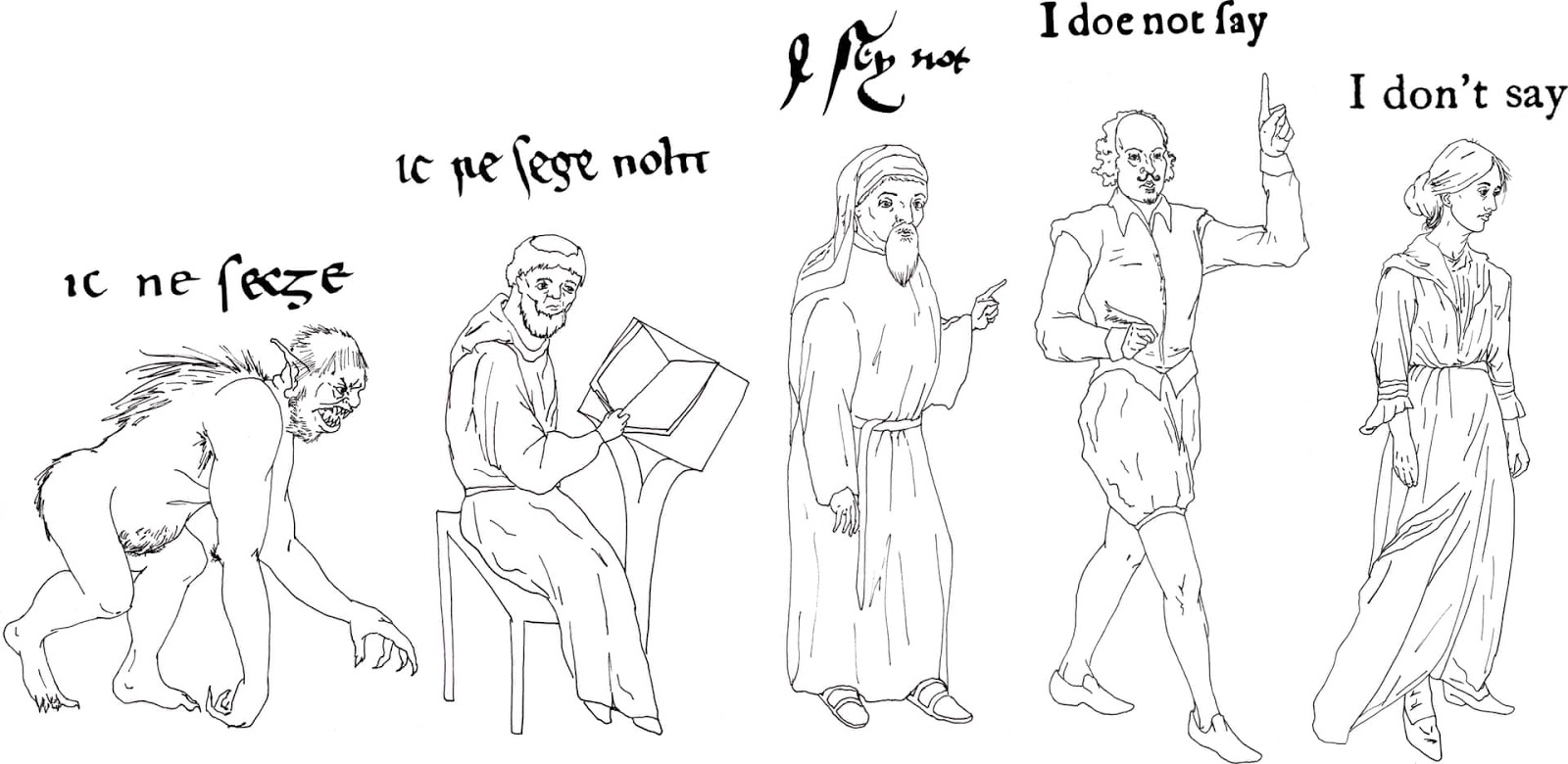
My field doesn't have an equivalent term, and so we don't really have equivalent debates about how to define or defend it (there aren't exactly tons of media personalities clamouring to declare themselves literary critics). But it's also a disadvantage when it comes to public communication, and that does trouble me a bit. There's an established market and an audience for popular history as there isn't for other fields, and so for public consumption everything relating to the literature, art, religion, and intellectual culture of the past tends to be subsumed into 'history'. This can be done well - History Today, for instance, does it very well indeed, offering an interdisciplinary and holistic view of the past by using a very inclusive definition of 'history' for a wide audience. Not all forums for popular history are so broad-minded, and I think there are a lot of topics which don't get as much attention as they should, or don't perhaps get the right kind of attention, because they can't be squeezed into 'history'. It's not that there are no forums for discussing those topics, but they don't feature much at the more popular end of the pop history spectrum (especially in the publishing of popular history books) - and I think that's a shame. I'm convinced that one reason the popular stereotype of the dark and stupid Middle Ages persists is that there are not many places where the interested public can be introduced to what medieval people thought, rather than just what they did - so they conclude, not unnaturally, that medieval people didn't really think at all. It's hard to hear their voices, their words, ideas, beliefs, and stories, if popular history insists on focusing only on their deeds; and for the medieval period, popular history usually means battles - kings and battles. That's the only thing that sells, publishers say, and I expect they're right - but then, it's the only thing they offer for sale. (It would be hypocritical of me to say I'm opposed to books on kings and battles, of course, though my book too fits uneasily under the 'history' label, and I wish there was somewhere else for it to go). It's no wonder that people think that kings and battles are all the medieval period consisted of, and it's a vicious cycle; if only this kind of history gets published, only this kind of history sells, so only this kind of history gets published. And many of the people who are successful at writing this kind of history, as I said above, have a particular view of what history should and shouldn't consist of and have been trained in a way which makes them well-informed about some aspects of the past but not about others (which is why some popular historians keep saying English evolved from the Anglo-Saxons' rugged earthy grunting into a sophisticated... you know. Because they never read Ælfric.)

The evolution of English from its monstrous origins, as illustrated for us by the Guardian

Anyway, there's not much any of us can do about this (gæð a wyrd swa hio scel), but it's good to remember that terms like historian have a history themselves, and do not set the limits of our potential interest in the past. Wyrd doesn't have much to do with history as modern historians understand it, because it relates not so much to what happens as why, in the largest possible sense of that question: what is the power which governs events in the world, which makes leaves grow and cities fall? Fate, time, God - all are possible explanations, and the question is still one which human beings seek to answer, and probably always will. It's not a question which belongs within the discipline of history as currently understood, though it used to be, and may one day be again - you never know, wyrd being what it is. But it's a timeless question, which many people have thought about over the centuries, and a question where writers, thinkers, and poets of the past have valuable perspectives to contribute. The reason I'm not a historian is, partly, that I care about their thoughts, and their words, on this and many other matters too deep for the historian's art.

Monday, 24 September 2018

Domne Eafe's Deer

Minster Abbey

My latest column for History Today can be read online here. It's about a text very close to my heart: the Kentish Royal Legend, one of our earliest written sources for the story of St Mildred and the Anglo-Saxon history of Thanet, the island on the eastern tip of the Kent coast where I was born. I gave a talk on this text earlier this year at St Augustine's in Ramsgate, and will be speaking about it again later this week at the North Downs Way Pilgrimage Festival. Going back to it for this purpose, I was struck by the prominence it gives to the succession of saintly royal women who were descended, over several generations, from King Ethelbert and his wife Bertha. The founder of Minster-in-Thanet, Domne Eafe, is the text's (and my own) favourite, but Bertha herself, Æthelburh of Lyminge, and Eanswythe of Folkestone are all mentioned too. Here's a summary of what the Kentish Royal Legend says about Domne Eafe:

Most of all, it celebrates a woman named Domne Eafe, the founder of Minster Abbey. The text tells how Domne Eafe, the great-granddaughter of Æthelberht and Bertha, managed to obtain land for the foundation of her monastery from Ecgberht, king of Kent. Her two young brothers had been murdered by one of the king’s followers, so Ecgberht offered Domne Eafe restitution for their murder in the form of land. The Kentish Royal Legend describes how she managed to manoeuvre the king into giving her as much land as she wanted (and perhaps more than he intended) by persuading him to grant her all the lands which her pet deer could run around on the island of Thanet. She set the deer running and it followed the course of her will, marking out the ground for her abbey, which the king had to grant.

This story is, of course, not to be taken too literally, yet it is striking how the text presents Domne Eafe: it emphasises her mastery of the situation and her subtle but powerful control of both the king and the deer. In her skilful manipulation of the king, bringing good out of the evil of her brothers’ murder, she demonstrates the ability to wield what the Anglo-Saxons called ræd, the practical wisdom and good judgement which was deemed an essential quality of an effective ruler. This was apparently how the nuns of Minster Abbey chose to remember their founding mother.

This is the kind of story I love - right in the sweet spot between legend and history. This is a localised and Christianised version of a story-type which is found all over the world, in lots of different contexts to do with the apportioning of land. Folklorists categorise it as the 'Deceptive Land Purchase': someone is granted as much as land as they can plough in a day, walk round in an hour, cover with a tree, encircle with an ox-hide (that one's from the Aeneid), etc., etc. And then they get more than they were initially promised through some clever exploitation of the promise.

A list of 'Deceptive Land Purchases' from Stith Thompson's Motif-Index of Folk-Literature

Above is a list of some examples from a reference guide to the subject - evocative, as all such lists are! Clearly Domne Eafe and her deer belong with these. Since her story involves an island, we might particularly compare, for instance, the story at the beginning of the Prose Edda about the Norse goddess Gefjon, which tells how King Gylfi of Sweden granted her as much land as she could plough in a day and night with four oxen. Gefjon produced four gigantic oxen, which were so powerful and ploughed so deep that they dragged the piece of land out to sea, and it became the island of Zealand.

Does that mean we just dismiss Domne Eafe's story as a legend - 'medieval fake news!', as some people have recently started crying when they encounter any kind of pre-modern legend, romance, or fiction? Of course not; legends are not lies, and they are absolutely not the same thing as what we have recently started calling 'fake news'. Thinking they are will lead you badly astray; here's a recent offender, where the phrase is used to describe a programme which turned out to be an object lesson in how not to analyse medieval history-writing. (That is: it set up a binary opposition between 'the truth' - provided by the magic of archaeology - and the supposed fake news of medieval romance history, which was simply cast aside as inaccurate once 'tested' against the archaeology. The concept that written sources are themselves complex objects which require specialised interpretation was nowhere to be seen; it did not seem to occur to anyone that it might be a good idea to interpret a twelfth-century source within a twelfth-century context, rather than simply reading it as an inaccurate record of events 600 years before.)

Anyway, dismissing legendary history as 'fake news' is not a particularly useful or enlightening approach. More interesting is to ask what a legend like Domne Eafe's might be able to tell us about the community which originated it, and what it reveals about their values, priorities, and concerns. This is a difficult sell for popular history, where you're often just supposed to be able to explain what really happened; but sometimes what people believe to have been the truth is just as important as what the truth actually was - especially where the truth is unrecoverable. What did Domne Eafe really do when she founded her monastery? We don't know, and we probably never will. But it matters what the Anglo-Saxon author(s) and audiences of the Kentish Royal Legend believed she did. They chose to believe this woman was the kind of person who would take on a wicked king to get justice for her brothers - quick-thinking and in control of events, she was a woman who could turn a murder into a miracle.